


Copper vs. Aluminum Transformer Windings
Introduction: The Conductor Battle
In the fields of electrical engineering and power distribution, few debates have lasted as long as the choice of transformer winding materials—the decades-long battle between copper (Cu) and aluminum (Al). Power companies, engineering, procurement, and construction (EPC) contractors, and facility managers have consistently weighed the pros and cons of these two conductive metals.
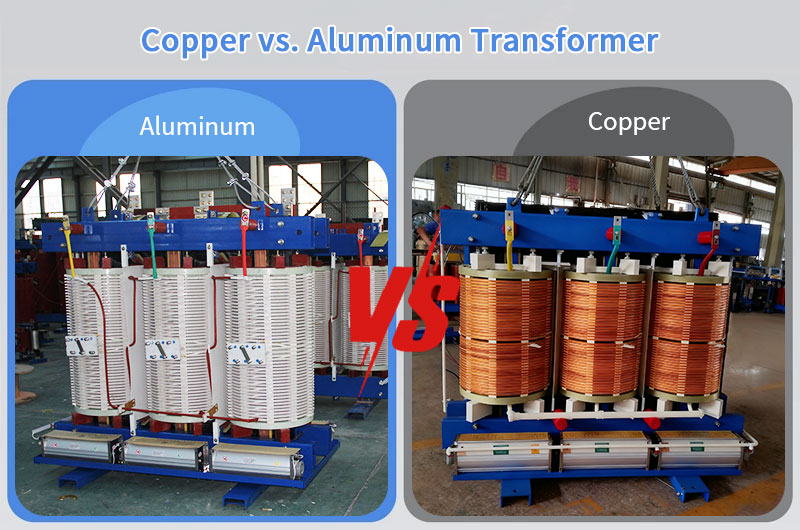
Traditionally, copper has been the undisputed "king of conductors, " with applications dating back to the earliest electromagnetic devices. However, the landscape has dramatically changed in the last 30 years: aluminum is now the mainstream choice for distribution transformers in North America and is rapidly gaining market share globally.
As a manufacturer specializing in aluminum strip and foil for transformer windings, Worthwill is at the heart of the supply chain, witnessing raw data, manufacturing trends, and actual performance firsthand.
This article goes beyond superficial misconceptions, delving into the physical properties, economics, and engineering practices of winding materials to help you make informed decisions for your power infrastructure.
Part 1: Performance, Size, and Physical Properties
To understand the logic behind choosing aluminum versus copper, we need to look beyond surface conductivity data to the essence of transformer design.
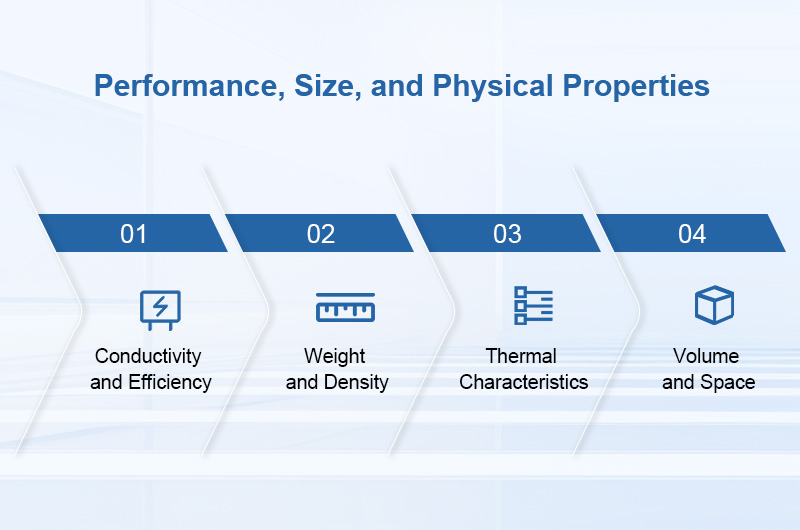
1. Conductivity and Efficiency: Trading "Size" for "Performance"
Misconception and Truth: While copper's conductivity (100% IACS) is indeed significantly higher than aluminum's (approximately 61% IACS), this does not necessarily mean that copper transformers are more efficient.
Engineering Equivalence: Engineers designing aluminum windings increase the conductor cross-sectional area by approximately 66% (1.6 times).
Conclusion: Through cross-sectional area compensation, the current-carrying capacity and resistance of aluminum windings are mathematically equivalent to those of copper, and their energy efficiency levels are consistent, fully complying with the same international standards.
2. Weight and Density: The Core Advantages of Aluminum
Physical Differences: The density of aluminum (2.7 g/cm³) is only about 1/3 that of copper (8.96 g/cm³).
Lightweight Result: Even with a 66% increase in conductor volume, the total weight is still only about half that of an equivalent copper winding.
Practical Benefits:
- Reduced Costs: Reduces the load-bearing requirements on the foundation, roof, and supporting structures.
- Convenient Construction: Reduces transportation difficulties, decreases reliance on heavy lifting equipment, and makes installation safer.
3. Thermal Characteristics: Stronger Overload Resistance
Heat Storage Capacity: The specific heat capacity of aluminum (0.214) is more than twice that of copper (0.092).
Practical Advantages: When facing motor startup or short-term current surges, aluminum absorbs more heat per unit weight without rapidly increasing its temperature. This "thermal inertia" provides a better safety buffer for transformers than copper.
4. Volume and Space: The Only Compromise
Size Trade-off: Due to its larger cross-sectional area, aluminum windings are indeed slightly larger than copper windings.
Applicability: Most standard transformer housings already have space reserved, so aluminum windings generally do not affect external dimensions. Only in special scenarios with extremely limited space does the compact size of copper windings become a decisive advantage.
Part 2: Economic Reality
As a supplier, Worthwill understands that the core demand of its customers (transformer manufacturers and end users) is cost control. The economics of transformer manufacturing heavily favor aluminum.
1. Raw Material Price Stability
Copper is classified as a“semi-precious metal”industrial metal, and its price fluctuates dramatically due to demand from consumer electronics, electric vehicles (EVs), and the global construction industry:
- Price Volatility: Significant copper price fluctuations make it difficult for transformer manufacturers to predict costs and provide stable quotes to power companies.
- Aluminum Stability: Aluminum resources are abundant, and its price fluctuations are far less than copper.
Typically, aluminum-winded transformers of the same efficiency are 20%-30% cheaper than copper-winded transformers. For large projects (such as solar power plants requiring 50 transformers or new residential developments), this saving is substantial.
2. Scrap Metal Value Considerations
Some copper proponents argue that copper transformers have a higher scrap metal value when they reach the end of their lifespan (approximately 30 years later). However, from a Net Present Value (NPV) perspective, the immediate cost savings from choosing aluminum far outweigh the potential value of copper scrap metal decades later—investing the initial savings yields a much higher return than waiting to sell scrap copper in 2050.
Part 3: Debunking Myths (Reliability and Safety)
Negative perceptions of aluminum conductors date back to residential branch wiring problems in the 1960s and 70s. It's crucial to clearly distinguish between old-style residential wiring and modern industrial transformer windings:
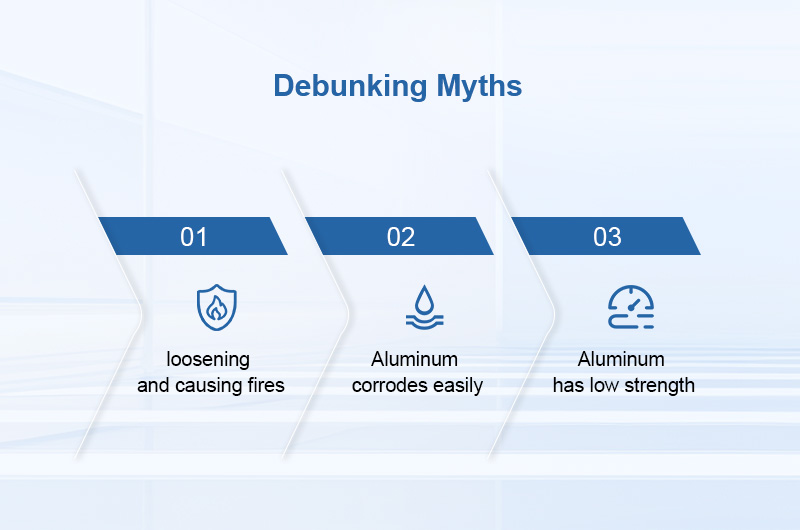
Myth 1: "Aluminum connections are prone to loosening and causing fires."
The Reality: Aluminum's coefficient of thermal expansion (23×10⁻⁶) is higher than copper's (16.6×10⁻⁶). In the past, improper connector design led to loosening of joints during thermal cycling.
Modern Solutions: Today's manufacturers use connection systems specifically designed for aluminum.
- Worthwill Washers: High-pressure spring washers maintain constant pressure on the joint, absorbing thermal expansion and contraction without loosening.
- Cold Press Welding: Worthwill has witnessed customers adopting inert gas protected cold press welding technology to create a seamless metal bond, completely eliminating the risk of joint failure.
Myth 2: "Aluminum corrodes easily."
The Reality: Both metals oxidize.
- Copper Corrosion: The verdigris (copper oxide) formed by copper oxidation gradually diffuses inwards, causing continuous corrosion if not sealed.
- Aluminum Corrosion: When aluminum is exposed to air, it instantly forms a dense film of aluminum oxide (Al₂O₃). This film is an excellent insulator, effectively protecting the metal from further corrosion.
The Engineering Fix: In transformer manufacturing, joints are cleaned and coated with anti-oxidation compounds (such as Penetrox), or welded in an inert gas environment. Once sealed in the resin of a dry-type transformer or the insulating oil of an oil-immersed transformer, the oxidation process completely stops.
Myth 3: "Aluminum has low strength and cannot withstand short-circuit current."
The Reality: Copper has higher tensile strength. However, short-circuit strength depends on coil design, not just material strength.
The Solution: By using aluminum foil for transformer windings (sheet winding) rather than round wire, axial short-circuit forces are virtually eliminated. The sheet winding distributes stress evenly across the entire width of the coil. This makes aluminum foil-wound transformers incredibly robust against mechanical shock.
Part 4: Manufacturing and Processing Performance
From a factory production perspective, aluminum offers significant processing advantages–a strength of Worthwill's materials science expertise.
1. Ease of Winding
Aluminum is softer and more malleable than copper:
- Resilience: When winding coils, copper wire tends to "spring back, " requiring greater tension and complex clamps for fixation; aluminum easily conforms to the coil shape.
- Insulation Integrity: Aluminum's flexibility reduces damage to the insulating paper or varnish during winding.
2. The Rise of Foil/Strip Winding
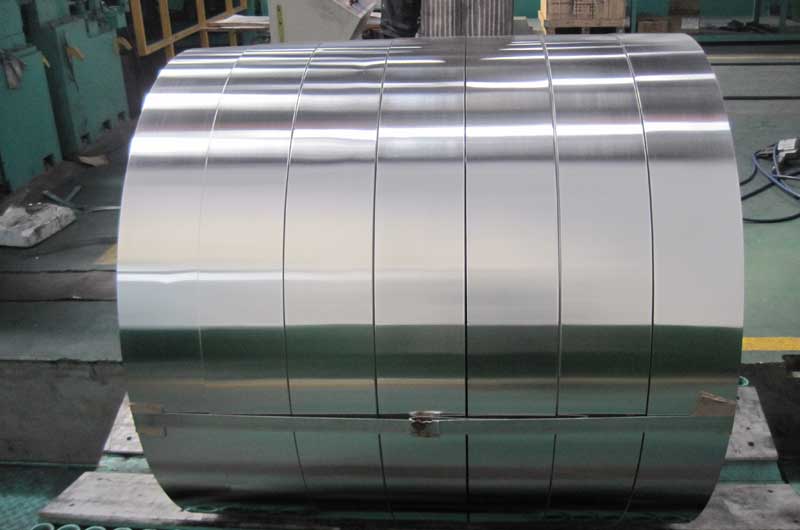
Aluminum strip has become the standard material in modern low-voltage distribution transformers. Worthwill specializes in producing 1050, 1060, and 1350 series alloy aluminum strips with precision-cut edges:
Why choose aluminum strip for transformer winding? Replacing round wire with wide aluminum strip eliminates "voids" in the windings, improves the fill factor, and achieves more uniform heat distribution, avoiding "hot spots" that lead to insulation aging.
3. Insulation Life
The service life of a transformer is determined by the insulation system (paper, epoxy resin, or insulating varnish), not the metallic materials. Since aluminum and copper transformers have the same design temperature rise limit (e.g., 65°C above ambient temperature), their insulation aging rates are consistent. The expected lifespan of aluminum transformers (20-30 years) is exactly the same as that of copper transformers.
Part 5: Application Scenarios–How to Choose?
While we advocate for aluminum, we also agree on the principle of "tailoring the solution to the problem":
Scenario A: Areas where aluminum excels (mainstream choice)
Aluminum is the optimal solution for 90% of general scenarios, including:
- Power distribution: Pole-mounted and pad-mounted transformers
- Commercial buildings: Schools, shopping malls, office parks
- Renewable energy: Solar and wind farms (budget-sensitive projects requiring large amounts of equipment)
- Advantages: In outdoor or electrical room environments, the slight increase in size of aluminum transformers has little impact, but the cost advantage is significant.
Scenario B: Applicable scenarios for copper
Copper is only superior in specific niche scenarios:
- Extremely space-constrained: For transformers that must be installed in elevator shafts or reserved enclosures in older equipment, copper's compactness is indispensable.
- Extremely corrosive environments: Although aluminum performs well, copper is sometimes preferred in highly acidic chemical plants or marine environments (after special treatment) (sealed aluminum equipment is also applicable).
- Specifications drive the market: Some traditional engineers still prefer to specify "copper only" in technical specifications (we recommend updating such specifications to allow the use of aluminum!).
Part 6: How to identify transformer winding materials?
To determine the winding type on-site, refer to the following professional techniques:
Check the nameplate:
- Look up the model code: In many regions, the letter "L" indicates aluminum (e.g., S11-M-100/10-L)
- The absence of "L" may indicate copper, but the manufacturer's data must be verified.
- Some nameplates directly state "Conductor: Aluminum" or "Conductor: Copper"
Weight comparison: Compare the equipment weight with the data sheet: If the actual weight is significantly lighter than the catalog value for a standard copper transformer, it is likely an aluminum winding.
Visual inspection (safe areas only):
- If you can see the terminals, copper terminals are reddish/orange. Aluminum terminals are silver/grey.
- Many copper terminals are tin-plated (silver) for corrosion protection; the surface can be lightly scratched when not energized to reveal the base metal color.
Part 7: Worthwill's Advantages
As a leading manufacturer, Worthwill is key to ensuring the reliable operation of aluminum transformers–transformer quality begins with the quality of the winding materials.
Low-quality aluminum strip may have burrs at the slitting edges, and these sharp edges can pierce the insulation layer, causing a short circuit.
Worthwill offers:
- Burr-free edges: Advanced precision slitting equipment ensures smooth, rounded edges on the aluminum strip used in transformers, avoiding electric field concentration and protecting the insulation layer.
- High-purity alloys: Strict control over the chemical composition of 1000 and 1350 series alloys ensures stable conductivity (minimum 61.5% IACS in the soft state).
- Custom sizes:Thickness and width can be adjusted according to customer needs, helping transformer designers optimize the core window for maximum efficiency.
When purchasing transformers, inquiring about the source of the winding materials from the supplier is crucial. Using Worthwill's high-quality aluminum strip ensures a robust coil mechanical structure and high electrical performance.
Conclusion: Ultimately verdict.
The competition between aluminum and copper is no longer a battle of quality, but a clash of perception and data.
Key Facts:
- Aluminum transformers manufactured to modern standards offer the same reliability as copper transformers.
- More cost-effective, saving 20%-30% on initial investment.
- Lighter weight, simplifying installation.
- Excellent heat storage capacity and surge current resistance.
While copper still has a place in space-constrained scenarios, aluminum has rightfully become the mainstream choice for distribution transformers.
Worthwill is committed to providing top-tier aluminum solutions for the power industry. Whether you are a manufacturer looking for high-quality aluminum foil for transformer windings or a project manager setting technical specifications, you can rely on the reliability and efficiency of aluminum.
Ready to optimize transformer production? Contact Worthwill today to learn about our premium aluminum strip and foil solutions and work together to build an energy-efficient future for electricity.
Frequently Asked Questions (FAQ)
Q: Are copper transformers more efficient than aluminum transformers?
A: Not necessarily. Efficiency is determined by design standards (such as the U.S. Department of Energy 2016 standard or Level 2 energy efficiency). Aluminum transformers that meet this standard have the same energy consumption performance as copper transformers–achieved simply by increasing conductor volume.
Q: Is the lifespan of aluminum transformers comparable to that of copper transformers?
A: Yes. Transformer lifespan is determined by the insulation system. Since both have the same temperature rise limit, their lifespan is over 20 years.
Q: Can copper wires used in construction be connected to aluminum transformers?
A: Yes. Industry standard terminals are double-adapter type (marked AL/CU), usually made of tin-plated aluminum, which can safely connect copper and aluminum wires, avoiding galvanic corrosion.
Q: Why do some engineers still insist on using copper?
A: This is often due to adherence to traditional technical specifications or a lack of updated understanding of the performance of modern aluminum alloys and connection technologies. Educating relevant parties about the cost/performance advantages of aluminum can usually change their decisions.
Disclaimer:This article is for informational purposes only. When specifying equipment, please consult the manufacturer's data sheet and local electrical codes.