


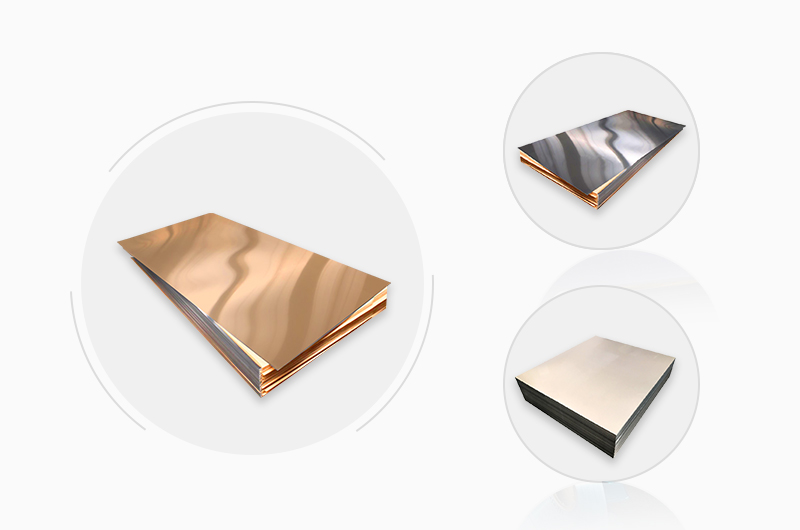
1100 aluminum is one of the most widely used commercially pure aluminum alloys, containing a minimum of 99.0% aluminum. As a non-heat-treatable alloy (Aluminum Association designation AA1100), it achieves different strength levels through cold working (strain hardening) rather than precipitation hardening. Its unique combination of high ductility, excellent corrosion resistance, and superior electrical/thermal conductivity makes it an ideal choice across food, chemical, electronics, and construction industries.
- Outstanding corrosion resistance — naturally forms a protective oxide layer; resists atmospheric, freshwater, and many chemical environments.
- High electrical & thermal conductivity — 59 % IACS electrical conductivity; 222 W/m·K thermal conductivity.
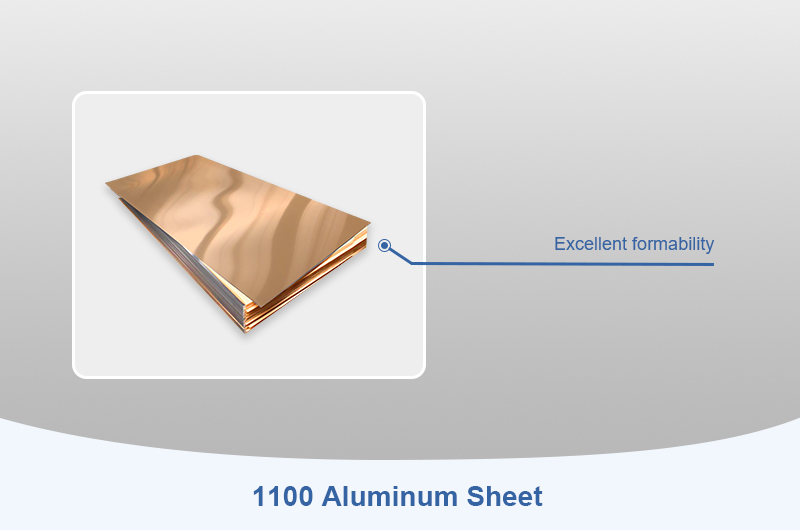
- Excellent formability — elongation ≥ 25 % in O temper; suitable for deep drawing, spinning, and roll forming.
- Superior weldability — easily joined by TIG, MIG, resistance, and brazing methods.
- Relatively low strength (H18 temper UTS ≈ 165 MPa / 24 ksi).
- Non-heat-treatable — strength only improved by cold work.
- Limited high-temperature capability (continuous service ≤ 180 °C).
1100 Aluminum Chemical Composition (wt%)
| Element | Si + Fe | Cu | Mn | Zn | Others (Each / Total) | Al |
|---|---|---|---|---|---|---|
| Content | ≤ 0.95 % | 0.05 – 0.20 % | ≤ 0.05 % | ≤ 0.10 % | ≤ 0.05 % / ≤ 0.15 % | ≥ 99.00 % |
Reference: ASTM B209 / Aluminum Association Teal Sheets. Note: Cu (0.05–0.20 %) is the key compositional distinction between 1100 and other 1xxx-series alloys such as 1050 and 1060.
1100 Aluminum Physical Properties
| Property | Value | Test Standard |
|---|---|---|
| Density | 2.71 g/cm³ (0.098 lb/in³) | ASTM B209 |
| Melting Range | 643 – 657 °C (1190 – 1215 °F) | — |
| Coefficient of Thermal Expansion (20–100 °C) | 23.6 × 10⁻⁶ /K | — |
| Thermal Conductivity (20 °C) | 222 W/m·K | — |
| Electrical Conductivity (20 °C) | 59 % IACS | — |
| Electrical Resistivity (20 °C) | 2.9 μΩ·cm | — |
| Elastic Modulus | 69 GPa (10 000 ksi) | — |
| Poisson's Ratio | 0.33 | — |
1100 Aluminum Common Tempers & Mechanical Properties
| Temper | Treatment | UTS (MPa) | Yield Strength (MPa) | Elongation (50 mm) | Typical Applications |
|---|---|---|---|---|---|
| O | Full annealing; removes all cold work | 75 – 105 | 25 – 45 | 25 – 45 % | Deep-drawn containers, foil, electrical conductors |
| H12 | Strain-hardened to ¼-hard | 95 – 130 | 75 – 105 | 10 – 20 % | Architectural panels, simple stamped parts |
| H14 | Strain-hardened to ½-hard | 110 – 150 | 95 – 130 | 6 – 14 % | Nameplates, light fixtures, general sheet metal |
| H16 | Strain-hardened to ¾-hard | 130 – 170 | 115 – 150 | 4 – 8 % | Rigid packaging, stiffened panels |
| H18 | Strain-hardened to full-hard | 150 – 185 | 130 – 165 | 3 – 6 % | Load-bearing parts, structural components |
| H24 | Strain-hardened + partially annealed (½-hard) | 110 – 150 | 75 – 130 | 6 – 12 % | Bottle caps, heat sinks, electronic enclosures |
| H112 | Hot worked / lightly strain-hardened (for plate ≥ 6 mm) | 75 – 110 | 25 – 75 | 12 – 25 % | Structural thick plates, industrial storage tanks |
Values per ASTM B209 and Aluminum Association typical data. Actual properties depend on thickness, testing direction, and specimen gauge length.
Machinability & Fabrication
| Process | Performance | Recommended Temper |
|---|---|---|
| Cutting / Machining | Use sharp HSS or carbide tools; O temper tends to be gummy — use kerosene coolant | H14 / H18 (best chip formation) |
| Deep Drawing / Stamping | Draw depth up to 5 × material thickness; excellent LDR (Limiting Drawing Ratio) | O / H14 |
| Bending | Min bend radius: 0 × t (O temper), 1 × t (H14), 1.5 × t (H18) | All tempers |
| Welding | TIG / MIG with 1100 or 4043 filler; joint strength ≥ 90 % of base metal | All tempers |
| Brazing / Soldering | Excellent brazeability with Al-Si filler alloys | All tempers |
Processing Technology
Production Flow
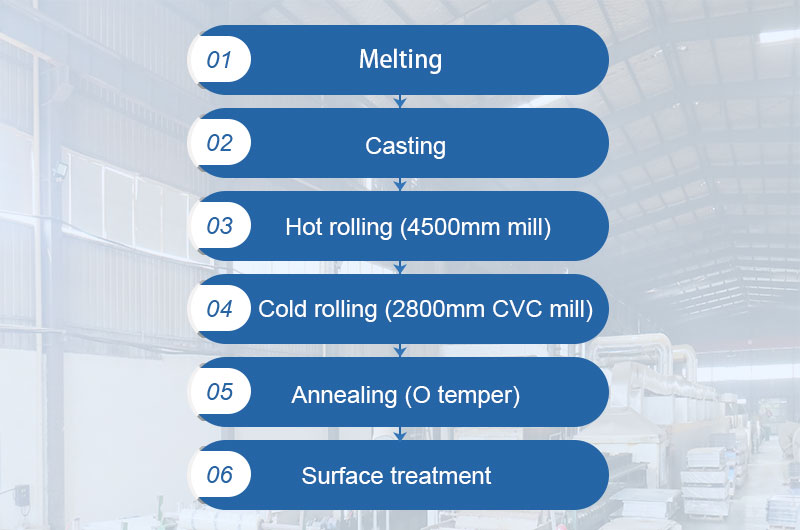
- Melting & alloying (inert-gas-shielded furnace)
- DC casting → scalping
- Homogenization (optional)
- Hot rolling (4 500 mm wide reversing mill)
- Cold rolling (2 800 mm CVC mill with IMS gauge control)
- Annealing (O temper: 345 °C ± 10 °C)
- Slitting / shearing / surface treatment
- Inspection & packaging
Process Highlights
- Cold rolling precision: thickness tolerance ± 0.02 mm, controlled by German IMS online crown gauge and CVC plus roll profile system.
- Annealing temperature: 345 °C ± 10 °C for full-soft O temper; continuous annealing for coil and batch annealing for plate.
- Surface quality: post-anneal surface roughness Ra ≤ 0.1 μm for mirror-finish grades.
1100 Aluminum Equivalent Designations
| Region | Designation | Standard |
|---|---|---|
| USA | AA 1100, UNS A91100 | ASTM B209, ASTM B210 |
| Europe | EN AW-1100, EN AW-Al99.0Cu | EN 573-3, EN 485 |
| Japan | JIS A1100P (sheet) / A1100BE (extrusion) | JIS H4000 |
| Germany | AlCu (historical DIN Al99.0Cu) | DIN 1725-1 (now EN 573) |
| China | 1100 (adopted AA designation) | GB/T 3880, GB/T 3190 |
Quality Control
- Raw material: Optical emission spectrometer (OES) confirms Al ≥ 99.0 %, Si + Fe ≤ 0.95 %, Cu 0.05–0.20 % per ASTM B209.
- In-process: Inert-gas-shielded melting minimizes inclusions; cold rolling thickness tolerance ± 0.02 mm; online flatness measurement ≤ 3 I-units.
- Final inspection: 50+ mechanical testing instruments including universal tensile testers, ultrasonic flaw detectors, and surface profilometers.
- Certifications: ISO 9001 quality management; testing per ASTM E1251 (composition), ASTM B557 (tensile), EN 1396 (coated products); SGS third-party verification available.
Standard Product Specifications
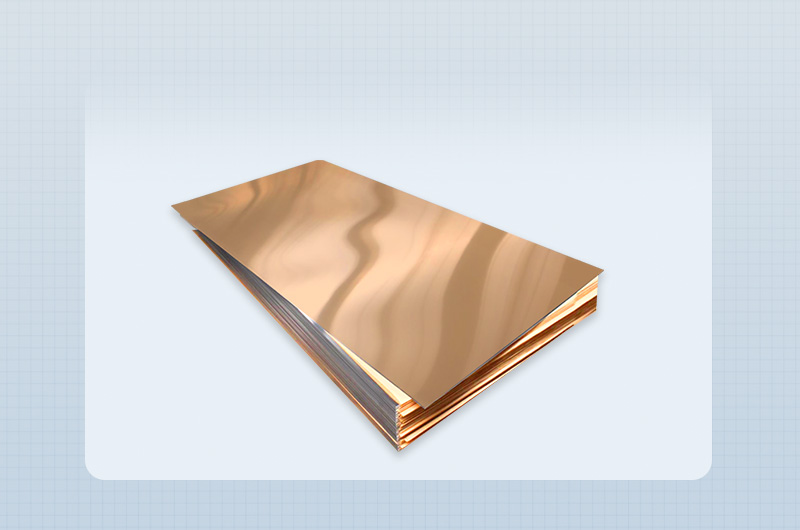
1100 Aluminum Sheet
- Thickness: 0.2 – 200 mm
- Width: 100 – 2 650 mm
- Length: up to 12 000 mm
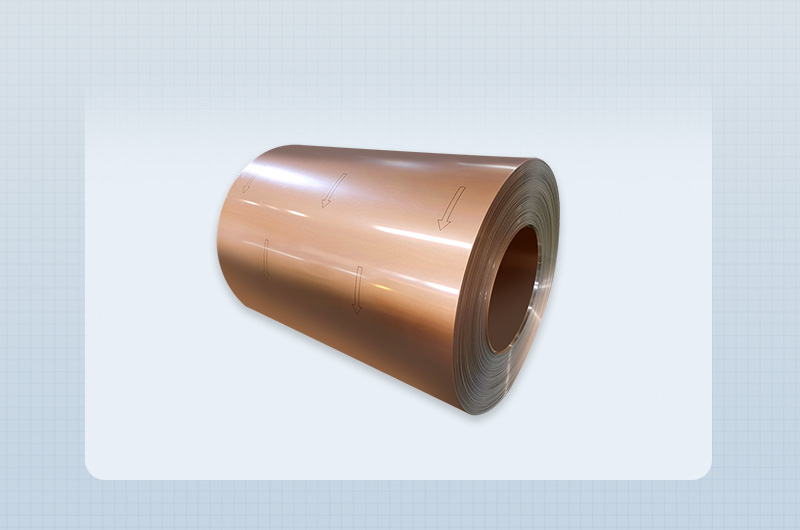
1100 Aluminum Coil
- Thickness: 0.1 – 3 mm
- Width: 100 – 2 650 mm
- I.D.: 508 mm (standard)
- Coil weight: ≤ 2 tonnes
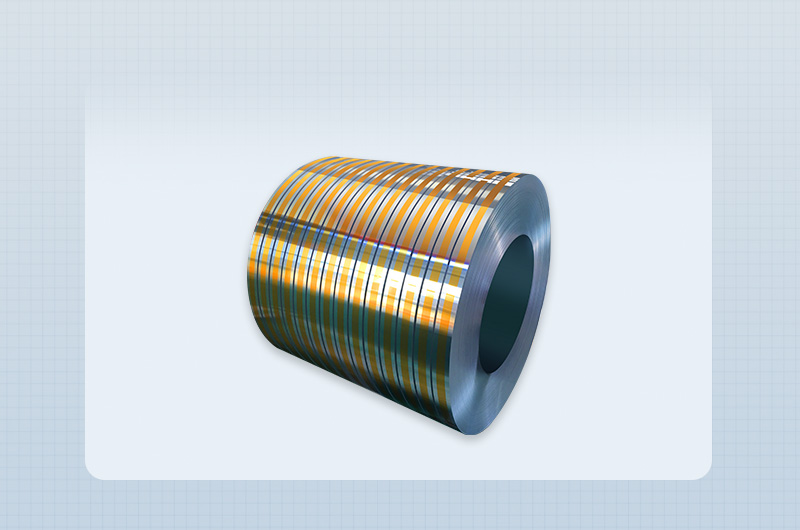
1100 Aluminum Strip
- Thickness: 0.1 – 3 mm
- Width: 10 – 1 500 mm
- I.D.: 508 mm (standard)
- Coil weight: ≤ 1 tonne
1100 Aluminum Circle (Disc)
- Thickness: 0.3 – 6 mm
- Diameter: 50 – 1 200 mm
- Temper: O, H12, H14
- Use: Cookware, signs, lamp covers
Surface Treatment & Processing Services
Available Treatments
| Type | Method | Result |
|---|---|---|
| Protective Film | PE film (black / white / blue, 50 μm) or laser-cut paper interleave | Scratch & corrosion protection during transport |
| Mechanical Finish | Brushing, sandblasting, or embossing (pattern depth 0.1–0.5 mm) | Enhanced grip, decorative texture |
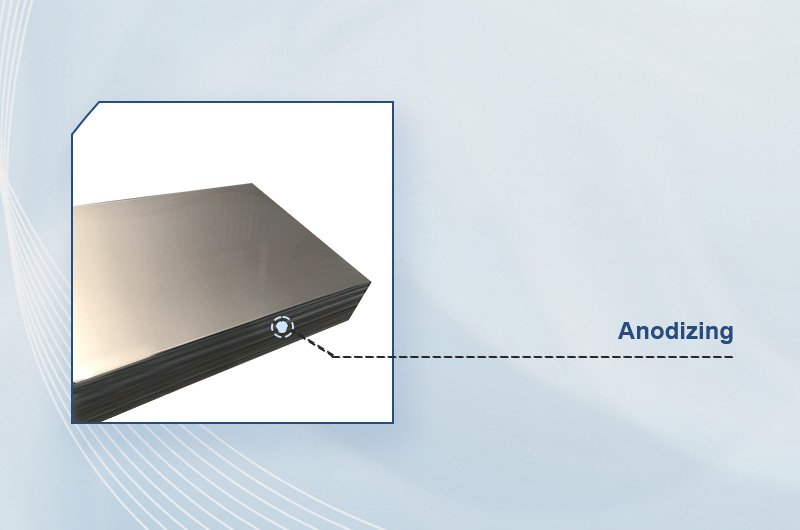
| Anodizing | Sulfuric acid anodizing (film 10–25 μm); optional color dyeing | Surface hardness 300–500 HV; corrosion & wear resistance |
| PVDF / PE Coating | Roller-coated fluorocarbon or polyester paint (25–35 μm) | UV & weather resistance for outdoor use; RAL color matching |
Mirror Polishing
Anodizing
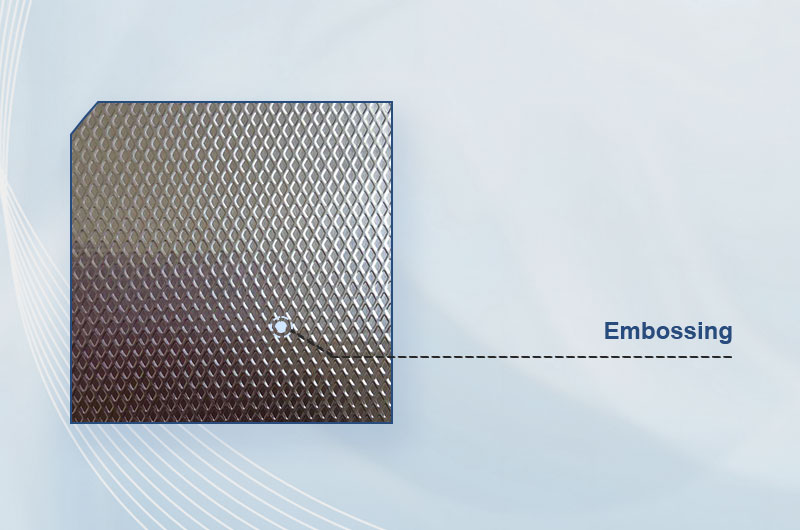
Embossing
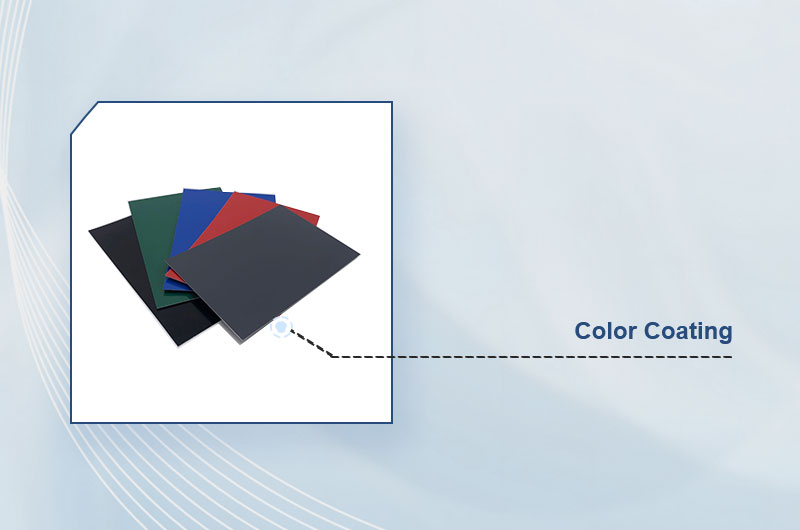
Color Coating
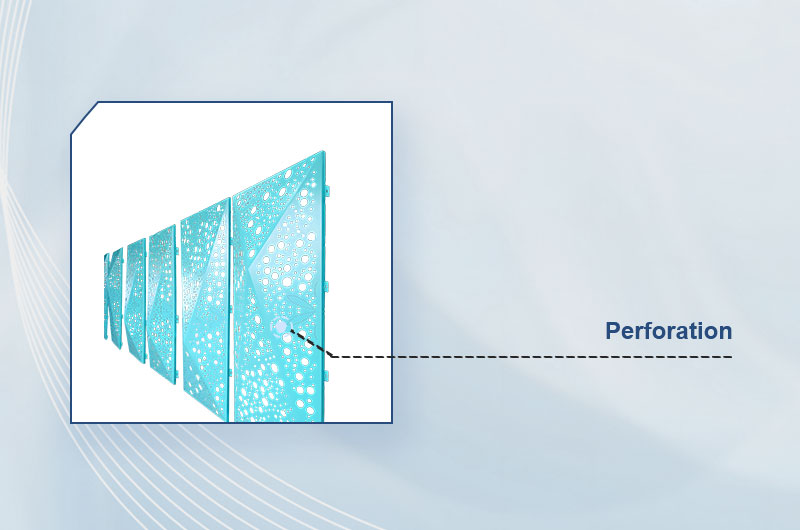
Perforation
Application Scenarios
- Anodizing: Improves hardness and corrosion resistance for curtain wall panels and electronic housings.
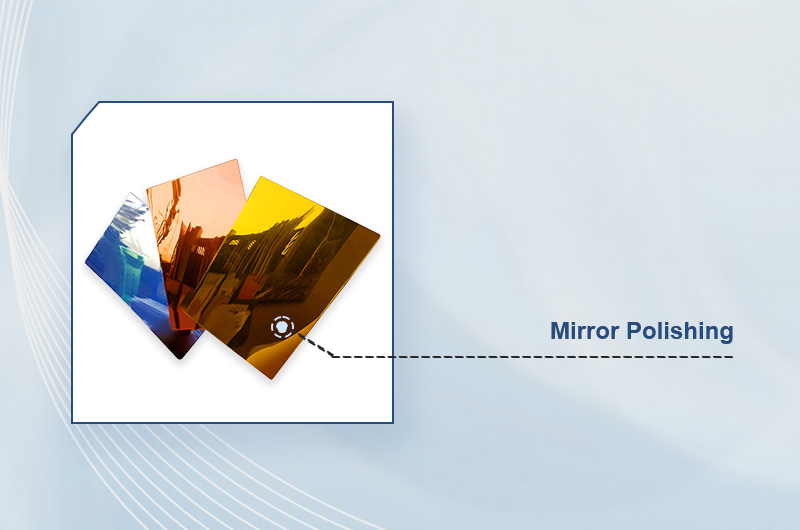
- Mirror polishing: 1100 mirror-finish sheet (0.5–3 mm) for premium interior decoration and lamp reflectors.
- Embossing: Five-bar tread plate (1.25–5.3 mm) for anti-slip flooring, vehicle steps, and ship decks.
- Color coating: PVDF-coated 1100 sheet for weather-resistant building facades and signage.
- Perforation: Perforated 1100 sheet (hole diameter 0.5–10 mm) for acoustic panels, ventilation screens, and filtration.
How to Choose the Right 1100 Temper
- By forming method: O temper for deep drawing and spinning; H14 / H24 for moderate stamping and bending; H18 for precision blanking and shearing.
- By strength need: O for maximum ductility; H14 for balanced strength and workability; H18 for maximum rigidity in thin gauges.
- By thickness: 0.4–0.8 mm for cookware and foil trays; 1–3 mm for curtain walls and signage; 6–100 mm plate in H112 for tanks and structural bases.
- By surface treatment: O or H14 for anodizing (best oxide layer uniformity); H14 / H18 for PVDF coating; O for mirror polishing.
- By environment: H14 / H24 for humid or mildly corrosive atmospheres; H112 thick plate for elevated-temperature service up to 180 °C.
1100 vs. Similar Alloys Comparison
| Property | 1100 | 1050 | 1060 | 3003 | 5052 |
|---|---|---|---|---|---|
| Al Content (min) | 99.0 % | 99.5 % | 99.6 % | ~98.6 % | ~97.2 % |
| Key Alloying Element | Cu 0.05–0.20 % | — | — | Mn 1.0–1.5 % | Mg 2.2–2.8 % |
| UTS, O temper (MPa) | 90 | 76 | 69 | 110 | 193 |
| Electrical Conductivity | 59 % IACS | 61 % IACS | 62 % IACS | 50 % IACS | 35 % IACS |
| Formability (O) | Excellent | Excellent | Excellent | Good | Good |
| Corrosion Resistance | Excellent | Excellent | Excellent | Good | Very Good (saltwater) |
| Relative Cost Index | 1.0 | 0.95 | 0.9 | 1.2 | 1.5 |
Selection guide: Choose 1100 for low-load, high-formability applications with good conductivity. Switch to 3003 when moderate strength is needed, 5052 for marine/structural strength, or 1060 when maximum electrical conductivity is required.
1100 Aluminum Weight Reference
| Thickness (mm) | Weight per m² (kg) | Weight per ft² (lb) |
|---|---|---|
| 0.5 | 1.36 | 0.28 |
| 1.0 | 2.71 | 0.56 |
| 1.5 | 4.07 | 0.83 |
| 2.0 | 5.42 | 1.11 |
| 3.0 | 8.13 | 1.66 |
| 5.0 | 13.55 | 2.78 |
| 10 | 27.1 | 5.55 |
| 20 | 54.2 | 11.10 |
| 50 | 135.5 | 27.76 |
Formula: weight (kg) = thickness (mm) × area (m²) × 2.71. Density = 2.71 g/cm³.
Standards & Certifications
- International: ASTM B209, ASTM B210, EN 573-3, EN 485-2, ISO 6361
- Domestic: GB/T 3880.1-2012, GB/T 3190-2020
- Certifications: ISO 9001 quality system, SGS third-party testing, NADCAP heat treatment certification
Applications of 1100 Aluminum
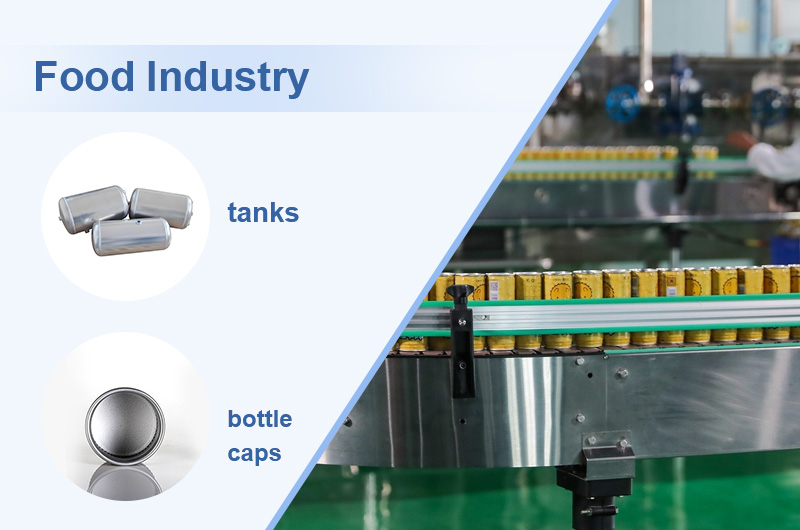
- Cookware, food containers, baking trays, bottle caps
- Recommended: 1100-O (deep draw) / 1100-H14 (stamped caps)
- Case: Bottle cap substrate for major beverage brands
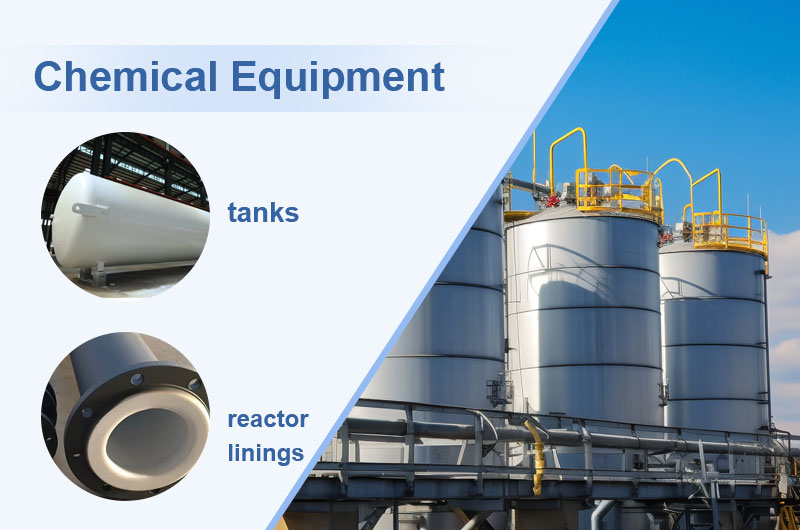
- Storage tanks, reactor linings, heat exchangers
- Recommended: 1100-H14 / 1100-H112 (thick plate)
- Case: Dilute-acid storage vessel linings (resistant to weak acids pH > 5)

- Curtain walls, fascia panels, signage, interior cladding
- Recommended: 1100-H14 / 1100-H18 (anodized or PVDF-coated)
- Case: Airport terminal decorative ceiling panels
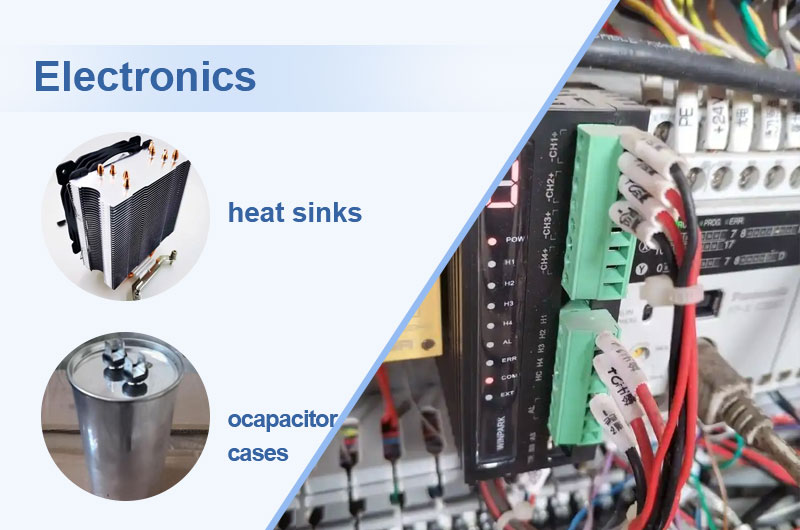
- Heat sinks, capacitor casings, bus bars, LED reflectors
- Recommended: 1100-O (conductors) / 1100-H18 (heat sinks)
- Case: EV charging station heat dissipation substrates
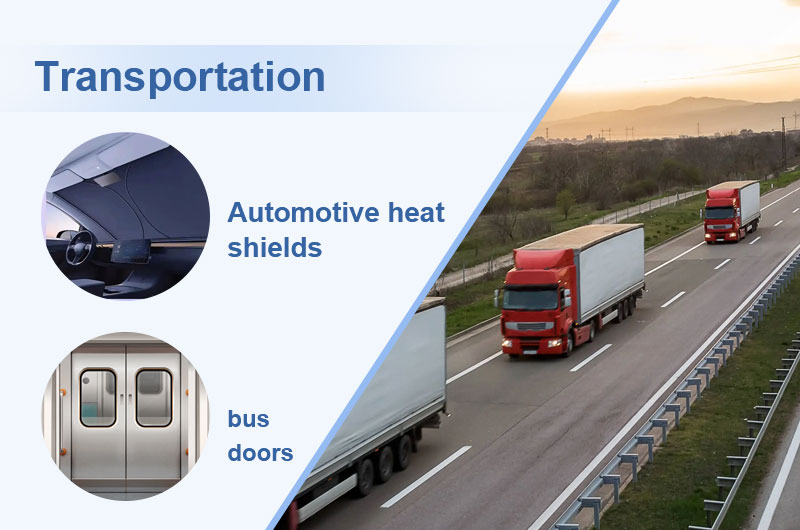
- Automotive heat shields, bus / RV body panels, trailer floors
- Recommended: 1100-H14 / 1100-H18
- Case: Exhaust heat shields for major OEM automakers
In-Stock Inventory
We maintain 130+ standard specifications of 1100 aluminum sheet and plate in our warehouse for immediate dispatch. Below is a summary by temper. Custom sizes and non-stock thicknesses can be produced within 3 weeks.
| Temper | Product | Thickness Range | Standard Sheet Sizes | Specs in Stock | Action |
|---|---|---|---|---|---|
| O | Sheet | 0.3 – 6.35 mm | 1250×2500 (4'×8'), 1520×3020 (5'×10') | 17 thicknesses × 2 sizes | |
| H12 | Sheet (cut pieces) | 0.5 – 3.18 mm | Custom: 152×152 to 610×1220 mm | 24 specifications | |
| H14 | Sheet | 0.5 – 6 mm | 1250×2500 (4'×8'), 1500×3000 (5'×10') | 11 thicknesses | |
| H18 | Sheet | 1 – 6 mm | 1250×2500 (4'×8') | 8 thicknesses | |
| H112 | Plate | 8 – 100 mm | 1250×2500, 1500×3000, 1500×3800 | 42 specifications | |
| — | Checkered plate | 1.25 – 5.3 mm | 1000×2000 | 4 thicknesses |
O Temper — Available Thicknesses (mm)
0.3, 0.41, 0.51, 0.64, 0.81, 1.02, 1.27, 1.6, 1.8, 2.03, 2.29, 2.54, 3.18, 4.06, 4.83, 5.08, 6.35
Sizes: each available in 1250×2500 mm and 1520×3020 mm.
H14 Temper — Available Thicknesses (mm)
0.5, 0.8, 1.0, 1.2, 1.5, 2.0, 2.5, 3.0, 4.0, 5.0, 6.0
Sizes: 1250×2500 mm and/or 1500×3000 mm (varies by gauge).
H18 Temper — Available Thicknesses (mm)
1.0, 1.2, 1.5, 1.6, 2.0, 2.5, 3.0, 4.0, 5.0, 6.0
Size: 1250×2500 mm.
H112 Temper Plate — Available Thicknesses (mm)
8, 10, 12, 14, 15, 16, 18, 20, 22, 25, 28, 30, 32, 35, 40, 45, 50, 55, 60, 65, 70, 75, 80, 85, 90, 95, 100
Sizes: 1250×2500 mm, 1500×3000 mm (1500×3800 mm for 80 mm).
H12 Temper — Cut Pieces
Thicknesses from 0.5 to 3.18 mm in various small sheet sizes (152×152, 152×305, 152×610, 305×305, 305×610, 610×610, 610×1220 mm, etc.). Ideal for prototyping and small-batch projects.
Checkered (Tread) Plate
1.25, 1.6, 3.5, 5.3 mm — five-bar pattern — 1000×2000 mm sheets.
Note: All in-stock items ship within 72 hours. Out-of-stock specifications and custom dimensions can be produced in approximately 3 weeks. Contact us for real-time availability and pricing.
Frequently Asked Questions
Q1: Can 1100 aluminum replace 3003 for chemical storage containers?
A: In mildly corrosive environments (pH > 5, dilute acids, alkaline solutions), 1100 performs well. However, 3003 offers about 20 % higher strength thanks to its manganese content, making it a better choice for pressurized or structural vessels. For strong-acid or highly concentrated environments, consider 3003 with an additional corrosion-resistant lining.
Q2: Can H18 temper 1100 aluminum be bent?
A: Yes, but with limitations. H18 full-hard sheet can be bent to a minimum radius of 1.5× the material thickness without cracking. For tighter bends or complex forming, we recommend H14 (min radius 1×t) or O temper (min radius 0×t). If your design requires H18 strength after forming, consider forming in O temper and then work-hardening the final part.
Q3: What is the difference between 1100 and 1060 aluminum?
A: The primary difference is copper content. 1100 contains 0.05–0.20 % Cu, which slightly increases strength (UTS ~90 MPa vs. ~69 MPa for 1060-O) while marginally reducing electrical conductivity (59 % vs. 62 % IACS). Choose 1100 when you need better mechanical strength; choose 1060 when maximum conductivity is the priority.
Q4: Is 1100 aluminum food safe?
A: Yes. 1100 aluminum is widely used in food-contact applications (trays, containers, cookware). It complies with FDA 21 CFR 175.300 and EU Regulation (EC) No 1935/2004 for food-contact materials. Its high purity and lack of toxic alloying elements make it one of the safest aluminum alloys for food use.
Q5: Does ultra-wide plate (≥ 2000 mm) have flatness issues?
A: Our German SMS reversing mill with CVC plus shape control ensures flatness ≤ 3 I-units across widths up to 3 800 mm — approximately 50 % better than the Chinese national standard requirement. Each plate is measured with a laser flatness scanner before shipping.
Q6: How do I calculate the weight of 1100 aluminum sheet?
A: Use the formula: Weight (kg) = Thickness (mm) × Width (m) × Length (m) × 2.71. For example, a 2 mm × 1250 mm × 2500 mm sheet weighs: 2 × 1.25 × 2.5 × 2.71 = 16.94 kg.
Why Choose Us
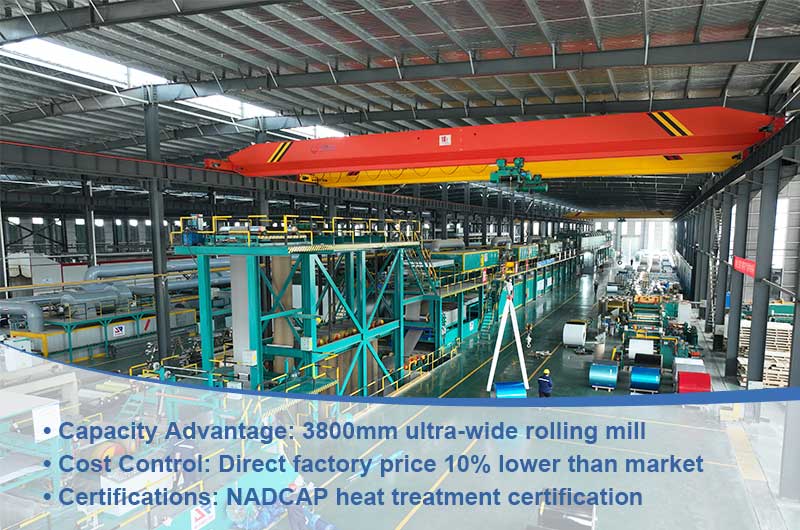
- Capacity advantage: 3 800 mm ultra-wide rolling mill capability — only ~5 % of global aluminum mills offer this width.
- Quality assurance: Full compliance with ASTM, EN, and GB standards; mill test certificates (MTC) and CoC provided with every shipment.
- Competitive pricing: Factory-direct pricing approximately 10 % below market average (benchmarked against LME + regional premiums).
- Fast delivery: In-stock orders dispatched within 72 hours; custom orders completed in ≤ 3 weeks (industry average: 4–6 weeks).
- Technical support: Free container loading optimization (saves up to 15 % on shipping costs); material selection consultation.
- Global certifications: ISO 9001, SGS testing, NADCAP heat treatment certification for aerospace supply chain qualification.