


What Is 5454 Aluminum?
5454 is a corrosion-resistant Al-Mg alloy with 2.4–3.0% magnesium, reinforced by manganese (0.5–1.0%) and chromium (0.05–0.20%). It is strengthened through cold working (strain hardening) rather than heat treatment.
What sets 5454 apart: It is one of the few 5xxx-series alloys ASME-approved for continuous service above 65°C — rated up to approximately 200°C (400°F). This elevated-temperature capability makes it the go-to choice for pressure vessels, chemical tanks, and hot-fluid transport where higher-Mg alloys like 5083 would risk sensitization.
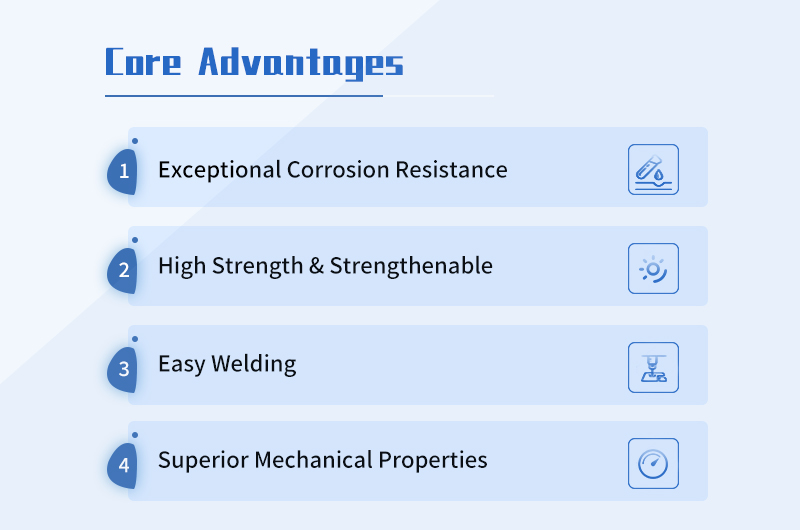
| Key Advantage | Detail |
| Elevated-Temperature Rated | ASME SB-209 approved to ~200°C — unlike 5083 (limited to ~65°C) |
| Chemical Corrosion Resistance | Superior to 5052 in chlorides, alkaline solutions, and industrial chemicals |
| SCC Resistant | Excellent stress-corrosion cracking resistance, even in welded structures |
| Weldable | TIG/MIG/resistance welding; joints retain corrosion resistance |
| Cryogenic Tough | Maintains ductility down to−196°C |
| Lightweight | Density 2.69 g/cm³ — ~65% lighter than steel |
Equivalent Designations
| AA (USA) | EN (Europe) | W.Nr (Germany) | UNS | ISO | China (GB) |
| 5454 | EN AW-5454 | 3.3537 | A95454 | AlMg3Mn | GB/T 3190 5454 |
Product Specifications
| Parameter | Details |
| Alloy | 5454 (UNS A95454 / EN AW-5454 / AlMg3Mn) |
| Tempers | O, H111, H112, H12, H14, H32, H34, H38 |
| Thickness | Sheet: 0.2–6 mm · Plate: 6–250 mm |
| Width | 1000–2650 mm |
| Length | Up to 6000 mm standard; custom cutting available (max 12 m) |
| Surface | Mill finish, anodized, sandblasted, laminated (blue / clear / B&W PE film) |
| Tolerance | Thickness: ±0.10 mm (≤3 mm) to ±0.75 mm (>20 mm); Flatness: ≤1.5 mm/m |
| Standards | ASTM B209, ASME SB-209, AMS 4025, EN 485 / 573, GB/T 3880 |
| Quality Systems | ISO 9001 / 14001, AS9100 (aerospace) |
Temper Selection Guide
Quick Comparison
| Temper | Tensile (MPa) | Yield (MPa) | Elongation (%) | Hardness (HB) | Best For |
| O | 215–285 | ≥85 | ≥14 | ~47 | Deep drawing, tank liners, cryogenic vessels |
| H111 | 215–285 | ≥85 | ≥10 | ~52 | Lightly worked structure, tanker frames |
| H32 | 250–305 | ≥180 | ≥10 | ~74 | Hull plating, offshore, truck bodies (primary temper) |
| H34 | 270–325 | ≥200 | ≥8 | ~81 | Pressure vessels, chemical reactors, heavy tankers |
| H38 | ≥290 | ≥220 | ≤5 | ≥90 | Wear-resistant decks, high-strength supports |
| H12/H14 | Intermediate | Intermediate | 6–12 | 55–70 | Industrial brackets, non-pressure piping |
Temper Details
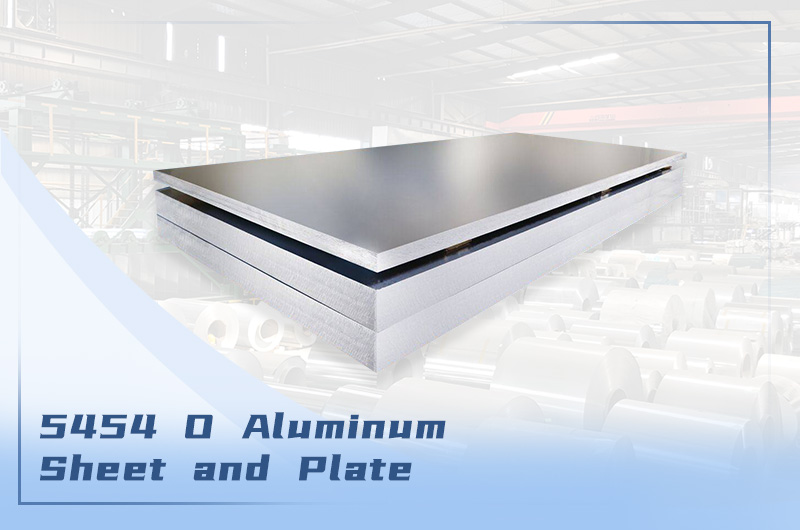
5454-O — Maximum Formability
- Highest ductility in the 5454 family — elongation ≥14%.
- Deep-drawing ratio ≥1.8; crack-free bending at tight radii.
- Uses: Complex stamped parts, tank liners, cryogenic equipment (−196°C).
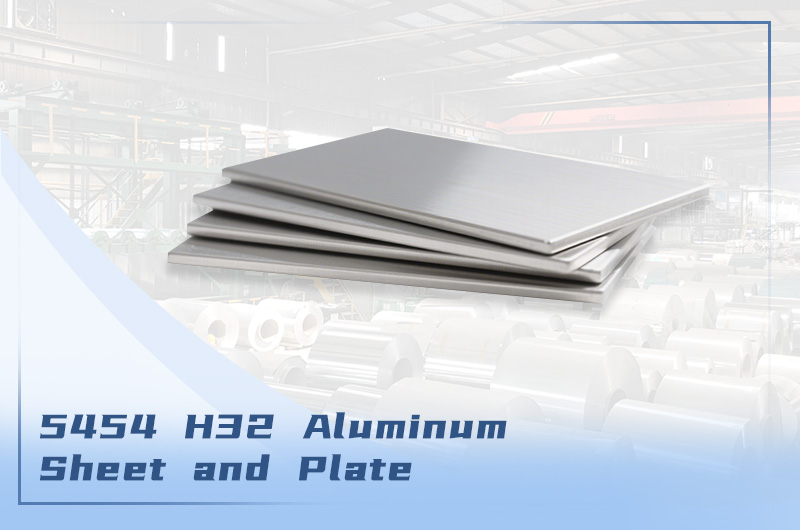
5454-H32 — Balanced Performance
- Cold-rolled + stabilized: best compromise of strength, formability, and cost.
- Primary temper for structural marine and transport applications.
- Uses: Hull plating, offshore platform decks, truck bodies, structural frameworks.
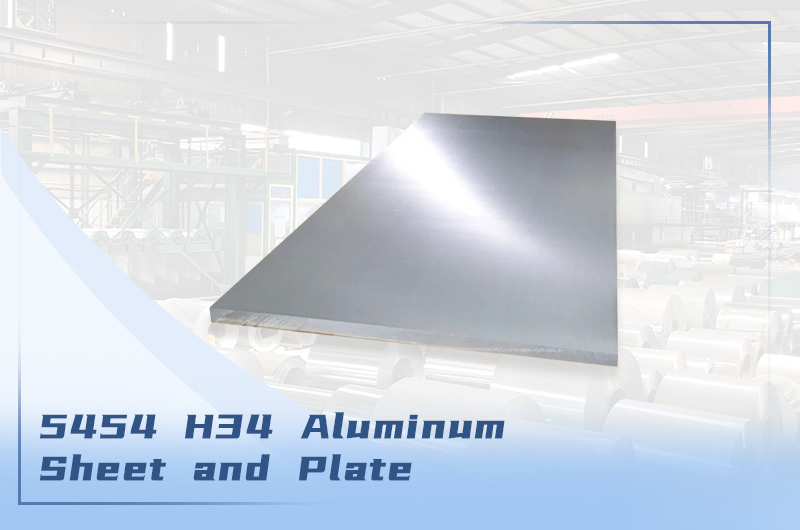
5454-H34 — Strength + SCC Resistance
- Higher cold-work than H32; optimal for welded load-bearing structures under corrosive conditions.
- ASME-rated for pressure service up to ~200°C.
- Uses: Pressure vessels, chemical reactors, LNG transport tanks, heavy-duty tanker shells.
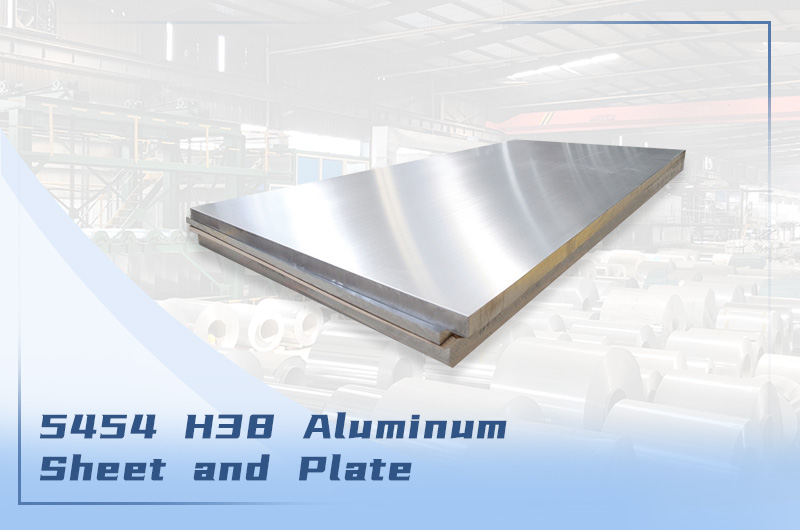
5454-H38 — Maximum Hardness
- Full hard temper — highest strength, lowest ductility.
- Uses: Wear-resistant marine decking, mechanical wear parts, high-strength structural supports.
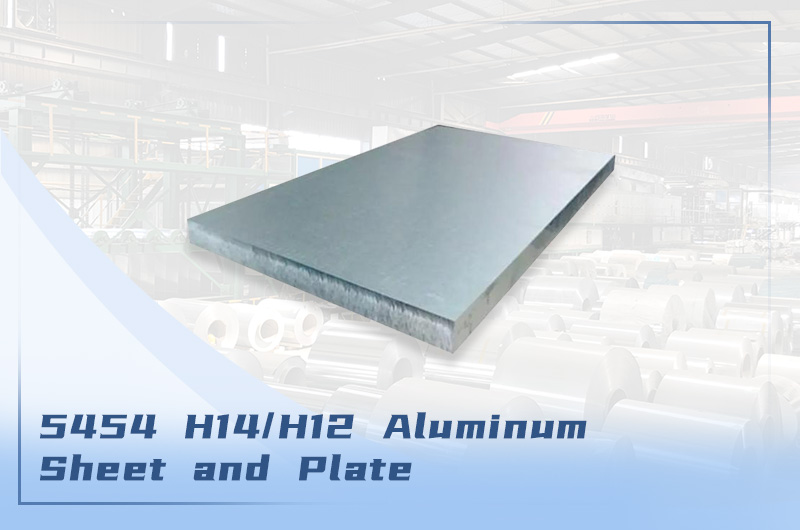
5454-H12 / H14 — Cost-Effective Mid-Range
- Strength between O and H32; versatile and economical.
- Uses: Industrial brackets, frames, non-pressure piping and tanks.
Chemical Composition (per ASTM B209)
| Element | Range (%) | Role |
| Mg | 2.4–3.0 | Primary strengthener; corrosion resistance |
| Mn | 0.50–1.0 | Grain refinement; offsets Fe impurity |
| Cr | 0.05–0.20 | Inhibits stress-corrosion cracking; enhances elevated-temp stability |
| Fe | ≤0.40 | Impurity |
| Si | ≤0.25 | Impurity |
| Cu | ≤0.10 | Strictly limited — elevated Cu promotes pitting |
| Zn | ≤0.25 | Impurity |
| Ti | ≤0.20 | Grain refiner |
| Al | Balance | Base metal |
Why Mg ≤3.0% matters: Alloys with Mg above ~3% (e.g., 5083 at 4.0–4.9%) are susceptible to β-phase (Al₃Mg₂) sensitization at sustained temperatures above ~65°C, leading to intergranular corrosion. 5454's controlled Mg range avoids this issue, making it ASME-approved for elevated-temperature pressure vessel service up to ~200°C — a critical advantage for chemical processing and hot-fluid transport.
Physical Properties
| Property | Value | Unit |
| Density | 2.69 | g/cm³ |
| Melting Range | 602–646 | °C |
| Thermal Conductivity | 134 | W/m·K (O temper) |
| Electrical Conductivity | 34 | % IACS |
| Specific Heat | 900 | J/kg·K |
| CTE (20–100°C) | 23.6 | μm/m·K |
| Elastic Modulus | 70.3 | GPa |
Mechanical Properties
| Temper | Tensile (MPa) | Yield (MPa) | Elongation (%) | Hardness (HB) |
| O | 215–285 | ≥85 | ≥14 | ~47 |
| H111 | 215–285 | ≥85 | ≥10 | ~52 |
| H32 | 250–305 | ≥180 | ≥10 | ~74 |
| H34 | 270–325 | ≥200 | ≥8 | ~81 |
| H38 | ≥290 (est.) | ≥220 (est.) | ≤5 | ≥90 |
Notes:
- Values per ASTM B209 for sheet/plate ≤6 mm; strength may decrease slightly in thicker sections.
- H38 values estimated from cold-work progression — confirm with mill test report.
- Fatigue strength: ~105 MPa at 5 × 10⁸cycles.
- Shear strength: ~150 MPa (H32).
5454 vs. Competing Alloys
5454 vs. 5052
| Property | 5454 | 5052 |
| Mg Content | 2.4–3.0% + Mn + Cr | 2.2–2.8% |
| H32 Tensile (MPa) | 250–305 | 215–265 |
| Corrosion | Superior (chemicals, elevated temp) | Excellent (general environments) |
| Max Service Temp | ~200°C (ASME) | ~150°C |
| Formability | Good | Excellent |
| Cost | Higher | Lower (most economical 5xxx) |
Choose 5454 for chemical/thermal corrosion and ASME pressure service. Choose 5052 for cost-sensitive forming with moderate corrosion needs.
5454 vs. 5754
| Property | 5454 | 5754 |
| Mg Content | 2.4–3.0% + Mn + Cr | 2.6–3.6% |
| Tensile Range (MPa) | 215–325 | 190–265 |
| Max Service Temp | ~200°C | ~100°C |
| Formability | Good | Excellent (deep drawing) |
| SCC Resistance | Superior (Cr-enhanced) | Good |
Choose 5454 for pressure vessels and elevated temperatures. Choose 5754 for deep-drawn automotive and interior parts.
5454 vs. 5083
| Property | 5454 | 5083 |
| Mg Content | 2.4–3.0% | 4.0–4.9% |
| H34 / H116 Tensile (MPa) | 270–325 | ≥303 |
| Max Service Temp | ~200°C | ~65°C (sensitization risk above) |
| SCC Resistance | Excellent (inherent) | Good (requires H116/H321 temper control) |
| Marine Certification | ASTM B209 | ASTM B928 (H116/H321 required) |
| Cost | Lower | Higher |
Choose 5083 when maximum strength and marine-class certification (B928) are required. Choose 5454 for welded pressure vessels, chemical tanks, and any application with sustained service above 65°C.
Applications
Pressure Vessels & Chemical Processing (Primary Market)
- ASME-coded vessels: Reactors, heat exchangers, storage tanks (service to ~200°C).
- Chemical tanks: Resistant to chlorides, alkaline solutions, and industrial solvents.
- LNG transport: Tanker truck tanks (cryogenic + weld integrity).
Marine & Offshore
- Hull structures: Bulkheads, decks, superstructure panels.
- Offshore platforms: Structural frames, wind tower components (salt-spray + fatigue resistance).
Heavy Transport
- Tanker trucks/trailers: ~65% lighter than steel; excellent road-salt durability.
- Container floors: H32 plate for high-load, corrosion-prone environments.
Industrial Equipment
- Food processing: Brewing vessels, cold-storage systems (non-toxic, cleaner-resistant).
- Energy: Boiler components, heat-exchanger tubing.
Construction
- Coastal infrastructure: Bridge railings, dock fittings (marine atmosphere resistance).
- Industrial facilities: Roofing, gutter systems in chemically aggressive environments.
Stock Inventory
We stock 5454-H32 sheet and plate in a full range of thicknesses. Contact us for other tempers and custom sizes.
5454-H32 Sheet
| Thickness (in / mm) | Available Sizes (mm) |
| 0.03 / 0.8 | 1250×2500 · 1500×3000 |
| 0.04 / 1.0 | 1250×2500 · 1500×3000 |
| 0.05 / 1.2 | 1250×2500 |
| 0.06 / 1.5–1.6 | 1250×2500 |
| 0.08 / 2.0 | 1250×2500 · 1500×3000 |
| 0.10 / 2.5 | 1250×2500 · 1500×3000 |
| 0.125 / 3.0 | 1250×2500 · 1500×3000 |
| 0.16 / 4.0 | 1250×2500 · 1500×3000 |
| 0.20 / 5.0 | 1250×2500 · 1500×3000 |
| 0.25 / 6.0 | 1250×2500 |
5454-H32 Plate
| Thickness (in / mm) | Available Sizes (mm) |
| 0.31 / 8.0 | 1250×2500 · 1500×3000 |
| 0.39 / 10.0 | 1250×2500 · 1500×3000 |
| 0.47 / 12.0 | 1250×2500 · 1500×3000 |
| 0.55 / 14.0 | 1250×2500 · 1500×3000 |
| 0.59 / 15.0 | 1250×2500 · 1500×3000 |
| 0.625 / 16.0 | 1250×2500 · 1500×3000 |
| Up to 3.94 / 100.0 | Custom sizes |
Standards: ASTM B209 / ASME SB-209. All material supplied with mill test reports.
Packaging & Shipping
| Layer | Protection |
| Surface | PE film + interleaving paper |
| Moisture | VCI paper + desiccant (RH <50%) |
| Edges | Plastic corners + foam strips |
| Outer | ISPM-15 fumigated wood pallets with steel straps (≤2 tons/pallet, stackable 3 high) |
| High-value | Sealed wooden crates (IPPC stamped) |
Shipping: Dry, clean 20'/40' containers; FOB / CIF / DDP available.
Pricing
FOB Price = SMM A00 Ingot Price + Processing Fee
| Advantage | Detail |
| Mill-direct processing | Competitive processing fees |
| Transparent formula | Published ingot index + fixed fee; USD / EUR / CNY |
| Rush delivery | 72-hour expedite available (5% surcharge) |
FAQ
What makes 5454 different from 5052?
5454 adds manganese (0.5–1.0%) and chromium (0.05–0.20%) to the Al-Mg base, giving it ~10–15% higher tensile strength, superior resistance to chemicals and stress-corrosion cracking (SCC), and — most importantly — ASME approval for sustained service up to ~200°C. Choose 5052 for cost-sensitive forming; choose 5454 for pressure vessels and chemical environments.
Can 5454 be used for pressure vessels?
Yes — 5454 is one of the few 5xxx alloys listed in ASME Section VIII for pressure vessel construction, with allowable service temperatures up to ~200°C. Its controlled Mg content (≤3.0%) avoids the sensitization risk that limits higher-Mg alloys like 5083 to ~65°C.
What is the density of 5454 aluminum?
2.69 g/cm³ (168 lb/ft³) — approximately 65% lighter than steel and comparable to other 5xxx-series alloys.
Is 5454 suitable for cryogenic applications?
Yes. Like all Al-Mg alloys, 5454 retains ductility and toughness down to−196°C, making it suitable for liquid nitrogen and cryogenic storage. However, its primary competitive advantage is elevated-temperature service, not cryogenics — for dedicated LNG containment, 5083-O is the industry standard.
How does 5454 compare to 5083?
5083 offers ~10–12% higher tensile strength and is the standard for marine hull plate (ASTM B928 certified). However, 5083's high Mg (4.0–4.9%) makes it susceptible to sensitization above ~65°C. 5454 is the better choice for welded tanks, chemical vessels, and any application with sustained service above 65°C.
Is 5454 weldable?
Excellent weldability with TIG, MIG, and resistance welding using ER5356 or ER5554 filler wire. Welded joints retain corrosion resistance — a key advantage for pressure vessels and chemical tanks.