


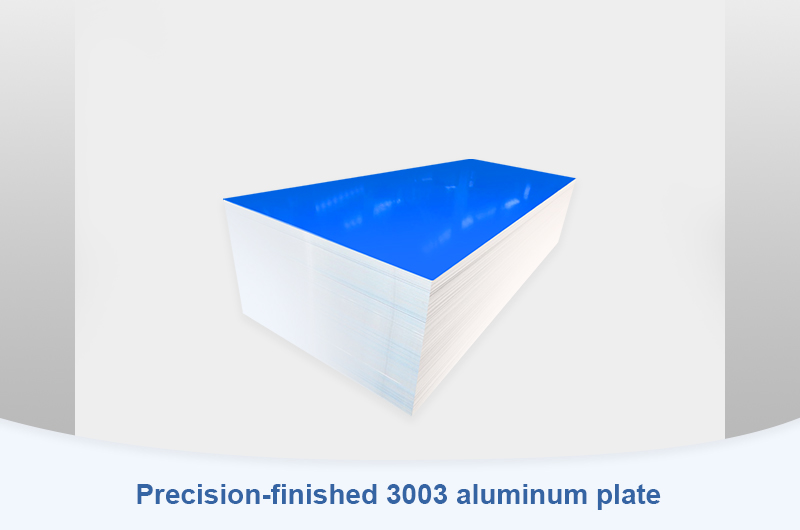
What is 3003 Aluminum Alloy? Basic Characteristics
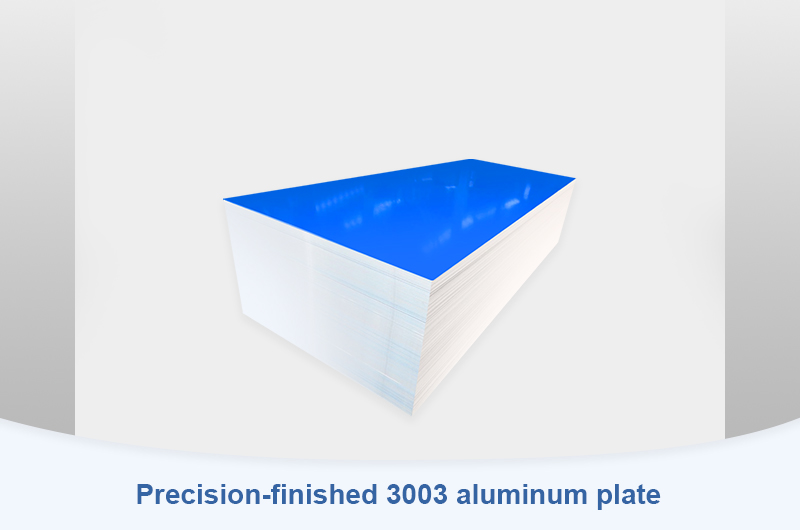
- Series: Aluminum-manganese alloy (3000 series).
- Heat Treatability: Non-heat-treatable; strengthened exclusively via cold working (e.g., rolling, drawing).
- Alias: Rust-proof aluminum (due to excellent atmospheric and moisture corrosion resistance).
Core Advantages
- Strength: ~20% higher than pure aluminum 1100 series (Tensile strength ranges from 110–160 MPa depending on temper).
- Corrosion Resistance: Excellent atmospheric and marine corrosion resistance; highly suitable for humid or chemical environments.
- Workability:
- Superior formability for deep drawing, spinning, and bending.
- Good weldability (TIG, MIG, resistance welding, and brazing).
- Compatible with anodizing, color spraying, and other surface treatments.
- Lightweight: Density: 2.73 g/cm³ (~1/3 the weight of carbon steel).
Equivalent Designations for 3003 Aluminum
| Standard System | Equivalent Grade | Common Tempers | Certification Scope |
|---|---|---|---|
| International | UNS A93003 | H14/O/H22 | ISO 209, ISO 6361 |
| USA | ASTM B209 (AA3003) | H14/O/H18 | AMS 4006/4008 (Aerospace) |
| Europe | EN AW-3003 | EN 515: H24/H14 | EN 573-3 (Composition), EN 485-2 (Properties) |
| Germany | DIN 3.0517 / AlMnCu | DIN EN 515: F25 | DIN 1725-1 (Processing) |
| Japan | JIS A3003 | JIS H4000: H24 | JIS H 4100 (Rolled Products) |
| China | GB/T 3190 3003 | GB/T 16475: H14 | GB/T 3880 (Sheet/Plate) |
| France | NF A-U3003 | NF A50-651: H14 | NF EN 573-3 |
| UK | BS 1470 3003 | BS EN 515: H14 | BS EN 573 |
| Russia | GOST АМц | ГОСТ 21631: М | ГОСТ 4784 (Aerospace) |
3003 Aluminum Sheet vs. Coil: Which Do You Need?
The chemical and mechanical properties of 3003 sheets and coils are identical. The choice depends entirely on your manufacturing process:
- 3003 Aluminum Sheet & Plate: Delivered flat. Ideal for low-volume manufacturing, architectural panels, and applications requiring extreme thickness (>6mm).
- 3003 Aluminum Coil & Strip: Delivered in continuous rolls. Perfect for high-volume automated production lines like stamping, roll forming, or HVAC fin manufacturing.
Chemical Composition of 3003 (%)
| Element | Al | Mn | Cu | Si | Fe | Zn | Others (Each) |
|---|---|---|---|---|---|---|---|
| Content | Remainder | 1.0–1.5 | 0.05–0.20 | ≤0.60 | ≤0.70 | ≤0.10 | ≤0.05 |
Physical & Mechanical Properties of 3003
| Property | Value | Unit | Test Standard | Note |
|---|---|---|---|---|
| Density | 0.098 | lb/in³ | ASTM B311 | Lightweight |
| 2.73 | g/cm³ | |||
| Melting Point | 1,190–1,210 | °F | ASTM E794 | Equivalent to 643–654°C |
| Elastic Modulus | 10,000 | ksi | ASTM E111 | Equivalent to 69 GPa |
| Shear Modulus | 3,630 | ksi | ASTM E143 | Equivalent to 25 GPa |
| Poisson's Ratio | 0.33 | – | ASTM E132 | Typical for metals |
| Brinell Hardness | 40 | HB | ASTM E10 | 500 kgf load, 10 mm ball |
| Ultimate Tensile Strength | 22,000 | psi | ASTM E8 | *H14 temper (Equivalent to 150 MPa)* |
| Yield Strength | 18,000 | psi | ASTM E8 | *H14 temper (Equivalent to ~125 MPa)* |
| Fatigue Strength | 9,000 | psi | ASTM E466 | 10⁷ cycles (62 MPa) |
| Shear Strength | 14,000 | psi | ASTM B831 | Equivalent to 96 MPa |
| Thermal Conductivity | 180 | W/(m·K) | ASTM E1461 | Measured at 25°C |
| CTE | 23.2 × 10⁻⁶ | /°C | ASTM E228 | 20–100°C range |
| Specific Heat | 900 | J/(kg·K) | ASTM E1269 | Measured at 25°C |
| Electrical Conductivity | 44 | % IACS | ASTM B193 | Annealed condition |
Aluminum Temper Characteristics Comparison
| Temper | Process Characteristics | Application Scenarios | Key Advantages |
|---|---|---|---|
| O (Annealed) | Fully softened, no cold working | Deep drawing parts, food containers, complex curved components | Optimal ductility (Elongation: 25-28%) |
| H14 (Half Hard) | Cold worked + partially annealed | Building curtain walls, battery casings, kitchenware | Balanced strength and formability |
| H18 (Full Hard) | Fully cold worked | High-hardness structural components, honeycomb panels | Maximum strength (Tensile strength ≥220 MPa) |
| H22 (Quarter Hard) | Cold worked + low-temperature annealing | Anti-slip patterned plates, industrial platforms | Excellent fatigue resistance |
| H154 (Custom) | Special cold working process | Custom requirements | Tailored strength performance |
Temper Characteristics & Mechanical Properties
| Property | 3003-O | 3003-H14 | 3003-H18 |
|---|---|---|---|
| Density | 2.73 g/cm³ | 2.73 g/cm³ | 2.73 g/cm³ |
| Tensile Strength | 95–130 MPa | 130–160 MPa | ≥220 MPa |
| Yield Strength | ~35 MPa | 115–145 MPa | ~200 MPa |
| Elongation | Up to 28% | ~8% | ~4% |
| Shear Strength | 75 MPa | 96 MPa | 110 MPa |
| Elastic Modulus | 70 GPa | 70 GPa | 70 GPa |
| Brinell Hardness | 28 HB | 40-42 HB | 55 HB |
| Melting Point | 643–654°C | 643–654°C | 643–654°C |
Note: H tempers are cold-work hardened; strength order: O < H22 < H14 < H18.
Typical Applications by Industry
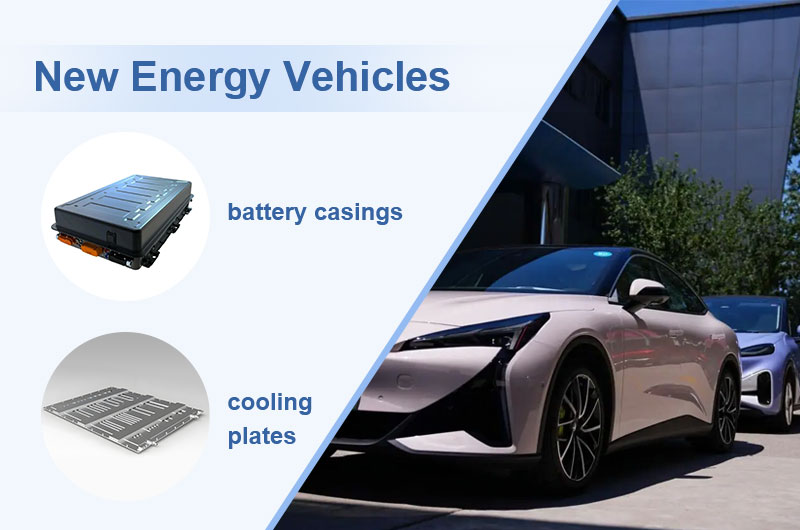
New Energy Vehicles (EVs)
- Products: Battery casings, cooling plates (3003+4343 composite coil).
- Recommended Temper: H14
- Key Advantages: Lightweight, excellent electrolyte corrosion resistance, good deep drawing.
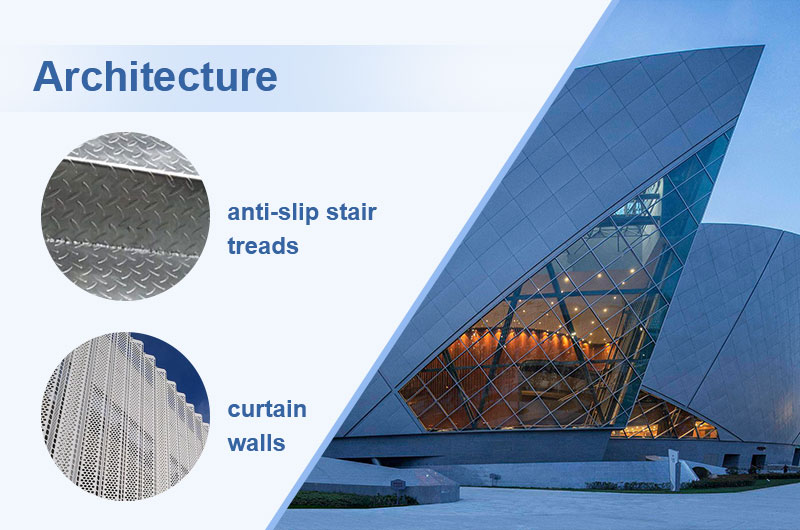
Architecture & Building
- Products: Curtain walls, roofing sheets, anti-slip stair treads.
- Recommended Temper: H22, H24, H14
- Key Advantages: Superior weather resistance, attractive aesthetics, takes PVDF coating perfectly.
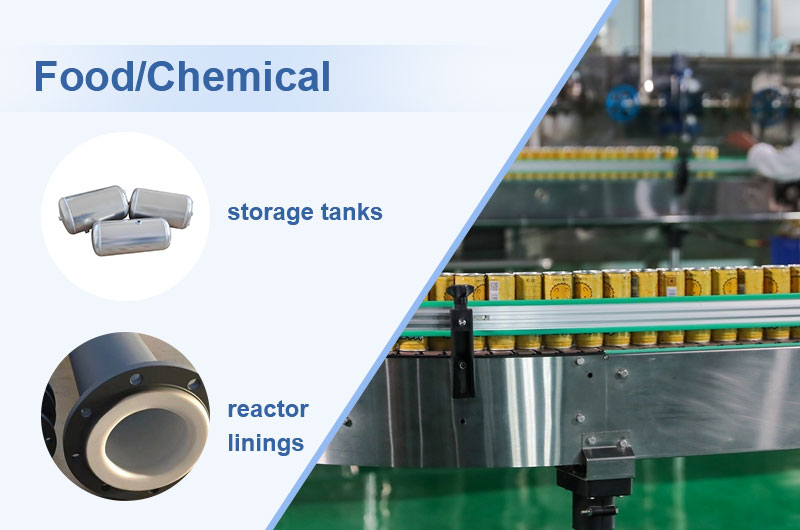
Food / Chemical Equipment
- Products: Storage tanks, piping, reactor linings.
- Recommended Temper: O (Annealed)
- Key Advantages: Non-toxic, easy cleaning, resists chemical degradation.
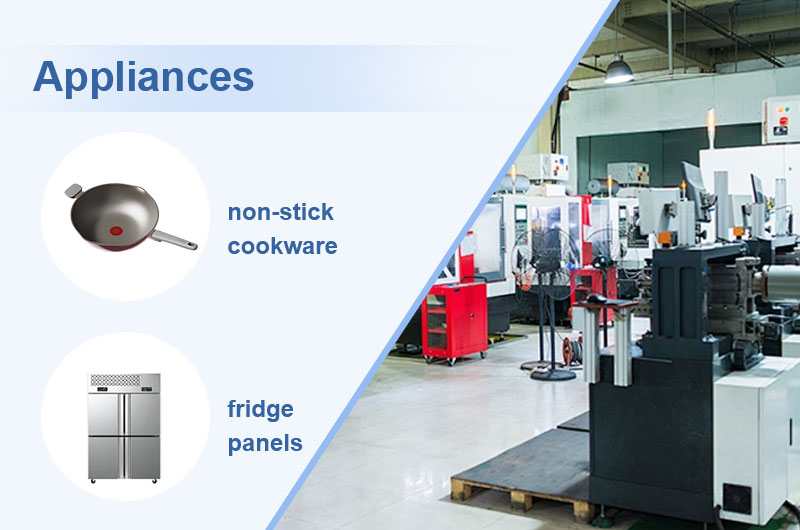
Appliances
- Products: Non-stick cookware, fridge panels, HVAC fins.
- Recommended Temper: H14
- Key Advantages: Excellent thermal conductivity, good formability.
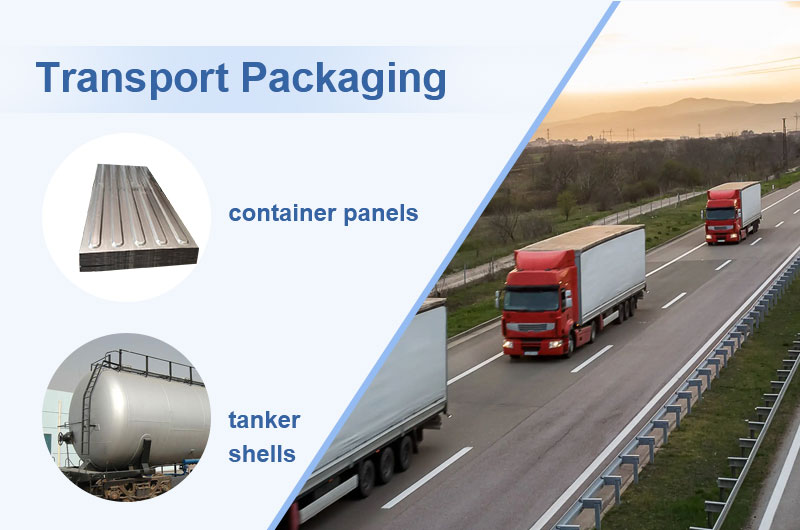
Transport & Packaging
- Products: Trailer side panels, container panels, tanker shells.
- Recommended Temper: H14, H18
- Key Advantages: High strength, good weather resistance, lightweight.
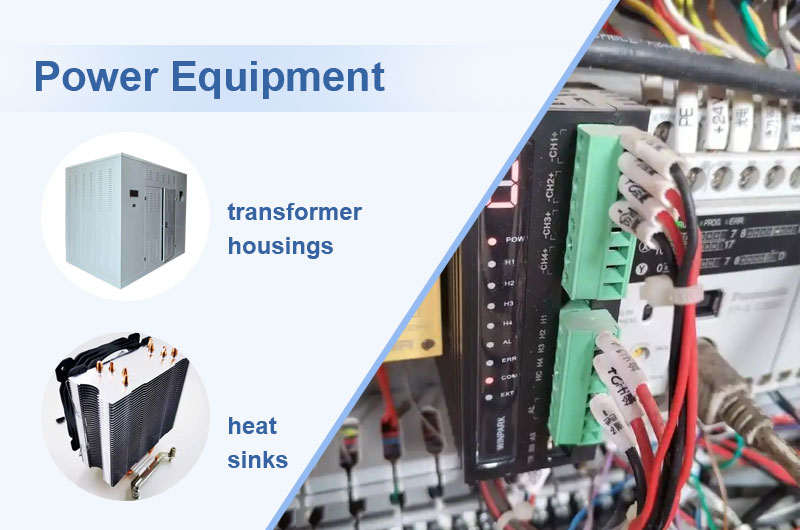
Power Equipment
- Products: Transformer housings, heat sinks.
- Recommended Temper: H18
- Key Advantages: Effective EMI shielding, efficient heat dissipation.
3003 Sheet & Plate Specifications & Stock
Standard Manufacturing Specifications
- Thickness: 0.2 mm ~ 250 mm (Sheet & Coil: ≤6 mm; Plate: >6 mm)
- Width: 150 mm ~ 2,650 mm (custom slitting available)
- Standard Sheet Sizes: 1,000 × 2,000 mm, 1,220 × 2,440 mm (4×8 ft), 1,500 × 3,000 mm (5×10 ft)
- Standards: ASTM B209, AMS 4008, EN AW-3003, DIN 3.0517
3003 Aluminum Sheet and Plate in Stock
| Thickness (in) | Size (in) | Temper | Surface Finish | Description | Action |
|---|---|---|---|---|---|
| Standard Sheets | |||||
| 0.025 | 48×96 | H14 | Mill Finish | H14 Sheet | |
| 0.032 | 48×96 | H14 | Mill Finish | H14 Sheet | |
| 0.032 | 48×96 | H154 | Mill Finish | H154 Sheet | |
| 0.040 | 48×96 | H14 | Mill Finish | H14 Sheet | |
| 0.040 | 48×96 | O | Mill Finish | O Annealed Sheet | |
| 0.050 | 48×96 | H14 | Mill Finish | H14 Sheet | |
| 0.050 | 48×96 | O | Mill Finish | O Annealed Sheet | |
| 0.063 | 48×96 | H14 | Mill Finish | H14 Sheet | |
| 0.063 | 48×96 | O | Mill Finish | O Annealed Sheet | |
| 0.080 | 60×120 | H14 | Mill Finish | H14 Sheet | |
| 0.090 | 60×120 | H14 | Mill Finish | H14 Sheet | |
| 0.090 | 60×120 | O | Mill Finish | O Annealed Sheet | |
| 0.100 | 72×144 | H14 | Mill Finish | H14 Sheet | |
| 0.125 | 72×144 | H14 | Mill Finish | 1/8" H14 Sheet | |
| 0.190 | 72×144 | H14 | Mill Finish | H14 Sheet | |
| Thick Plates | |||||
| 0.249 | 48×96 | H14 | Mill Finish | H14 Medium Plate | |
| 0.250 | 48×96 | H14 | Mill Finish | 1/4" Medium Plate | |
| 0.375 | 60×120 | H14 | Mill Finish | 3/8" Thick Plate | |
| 0.630 | 72×144 | H14 | Mill Finish | H14 X-Thick Plate | |
3003 vs Other Alloys: Which to Choose?
| Property | 3003 (H14/O) | 1100 (Pure Al) | 5052 (H32) | 6061 (T6) |
|---|---|---|---|---|
| Alloy Series | 3000 (Al-Mn) | 1000 (Pure Al) | 5000 (Al-Mg) | 6000 (Al-Mg-Si) |
| Temper | H14/O | H14/O | H32 | T6 |
| Tensile Str. (MPa) | 110–160 (H14) 95–130 (O) | 90–120 | 210–270 | 310–340 |
| Yield Str. (MPa) | ~125 (H14) ~35 (O) | ~35 | 190–230 | 275–310 |
| Elongation (%) | 8–28 (O max.) | 25–35 | 10–15 | 8–12 |
| Corrosion Resist. | Excellent (Atmosphere) | ⭐⭐⭐⭐ | ⭐⭐⭐⭐⭐ (Saltwater) | ⭐⭐⭐ (Requires coating) |
| Workability | ⭐⭐⭐⭐⭐ (Deep drawing/spinning) | ⭐⭐⭐⭐⭐ | ⭐⭐⭐ (Moderate) | ⭐⭐ (Poor, cracks easily) |
| Weldability | ⭐⭐⭐⭐ (Universal methods) | ⭐⭐⭐⭐ | ⭐⭐⭐⭐ | ⭐⭐⭐ (Special filler) |
| Anodizing Effect | ⭐⭐ (Color may vary slightly) | ⭐⭐⭐⭐ (Uniform) | ⭐⭐⭐ | ⭐⭐⭐⭐⭐ (Colorable) |
| Cost | ⭐⭐ (Economical) | ⭐ (Lowest) | ⭐⭐⭐ (Moderate) | ⭐⭐⭐⭐ (High) |
| Typical Apps. | Cookware, roofing, HVAC, tanks | Foil, chemical containers | Marine, auto panels | Structural frames, aerospace |
Processing & Treatment Guidelines
Forming Processes
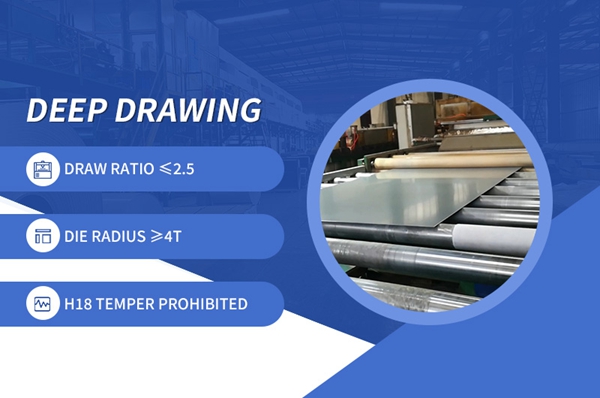
Deep Drawing
- Rec. Temper: O (Annealed)
- Key Parameters: Draw ratio ≤2.5, die radius ≥4t
- Restrictions: H18 temper prohibited due to cracking risks.
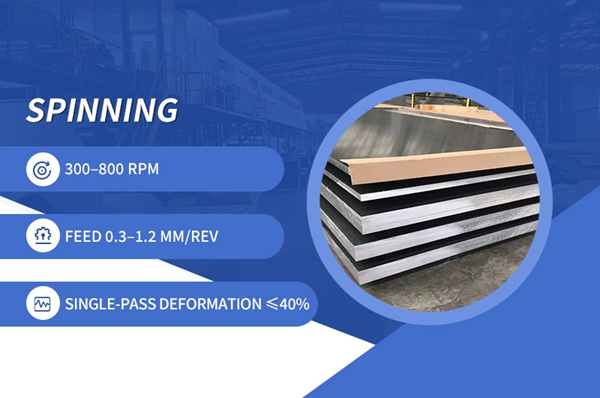
Spinning
- Rec. Temper: O / H14
- Key Parameters: 300–800 RPM, feed 0.3–1.2 mm/rev
- Restrictions: Single-pass deformation ≤40%.
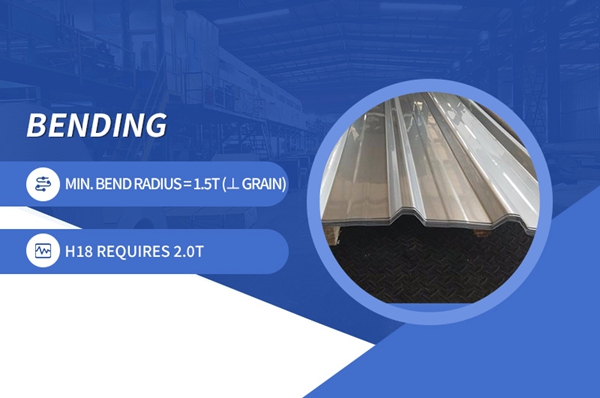
Bending / Braking
- Rec. Temper: H14 / H22
- Key Parameters: Min. bend radius = 1.5t (perpendicular to grain).
- Restrictions: H18 requires 2.0t bend radius minimum.
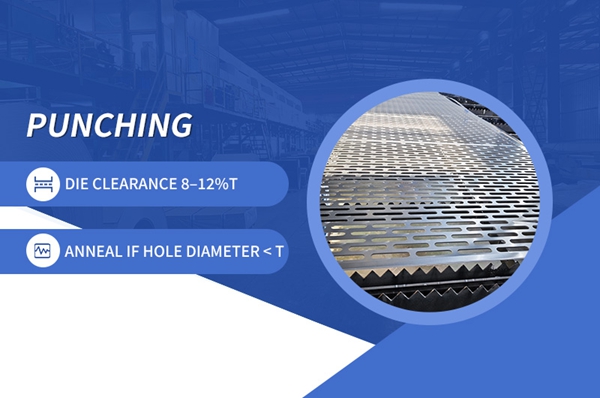
Punching & Stamping
- Rec. Temper: All (H14 provides clean cuts)
- Key Parameters: Die clearance 8–12%t.
- Restrictions: Anneal if hole diameter is smaller than material thickness.
Welding Processes
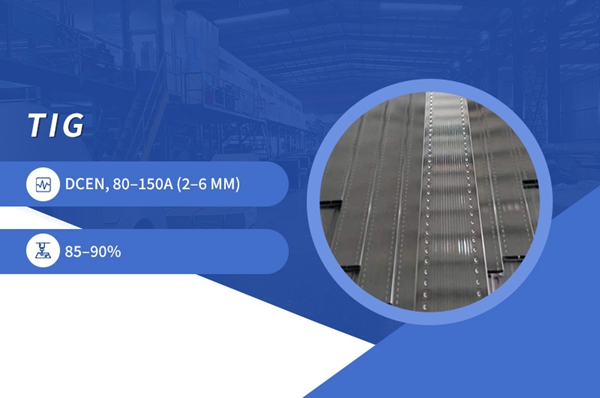
TIG Welding
- Filler Wire: ER4043 recommended.
- Parameters: DCEN, 80–150A (for 2–6 mm thickness).
- Shielding Gas: Argon (Ar) ≥99.99% purity.
- Weld Strength Retention: 85–90%.
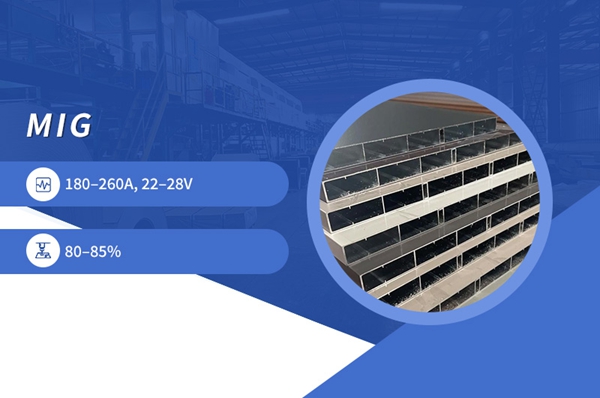
MIG Welding
- Filler Wire: ER5356 or ER4043.
- Parameters: 180–260A, 22–28V.
- Shielding Gas: Mixture of Argon + 25% Helium (for thicker plates).
- Weld Strength Retention: 80–85%.
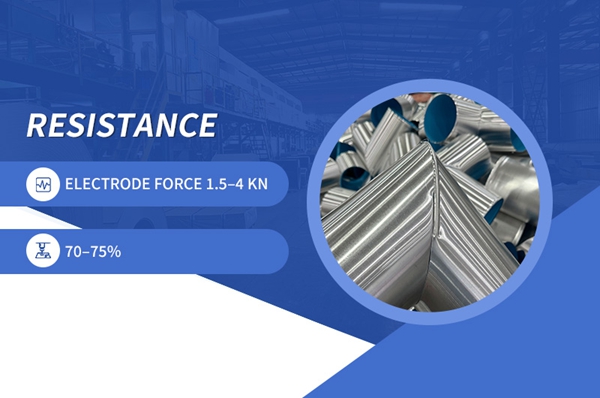
Resistance Welding
- Suitability: Excellent for 3003 sheets.
- Parameters: Electrode force of 1.5–4 kN, welding time 0.1–0.5 seconds.
- Weld Strength Retention: 70–75%.
Surface Treatment
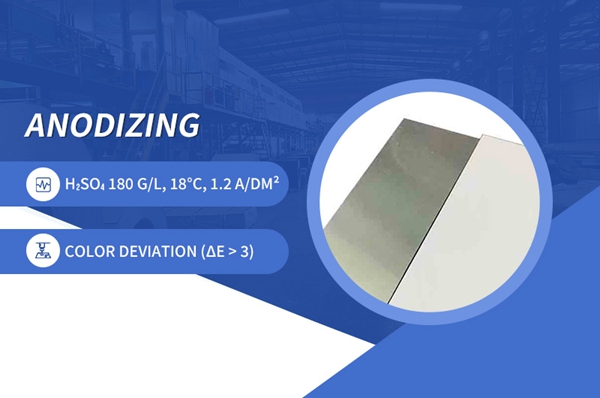
Anodizing
- Key Parameters: H₂SO₄ concentration 180 g/L, temperature 18°C, current density 1.2 A/dm².
- Note: Due to Manganese content, anodized color may appear slightly grayish compared to 1100 series.
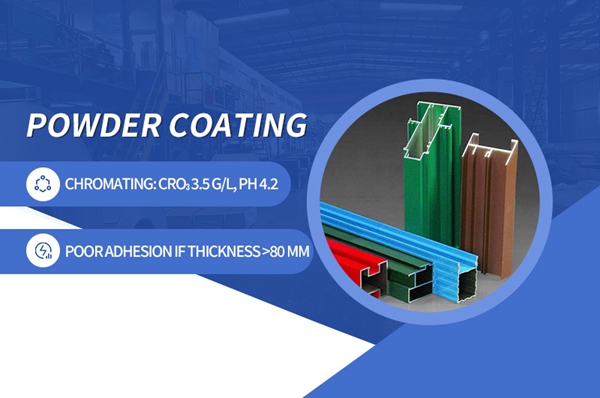
Powder & PVDF Coating
- Pre-treatment: Chromating process ensures strong adhesion.
- Result: Excellent adhesion for architectural color-coated aluminum coils.
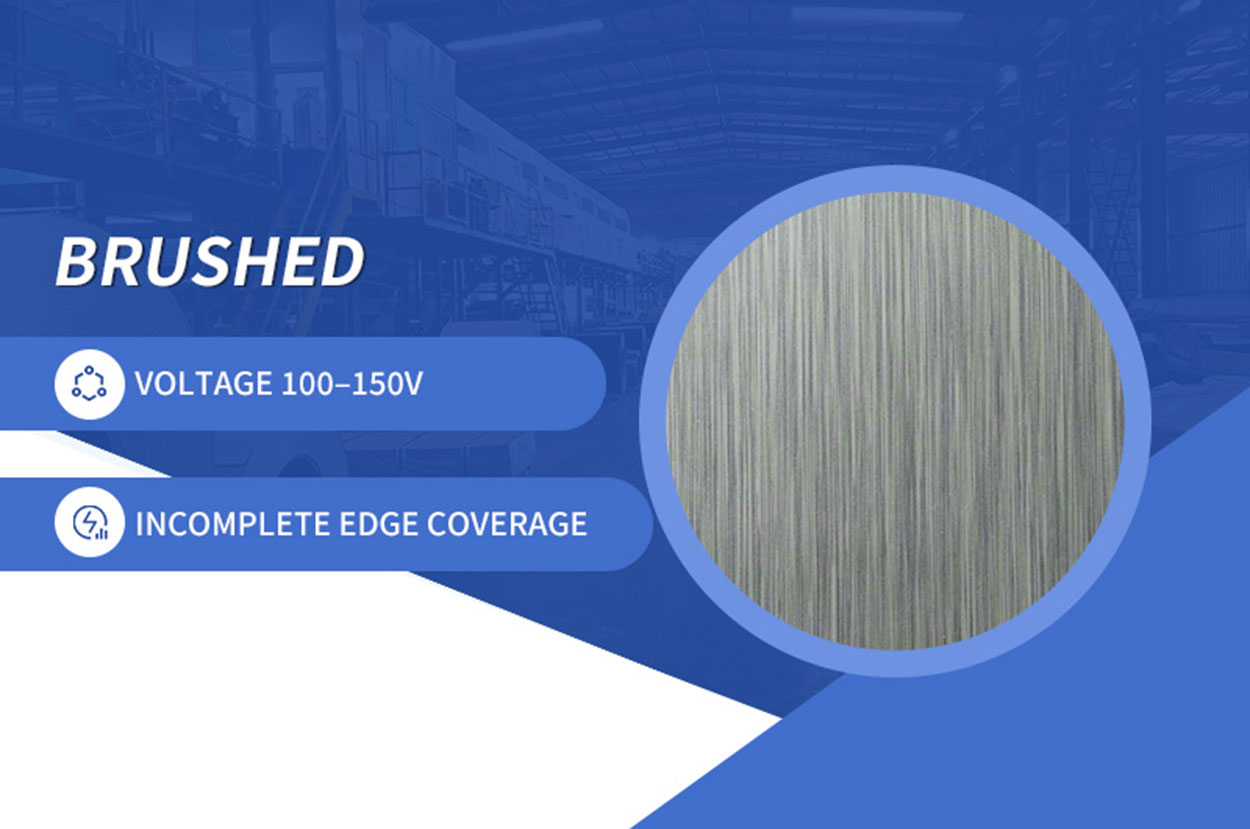
Brushed Finish
- Process: Professional and efficient surface brushing equipment.
- Application: Widely used in appliances and decorative interior panels.
Specialized 3003 Product Types
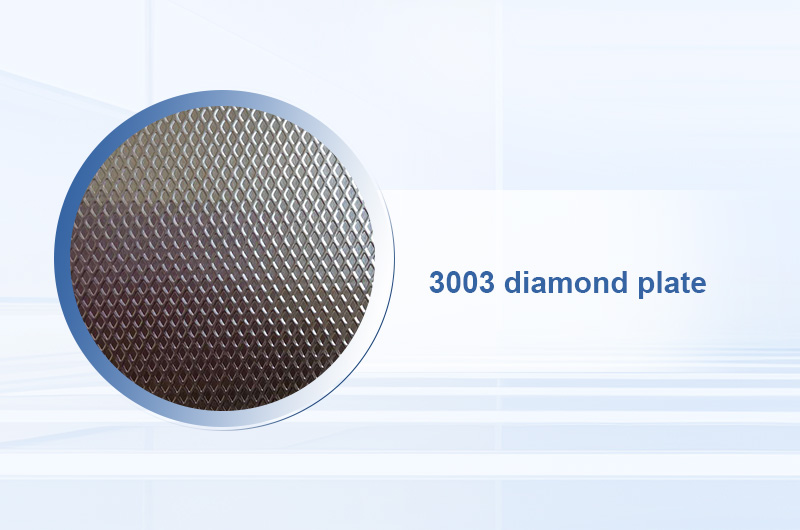
3003 Aluminum Diamond Plate (Tread Plate)
- Base Alloy: 3003-H22/H24
- Thickness: 1.5–10 mm
- Width: 1,000–1,500 mm (custom ≤2,500 mm)
- Length: 2,000–6,000 mm (Std: 1,220×2,440 mm)
- Pattern: Diamond, 5-bar (0.8–1.5 mm height)
- Slip Resistance: Class A (Ideal for stairs and trailers)
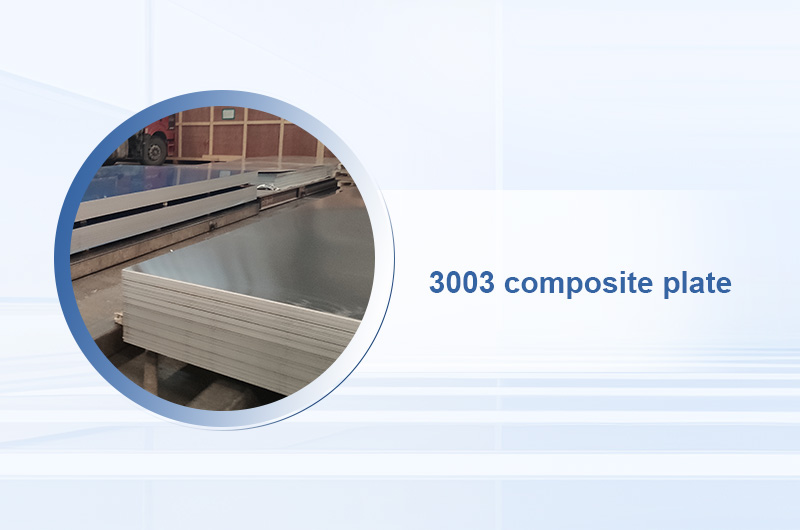
3003 Brazing Clad Plate & Coil
- Type: 3003 core clad with 4343 or 4045 brazing alloys.
- Clad Ratio: 8% – 15%
- Thickness: 0.3–6.0mm (Common: 0.5/0.8/1.0 mm)
- Brazing Temp.: 575–620°C.
- Applications: Automotive radiators, HVAC heat exchangers.
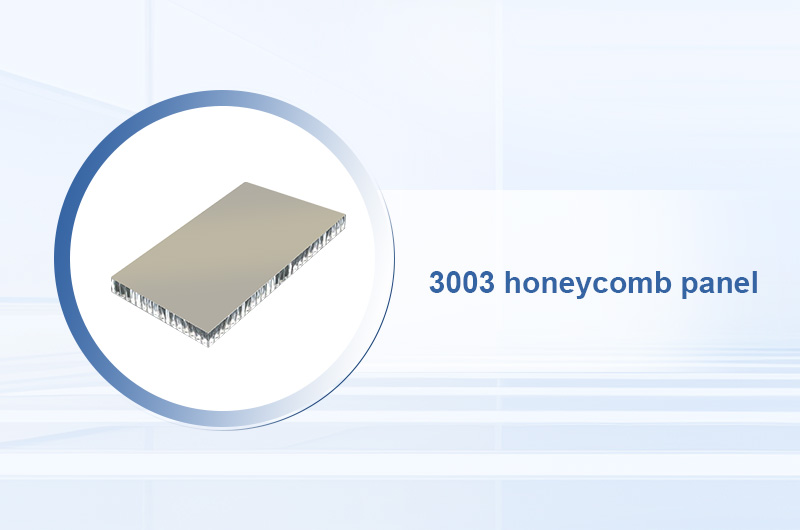
3003 Honeycomb Panel & Foil
- Front and Back Sheet: 3003-H18 / H24
- Core Foil: 0.04 - 0.05 mm 3003 aluminum foil
- Properties: Density ~3.8 kg/m², extremely high compressive strength.
- Surface Treatment: Anodized, Mill Finished, Mirror.
- Applications: Aircraft interiors, architectural partitions.
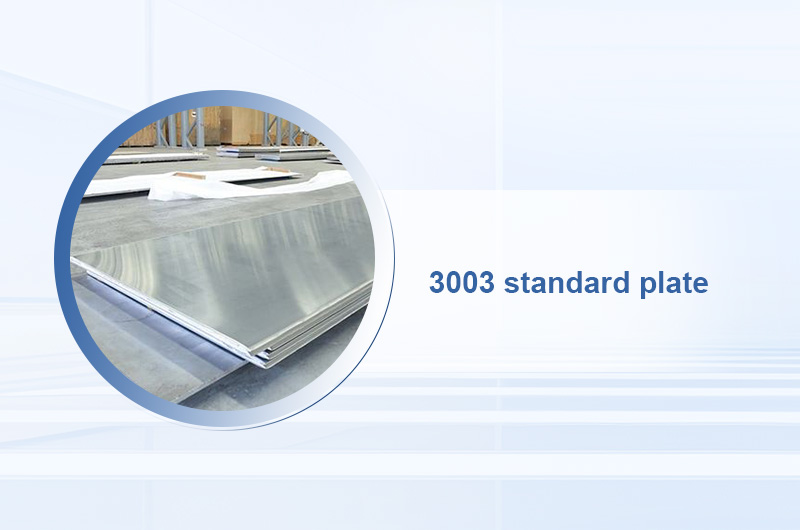
PVDF/PE Color Coated Aluminum Coil & Sheet
- Alloy: 3003
- Coating: PVDF or PE (20–30 μm)
- Performance: QUV aging ≥2,000 hrs, anti-fading, ΔE ≤1.5.
- Applications: Architectural curtain walls, ACP panels, roofing.
Worthwill Quality Control System
Key QC Checkpoints for our sheets and coils:
| Stage | Parameter | Test Method | Standard |
|---|---|---|---|
| Raw Material | Al ≥98.0%, Mn: 1.0–1.5% | ICP-OES | Impurities tightly controlled |
| Melting/Casting | H₂ content ≤0.12 ml/100g | Vacuum test | ASTM E2791 |
| Hot Rolling | Final rolling temp: 300±10°C | IR thermometer | Prevent Mn segregation |
| Annealing | O temper: 415°C × 3h | Thermocouple | ±5°C tolerance |
| Surface Quality | Defect area ≤0.01% | AI visual inspection | Scratches ≤3μm deep, ≤10mm long |
| Mechanical Props. | H14 UTS: 130–160 MPa | Universal tester | ASTM E8 |
Certifications: ISO 9001, IATF 16949 (Automotive), AS9100 (Aerospace).
Export Logistics & Packaging
| Packaging Type | Product Format | Protection Method |
|---|---|---|
| Fumigated Wooden Pallets | Sheets / Plates | Interleaved with PE film + wrapped in anti-rust craft paper. |
| Steel Coil Racks (Eye to Sky/Wall) | Aluminum Coils | Wrapped securely with VCI (vapor corrosion inhibitor) materials. |
| Vacuum Packaging | Precision Foil | Sealed with desiccant + O₂ indicator to prevent moisture. |
Customization Services
We offer specialized manufacturing for non-standard requirements:
- Ultra-thin plates and foil (0.04–0.5 mm)
- Ultra-thick plates (up to 150 mm)
- Ultra-wide coils and plates (up to 2,650 mm)
- Oversized structural plates (e.g., 6 m × 20 m)
- Custom coil slitting and cut-to-length services.
Frequently Asked Questions (FAQs)
1. What is the difference between 3003 and 5052 aluminum?
3003 is more workable and economical, ideal for deep drawing and standard environments. 5052 is significantly stronger and offers superior resistance to saltwater, making it better for marine applications.
2. Is 3003 aluminum easy to bend?
Yes, 3003 aluminum has excellent formability. For tight 90-degree bends without cracking, the O (annealed) or H14 (half-hard) tempers are highly recommended.
3. Can 3003 aluminum sheet be anodized?
Yes, it can be anodized to increase corrosion resistance. However, due to its manganese content, the resulting finish may have a slight yellowish or grayish tint rather than a clear finish.
4. Do you offer custom cut sizes for 3003 coils and plates?
Yes, we provide custom slitting for coils (down to narrow strips) and cut-to-length services for flat plates up to 2,650 mm wide and 20 meters long.