


What is 6082 Aluminum Alloy?
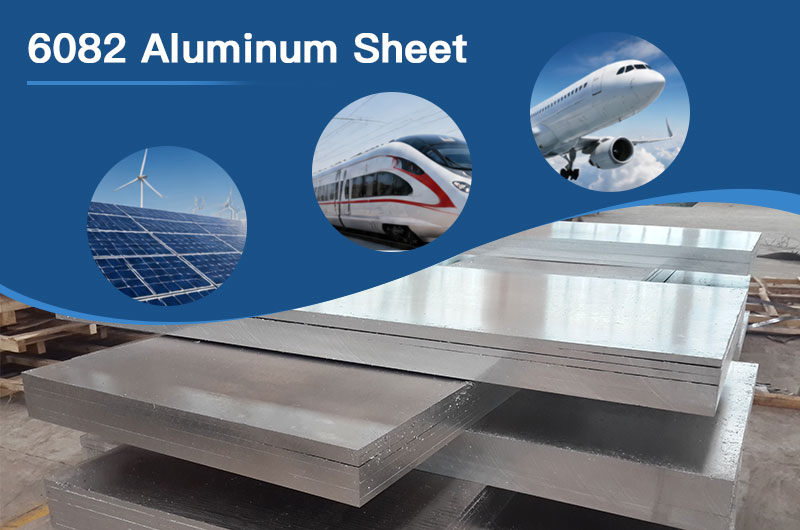
6082 aluminum alloy is a heat-treatable wrought aluminum alloy in the 6000 series (Al-Mg-Si series) with the most outstanding comprehensive properties. Its standard grade was established in 1972. It is the highest-strength alloy in the 6000 series, and the industry defines it as a "structural-grade aluminum alloy."
6082 has partially replaced 6061 to become the mainstream choice for structural engineering. Globally, there is a massive demand for it in heavy-duty fields such as transportation, bridge construction, marine engineering, and machinery manufacturing.
International Grade Comparison
| Standard System | Grade |
|---|---|
| China GB | 6082 |
| US AA | AA6082 / A96082 |
| Europe EN | EN AW-6082 |
| ISO | AlSi1MgMn |
| Germany DIN | 3.2315 |
| UK BS | HE30 / HP30 / HS30 |
| France NF | A-SGM0.7 |
| UNS | UNS A96082 |
Detailed Chemical Composition of 6082 Aluminum Alloy
The chemical composition of 6082 aluminum alloy strictly follows international standards such as GB/T 3190-2020 (China), ASTM B209-2023 (USA), and EN 573-3 (Europe). The regulations for the composition are highly consistent across these major standards.
| Element | Min (%) | Max (%) | Metallurgical Function |
|---|---|---|---|
| Si (Silicon) | 0.70 | 1.30 | Synergizes with Mg to form the Mg₂Si strengthening phase, enhancing strength |
| Mg (Magnesium) | 0.60 | 1.20 | Primary solid solution strengthening element, promoting heat-treatment strengthening |
| Mn (Manganese) | 0.40 | 1.00 | Refines grain, raises recrystallization temperature, enhances corrosion resistance |
| Fe (Iron) | — | 0.50 | Controls the amount of intermetallic compounds |
| Cr (Chromium) | — | 0.25 | Enhances stress corrosion resistance |
| Cu (Copper) | — | 0.10 | Low content design to inhibit galvanic corrosion |
| Zn (Zinc) | — | 0.20 | Impurity control |
| Ti (Titanium) | — | 0.10 | Refines casting grain |
| Al (Aluminum) | 95.2 | 98.3 | Base element |
| Others (Each) | — | 0.05 | — |
| Others (Total) | — | 0.15 | — |
Core Logic of Composition Design: Si and Mg form the Mg₂Si phase to provide high strength; the high Mn content (0.40–1.00%, far exceeding that of 6061) ensures superior grain control and corrosion resistance; while the low Cu design (≤0.10%) effectively prevents electrochemical corrosion.
Core Performance Parameters of 6082 Aluminum Plate
Physical Properties
| Performance Parameter | Value | Unit |
|---|---|---|
| Density | 2.70–2.71 | g/cm³ |
| Solidus Temperature | 580 | °C |
| Liquidus Temperature | 650 | °C |
| Elastic Modulus | 69–70 | GPa |
| Shear Modulus | 26 | GPa |
| Poisson's Ratio | 0.33 | — |
| Coefficient of Thermal Expansion | 23–24 | μm/m·K |
| Thermal Conductivity | 160–180 | W/m·K |
| Thermal Diffusivity | 67 | mm²/s |
| Specific Heat Capacity | 896–900 | J/kg·K |
| Latent Heat of Fusion | 410 | J/g |
| Electrical Conductivity (T6 Temper) | 42 | % IACS |
| Max Operating Temperature | 170 | °C |
T6 Temper Mechanical Properties (Classified by Product Form and Size)
T6 is the most mainstream supply temper for 6082 aluminum plates. It is worth noting that under the same temper, mechanical properties vary depending on the product form and size. When purchasing, the performance standards for the corresponding specifications must be verified.
Sheet/Plate (BS EN 485-2:2008)
| Thickness Range | Tensile Strength (MPa) | Yield Strength (MPa) | Elongation (%) | Hardness (HB) |
|---|---|---|---|---|
| 0.4–6 mm (Sheet/Coil) | ≥310 | ≥260 | — | 94 |
| 6–12.5 mm | ≥300 | ≥255 | ≥9 | 91 |
| 12.5–100 mm | ≥295 | ≥240 | — | 89 |
| 100–150 mm | ≥275 | ≥240 | ≥6 | 84 |
Bar/Rod (BS EN 755-2:2008)
| Diameter Range | Tensile Strength (MPa) | Yield Strength (MPa) | Elongation (%) | Hardness (HB) |
|---|---|---|---|---|
| ≤20 mm | ≥295 | ≥250 | ≥8 | 95 |
| 20–150 mm | ≥310 | ≥260 | ≥8 | 95 |
| 150–200 mm | ≥280 | ≥240 | ≥6 | 95 |
| 200–250 mm | ≥270 | ≥200 | ≥6 | 95 |
Tube/Pipe (BS EN 755-2:2008)
| Wall Thickness | Tensile Strength (MPa) | Yield Strength (MPa) | Elongation (%) | Hardness (HB) |
|---|---|---|---|---|
| ≤5 mm | ≥290 | ≥250 | ≥8 | 95 |
| 5–25 mm | ≥310 | ≥260 | ≥10 | 95 |
Fatigue Strength and Shear Strength
In engineering design, fatigue strength and shear strength are often more decisive than tensile strength, especially for structural parts subjected to dynamic loads or shear forces.
| Temper | Fatigue Strength (MPa) | Shear Strength (MPa) | Application Scenarios |
|---|---|---|---|
| O | 91 | 84 | Forming processes |
| T4 | 66 | 140 | Transitional forming |
| T5 | 130 | 180 | Extruded profiles |
| T6 | 95 | 220 | Structural engineering |
| T651 | 94 | 190 | Precision machining |
| T6511 | 95 | 220 | High-strength extrusions |
The shear strength of T6 and T6511 tempers reaches up to 220 MPa, demonstrating outstanding advantages in connecting components and fastening structures subjected to transverse loads.
Detailed Guide to 6082 Aluminum Plate Tempers and Selection
6082 aluminum alloy has 12 heat-treatment tempers in total. Different tempers achieve a different balance among strength, ductility, and residual stress, covering all needs from soft-state forming to ultra-high-strength structures.
Full Temper Mechanical Properties Comparison
| Temper | Tensile Strength (MPa) | Yield Strength (MPa) | Elongation (%) | Hardness (HB) | Fatigue Strength (MPa) |
|---|---|---|---|---|---|
| O | 140 | 85 | 18 | 40 | 91 |
| H111 | 140 | 95 | 16 | — | 81 |
| T4 | 230 | 120 | 16 | 58 | 66 |
| T42 | 230 | 110 | 15 | 57 | 55 |
| T451 | 230 | 120 | 15 | 58 | 64 |
| T5 | 300 | 260 | 9.0 | — | 130 |
| T6 | 330 | 270 | 9.8 | 93 | 95 |
| T61 | 310 | 220 | 9.1 | 82 | 88 |
| T62 | 310 | 270 | 7.9 | 91 | 100 |
| T651 | 320 | 270 | 6.3 | 91 | 94 |
| T6151 | 310 | 230 | 9.0 | 82 | 91 |
| T6511 | 340 | 320 | 13 | 95 | 95 |
T6511 is the highest strength temper among all 6082 states. The tensile strength reaches 340 MPa, and the yield strength is 320 MPa, while maintaining a good elongation of 13%. It is designed specifically for extruded bars and profiles.
Methods of Achieving Tempers and Application Scenarios
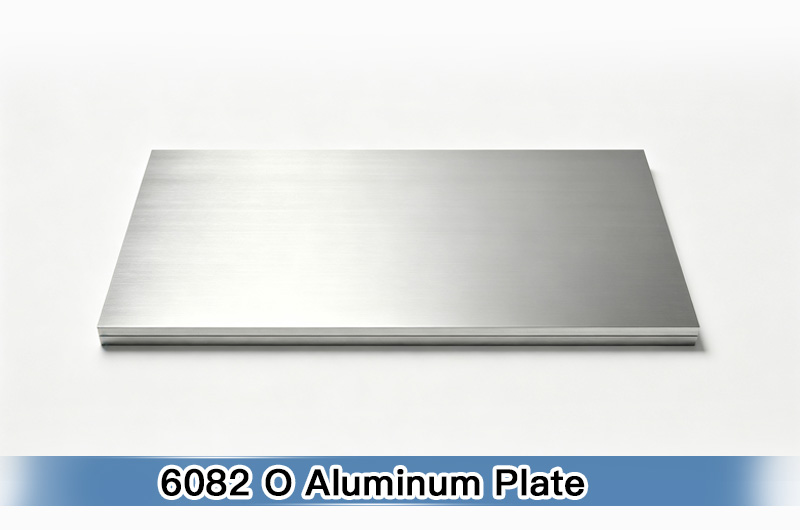
6082-O Aluminum Plate
Fully annealed temper, highest elongation (18%), best ductility, lowest hardness (40 HB). Suitable for subsequent forming processing scenarios that require extensive bending, stamping, and deep drawing.
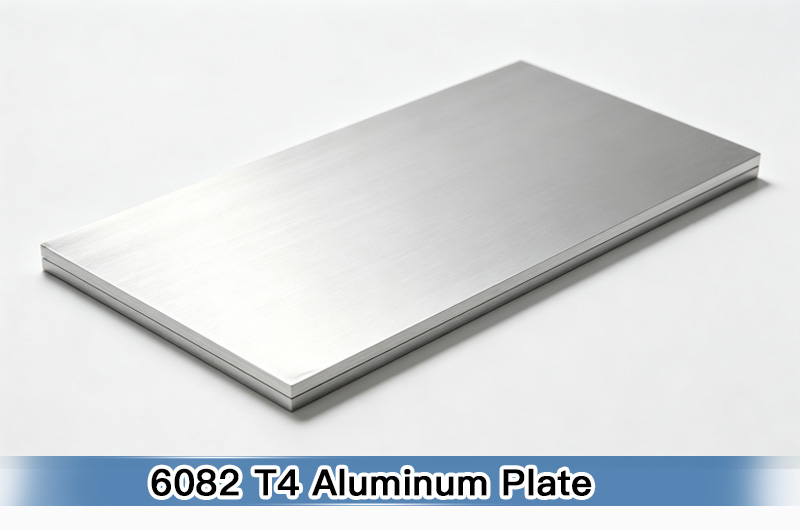
6082-T4 Aluminum Plate
Solution heat treatment + natural aging temper, possessing a balance of good formability and moderate strength. Suitable for parts that require further bending or stamping, and it is also the intermediate state for T6 reprocessing.
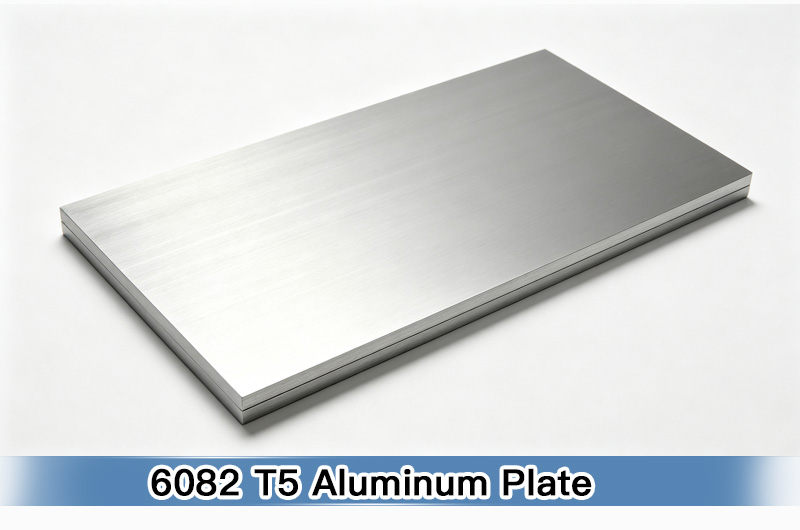
6082-T5 Aluminum Plate
Direct artificial aging after extrusion, skipping the solution quenching step. Fatigue strength reaches up to 130 MPa, and machinability is excellent. Suitable for extruded profile structural parts that are cost-sensitive and have moderate strength requirements.
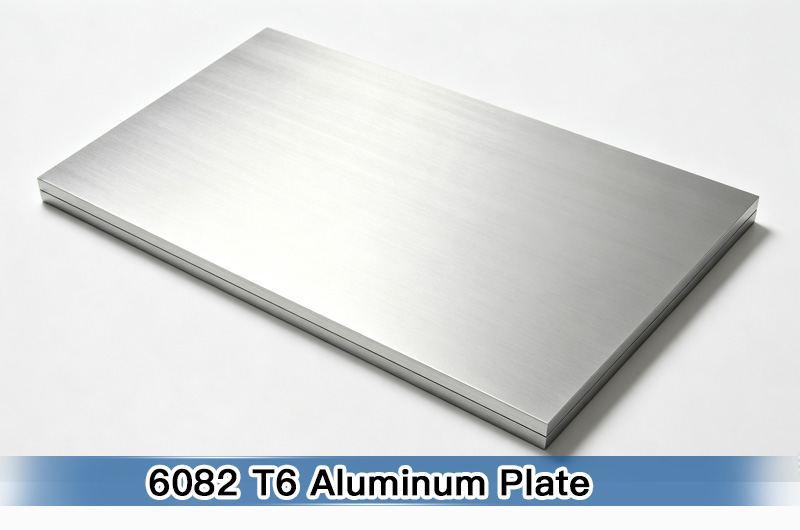
6082-T6 Aluminum Plate
Solution heat treatment + artificial aging temper, the most commonly used engineering temper, with the most balanced comprehensive mechanical properties. Tensile strength ≥310 MPa, shear strength 220 MPa. Suitable for the vast majority of engineering applications such as bridges, cranes, and marine structural frames.
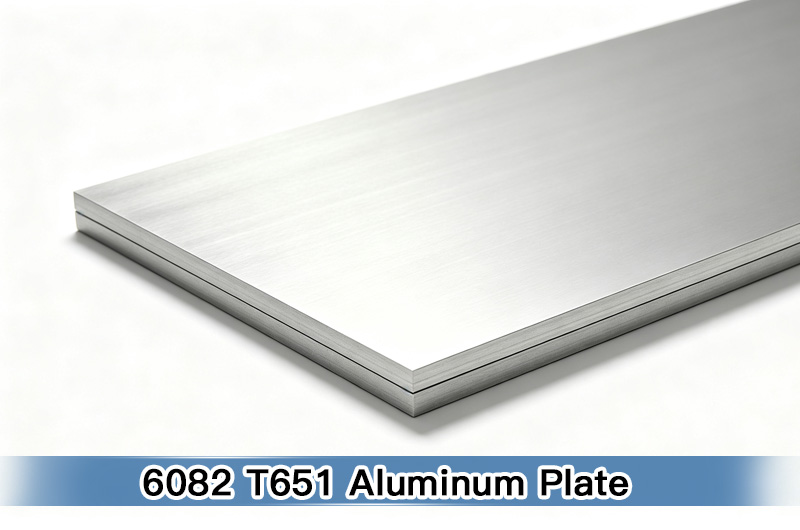
6082-T651 Aluminum Plate
Solution heat treatment + stress-relieving by stretching + artificial aging. Based on T6, internal stress is eliminated through stretching, resulting in optimal dimensional stability, with slightly lower elongation (6.3%). It is the premier choice temper for precision machined parts, mold base plates, and aerospace structural parts, effectively avoiding machining distortion.
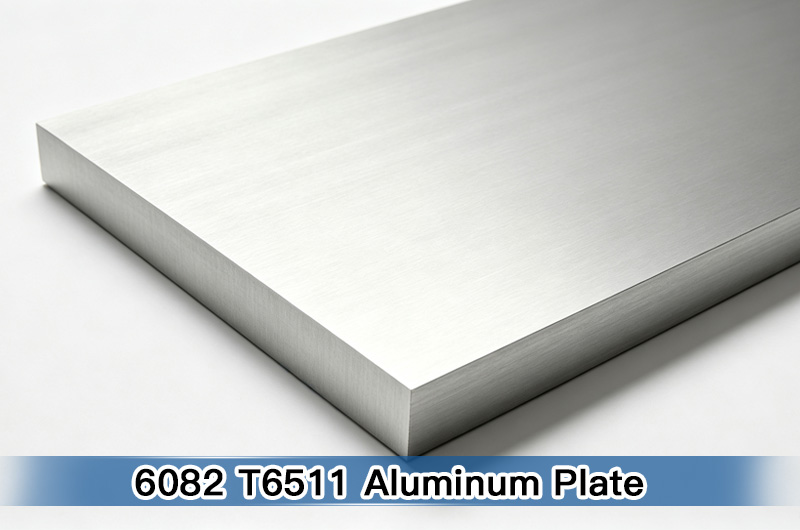
6082-T6511 Aluminum Plate
Solution heat treatment + stress-relieving by stretching + artificial aging + straightening. The highest strength temper of 6082 (340 MPa), dedicated to extruded tubes and profiles. Suitable for heavy-duty structural profiles requiring extremely high strength.
Temper Selection Decision Guide
| Requirement Scenario | Recommended Temper | Core Reason |
|---|---|---|
| Subsequent bending/stamping forming | O or T4 | Best ductility |
| General structural engineering | T6 | Most balanced strength and ductility |
| Precision machining / Relieving internal stress | T651 | Optimal dimensional stability |
| High-strength extruded profiles | T6511 | Highest strength |
| Cost optimization for extruded parts | T5 | Skips the solution treatment process |
6082 vs 6061 Aluminum Plate: Core Differences Comparison
Both 6082 and 6061 belong to the Al-Mg-Si alloy series, with a composition similarity as high as 99%, but key differences dictate entirely different application scenarios.
Core Composition Differences: The Key is Mn
| Element | 6082 | 6061 | Significance of Difference |
|---|---|---|---|
| Mn | 0.40–1.00% | ≤0.15% | 6082 is far higher than 6061, resulting in finer grain, and superior strength and corrosion resistance |
| Si | 0.70–1.30% | 0.40–0.80% | 6082 has higher silicon content, with a stronger strengthening effect |
| Cu | ≤0.10% | 0.15–0.40% | 6061 has higher copper content, resulting in slightly better machinability |
The massive gap in Mn content is the fundamental reason 6082 surpasses 6061. High Mn content effectively controls the grain structure, endowing 6082 with higher strength and superior corrosion resistance.
Key Performance Comparison
| Comparison Dimension | 6082 | 6061 | Conclusion |
|---|---|---|---|
| Tensile Strength-T6 (MPa) | 330 | 310 | 6082 is 6.5% higher |
| Tensile Strength-T6511 (MPa) | 340 | 290 | 6082 is 17.2% higher |
| Yield Strength-T6511 (MPa) | 320 | 270 | 6082 is 18.5% higher |
| Welding Coefficient | 0.92 | 0.85 | 6082 is superior |
| Seawater Corrosion Rate (mm/y) | 0.02 | 0.03 | 6082 has a longer lifespan |
| Machinability | Good | Better | 6061 is slightly superior |
| Complex Profile Extrusion | Harder | Easier | 6061 is slightly superior |
| European Market Acceptance | Mainstream | Less common | 6082 is mainstream |
Selection Advice
- Choose 6082: Heavy-duty structures, marine & offshore, high-strength extruded profiles, and targeting the European market.
- Choose 6061: Complex cross-section extrusions, general machined parts, and targeting the North American market.
For a comprehensive and in-depth comparison of the two alloys, please refer to our feature article: 6082 vs 6061 Aluminum Alloy: How to Choose the Most Suitable Aluminum Alloy for You?
6082 Aluminum Plate Specifications and Supply Forms
Plate Specification System
Worthwill provides a complete range of 6082 aluminum plate specifications covering ultra-thin to ultra-thick.
| Product Type | Thickness Range | Width Range | Max Length |
|---|---|---|---|
| Sheet | 0.2–8 mm | 1000–1500 mm | Customized |
| Plate | 8–120 mm | 1000–3000 mm | 20 m |
| Thick Plate | 120–250 mm | 1000–3800 mm | Customized |
| Ultra-wide Plate | 8–250 mm | Up to 3800 mm | Customized |
Common Stock Specifications (T6/T651)
| Thickness | Standard Dimensions |
|---|---|
| 4–8 mm | 1250×2500 mm, 1500×3000 mm |
| 10–25 mm | 1250×2500 mm, 1500×3000 mm |
| 30–60 mm | 1250×2500 mm, 1500×3000 mm |
| 70–100 mm | 1250×2500 mm, 1500×3000 mm |
Other Supply Forms
- Bar/Rod: Hot extruded bar (Φ30–400 mm, length ≤12 m); Cold drawn fine bar (Φ10–150 mm, dimensional tolerance h7 grade, straightness ≤0.3 mm/m)
- Tube/Pipe: Spun seamless tube (Φ50–800 mm × 3–40 mm, wall thickness tolerance ±5%); Laser welded tube (Φ30–600 mm × 1–12 mm, weld joint coefficient ≥0.95)
- Profiles: Square bar, square tube, rectangular tube, channel steel (shape), T-profile, equal angle aluminum, unequal angle aluminum, flat bar
- Strip/Coil: Dedicated for automotive structural parts, thickness 1.0–4.0 mm, width 800–2000 mm, IATF 16949 certified, forming limit FLD₀=0.45
Available Tempers and Applicable Product Forms
| Temper | Applicable Product Forms | Main Characteristics |
|---|---|---|
| O | Sheet, Strip/Coil | Best formability, highest ductility |
| T4 | Plate/Sheet, Bar, Extruded Tube | Balance of formability and strength |
| T6 | Plate/Sheet, Bar, Tube, Profile | Most common, balanced high strength |
| T651 | Thick plate, Precision machined plate | Eliminates internal stress, dimensionally stable |
| T6511 | Extruded bar, tube, profile | Highest strength temper |
Surface Treatment Options
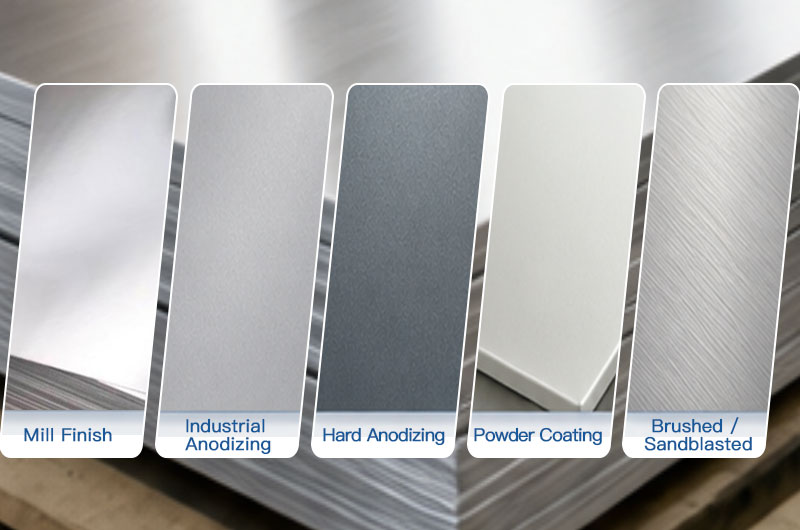
Worthwill can provide a variety of surface treatment supporting services to meet the needs of different application scenarios.
| Surface Treatment | Characteristics | Application Scenarios |
|---|---|---|
| Mill Finish | Natural oxide layer, basic anti-corrosion | General industrial parts |
| Industrial Anodizing | Hard oxide layer, wear and corrosion resistant | Structural parts, machinery parts |
| Hard Anodizing | Thicker oxide layer (25–50 μm) | Heavy industry, wear-resistant parts |
| Powder Coating | Dual effect of aesthetics + anti-corrosion | Architectural components |
| Brushed / Sandblasted | Uniform matte texture | Decorative structural parts |
Execution Standards
| Standard System | Standard Number |
|---|---|
| China GB | GB/T 3190-2020, GB/T 3880 |
| US ASTM | ASTM B209-2023, ASTM B221 |
| Europe EN | EN 485-2, EN 573-3, EN 755-2 |
| UK BS | BS L113 (T6 Plate), BS L115 (T651 Thick Plate), BS HP30 |
| ISO | ISO 6361 |
| UNS | UNS A96082 |
Production Process and Quality Assurance
The final performance of 6082 aluminum plate depends largely on the strictness of the production process. During the production process of 6082 aluminum plate, Worthwill implements strict process control standards in every key link from melting to finished product shipment.
Two Main Forming Processes
6082 aluminum plate is mainly produced through hot rolling + cold rolling processes, treated separately according to thickness requirements:
- Hot Rolled Plate (usually above 6 mm): Uniform internal structure, suitable for medium and thick plate production; it is the main supply form for bridge components, mold base plates, and structural plates.
- Cold Rolled Sheet (usually below 8 mm): Further thinned on the basis of hot rolling, with higher surface finish and better dimensional accuracy; suitable for sheet applications requiring high surface quality.
Heat Treatment: The Key to Performance
Before leaving the factory, 6082 aluminum plate must undergo a strict heat treatment process to meet the mechanical performance standards corresponding to T6, T651, and other tempers.
The core steps of heat treatment are solution treatment + quenching + aging. Among them, the quenching link is particularly critical for 6082—6082 has a high quench sensitivity, so a water quenching process must be adopted to ensure rapid cooling, which is the only way to ensure the final product meets the standard required tensile strength and yield strength.
This is also a link where buyers need to emphatically verify the supplier's process capability during procurement: if the quenching process is not up to standard, product strength cannot be guaranteed.
Quality Control Standards
| Inspection Item | Control Standard |
|---|---|
| Chemical Composition | Checked per furnace by spectrometer, complies with GB/T 3190-2020 |
| Mechanical Properties | Full testing of tensile, yield, and elongation |
| Flatness | ≤1.2 mm/m |
| Ultrasonic Flaw Detection | GB/T 6519 Class A |
| Coarse Grain Layer | ≤1.0 mm |
| Factory Documents | Complete Mill Certificate |
Every batch of 6082 aluminum plate must pass the above inspections before leaving the factory, accompanied by a complete Mill Certificate to ensure the performance data of every piece of plate is traceable.
Processing Performance
Welding Performance
- Methods: Excellent MIG/TIG weldability.
- Filler Wires: 4043 (for 6082–6082) or 5356 (for 6082–7005).
- Design Warning: HAZ strength drops 40–50%; factor into load-bearing safety margins.
- Advanced Tech: Laser-MIG hybrid welding effectively reduces porosity to <0.1% and refines microstructures.
Machinability
Machinability is good in T5 and T6 tempers. Using chip breakers can produce tight chip curls, making chip management easier. Compared to 6061, 6082 has a slightly higher hardness, so cutting parameters need to be optimized to control tool wear.
Surface Treatment
| Treatment Method | Characteristics | Application Scenarios |
|---|---|---|
| Anodizing | Forms a dense oxide layer, enhances wear and corrosion resistance | Industrial structural parts |
| Hard Anodizing | Thicker oxide layer | Heavy industry parts |
| Powder Coating / Painting | Balances aesthetics and anti-corrosion | Architectural exterior components |
| Electroplating | Enhances surface hardness | High wear resistance occasions |
Note: The decorative anodizing effect of 6082 is not as good as 6060/6063. For high-finish decorative needs, evaluating other alloys is recommended.
Overall Processing Performance Rating
| Process | Rating |
|---|---|
| Cold Working | Good |
| Machining (CNC) | Good |
| Gas Welding | Good |
| Arc Welding (MIG/TIG) | Good |
| Resistance Welding | Good |
| Brazing | Good |
| Soldering | Good |
Main Application Areas
Transportation
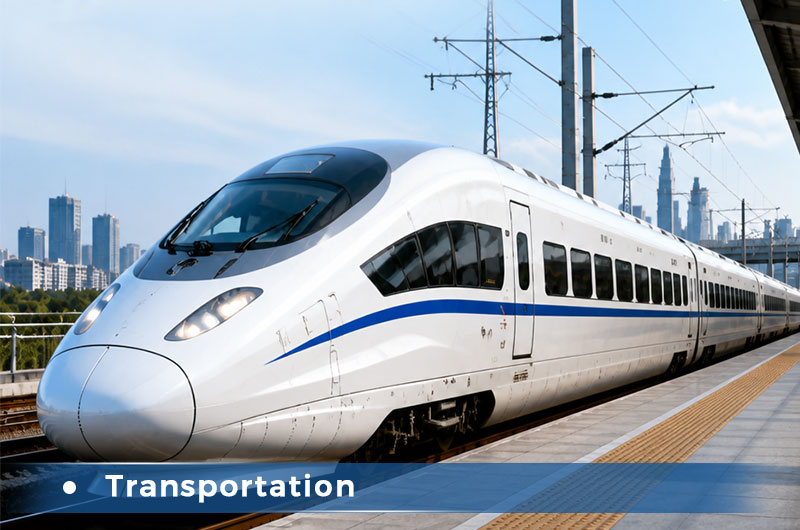
6082 is ideal for high-speed rail structures, utilizing Friction Stir Welding (FSW) for premium joints. Its exceptional corrosion resistance (passing 5000-hour salt spray tests) makes it the preferred material for high-speed ships and offshore platforms.
Construction and Infrastructure
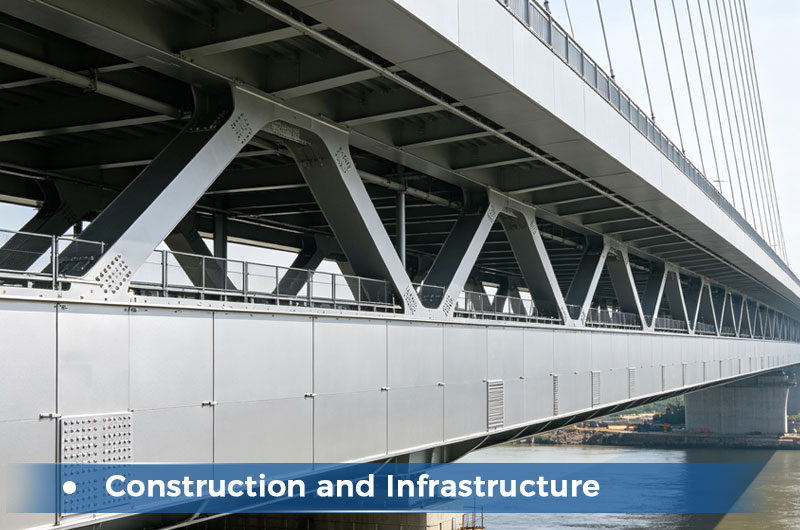
Bridge main components, crane booms, roof trusses, and scaffolding systems—these high-stress scenarios are the core market for 6082. A high strength-to-weight ratio means that under the same load-bearing capacity, the structural dead weight is lighter, and foundation loads are smaller.
Aerospace and Defense
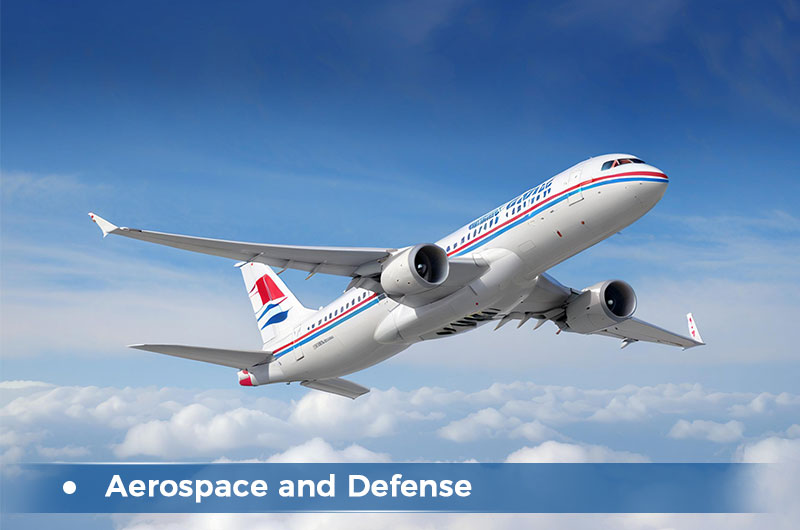
6082 is used for aircraft landing gear pads, aviation fixtures, and helicopter structural parts. Its high strength and excellent corrosion resistance also make it suitable for military equipment structural frames and protective components.
Machinery and Heavy Industry
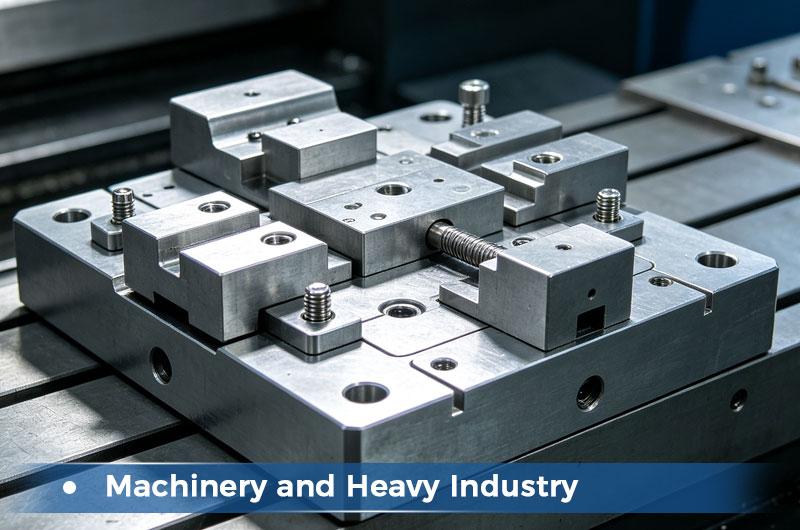
Hydraulic system components, mold base plates, precision jigs and fixtures, mining tippers—the dimensional stability of the T651 temper makes it the premier choice for precision machining occasions.

New Energy and Electronics
In EV battery boxes, 6082 replaces steel due to its high strength-to-weight ratio and precise weldability (pulse MIG deformation <0.8°). For electronics, a 170–180 W/m·K thermal conductivity ensures exceptional heat dissipation.
Application Quick Reference
| Industry | Typical Applications | Recommended Temper |
|---|---|---|
| Rail Transit | High-speed rail bodies, light rail structural parts | T6 / T651 |
| Marine Engineering | Decks, high-speed ship components | T6 |
| Bridge Construction | Bridge main components | T6 / T651 |
| Lifting Equipment | Crane booms, mining tippers | T6 |
| Aerospace | Landing gear pads, fuselage supports | T651 |
| Automotive Industry | Truck frames, battery boxes | T6 |
| Machinery Manufacturing | Hydraulic parts, mold base plates | T651 |
| Construction Structures | Roof frames, scaffolding | T6 |
Practical Purchasing Guide
Weight Calculation
Before purchasing aluminum plates, accurately estimating the weight is the first step in controlling costs.
Quick calculation formula: Aluminum plate weight (kg) = 0.00271 × Thickness (mm) × Width (mm) × Length (mm)
For quick calculation, you can use our online tool: 6082 Aluminum Plate Weight Calculator
Delivery Cycle Reference
| Specification Type | Reference Delivery Cycle |
|---|---|
| In-stock Standard Specs (T6/T651) | 3–7 working days |
| Custom Sizes (Cutting) | 7–15 working days |
| Non-standard Tempers / Special Specs | 15–30 working days |
| Ultra-thick Plates (>120 mm) | 30–45 working days |
Quality Acceptance Points
- Visual Inspection: The plate surface should be flat (flatness ≤1.2 mm/m), with no scratches, bubbles, or oxidation spots on the surface, and edges should be cut neatly without burrs.
- Mill Certificate Verification: The Mill Certificate must state the heat number, measured chemical composition values (Mn should be in the 0.40–1.00% range), mechanical property test values, and execution standards. If data is missing or has obvious deviations, re-testing must be requested.
- Temper Quick Verification: T6 temper hardness is about 90–95 HB, which can be verified on-site using a portable hardness tester; chemical composition can be detected within 5 minutes using a handheld XRF spectrometer.
- Large-volume Purchasing: For first-time cooperating suppliers, it is recommended to commission third-party organizations like SGS or BV to conduct full mechanical property testing, and proceed with bulk purchasing only after confirming they meet the standards.
Packaging and Storage
- Packaging: PVC protective film (50–80 μm) + wooden pallets or wooden crates, to prevent scratches and corrosion during transportation.
- Storage: Store indoors in a dry and ventilated place, stack horizontally, and avoid contact with acid, alkali, and salt media. Clean using neutral detergents; strong alkaline detergents are strictly prohibited.
Horizontal Positioning with Other Series of Aluminum Alloys
| Series | Representative Grade | Strength | Corrosion Resistance | Weldability | Typical Scenarios |
|---|---|---|---|---|---|
| 5 Series | 5083 aluminum sheet | Medium | Excellent | Excellent | Deep-sea ships, cryogenic storage tanks |
| 6 Series | 6082 | Medium-High | Excellent | Excellent | Structural engineering, transportation |
| 7 Series | 7075 aluminum plate | Extremely High | Poorer | Harder | Aerospace, high-end sports equipment |
Common Purchasing Misunderstandings
- Misunderstanding 1: All T6 tempers have the same performance. The tensile strength of thick plates (100–150 mm) in T6 is only ≥275 MPa, which is far lower than the ≥310 MPa of thin sheets (0.4–6 mm). Performance indicators must be confirmed separately when purchasing thick specifications.
- Misunderstanding 2: T651 is an upgraded version of T6. The elongation of T651 (6.3%) is lower than T6 (9.8%), making it unsuitable for occasions requiring impact absorption capability. Selection should be based on actual working conditions.
- Misunderstanding 3: Ignoring the parking effect. If the parking time from solution treatment to aging exceeds 6 hours, it will lead to a significant drop in strength. When purchasing, you should inquire about the supplier's production timing control measures.
How to Choose a Reliable 6082 Aluminum Plate Supplier
- Quality Certification Verification
- A reliable supplier should hold basic certifications such as ISO 9001, ISO 14001, and OHSAS 18001. Aerospace-grade products require AS9100, Nadcap HT, and Nadcap NDT certifications; automotive supporting parts require IATF 16949 certification. Every batch of goods must provide a complete Mill Certificate.
- Production and Testing Capabilities
- Premium suppliers should possess full-process production capabilities, equipped with complete testing equipment such as spectrometers, tensile testing machines, hardness testers, and ultrasonic flaw detectors (GB/T 6519 Class A). It is recommended to request to see the original test reports or entrust third-party verification.
- Purchasing Notes
- Confirm that execution standards match the requirements; the T651 temper needs clarification on the stress-relief stretching process; request samples for inspection before large-batch procurement; inquire about packaging protection and transportation insurance terms.
- Price Influencing Factors
- The LME aluminum ingot price constitutes the base cost. Heat treatment temper, plate thickness, purchase volume, and custom complexity will all affect the final quotation. The international reference price for standard extruded materials is approximately $4.50–$6.50/kg (FOB China reference), with actual prices subject to inquiry.
Frequently Asked Questions (FAQ)
- Q1: What is the difference between 6082-T6 and T651?
- T6 is solution heat treatment followed by artificial aging; T651 adds a stress-relief stretching procedure based on T6, resulting in lower residual stress, better dimensional stability, and slightly lower elongation (6.3% vs 9.8%). It is the premier choice for precision machining and large structural parts.
- Q2: How should I choose between 6082 and 6061 aluminum plate?
- If you need higher strength (in the T6511 temper, 6082 is about 17% higher than 6061), better corrosion resistance, and are targeting the European market, choose 6082. If you need complex cross-section extrusion, better machinability, and are targeting the North American market, choose 6061.
- Q3: Can 6082 aluminum plate be welded? How is the strength after welding?
- Yes, both MIG and TIG are applicable. 4043 welding wire is recommended. The strength of the welding heat-affected zone will decrease by 40–50%. This must be incorporated into the safety coefficient when designing load-bearing structures. If necessary, conduct heat treatment after welding to partially restore the strength.
- Q4: Which temper of 6082 has the highest strength?
- The T6511 temper has the highest strength, with a tensile strength of 340 MPa and a yield strength of 320 MPa, while also reaching a 13% elongation. It is suitable for extruded bars and profiles.
- Q5: Is 6082 aluminum plate suitable for anodizing?
- It is suitable for industrial-grade anodizing, which can significantly enhance corrosion resistance and wear resistance. However, the decorative anodizing effect is not as good as 6060/6063. For high-finish decorative needs, it is recommended to confirm in advance.
- Q6: What is the maximum operating temperature of 6082 aluminum plate?
- The recommended maximum operating temperature is 170°C. Exceeding this temperature will cause a significant decline in mechanical properties, making it unsuitable for continuous high-temperature working conditions.
Conclusion
Relying on its three core advantages—the highest strength in the 6000 series, excellent corrosion resistance, and comprehensive processing compatibility—6082 aluminum plate has become one of the most recognized aluminum alloy materials in the global engineering structural field. From bridges to ships, and from high-speed railways to new energy vehicles, the applications of 6082 aluminum plate are becoming increasingly widespread.
Henan Worthwill Industry Co., Ltd. (Worthwill) provides complete specification coverage of 6082 aluminum plates (thickness 0.2–250 mm, maximum width 3800 mm), supports multiple tempers including O/T4/T6/T651/T6511, produces and inspects strictly in accordance with international standards such as GB/T, ASTM, and EN, and provides complete Mill Certificates and professional technical support.
Welcome to contact Worthwill to obtain quotations and technical data. We promise to respond to your inquiry needs within 24 hours.