


What is 1070 Aluminum?
1070 aluminum belongs to the 1xxx series of industrial pure aluminum, featuring aminimum aluminum purity of 99.7%. It was first registered by the Aluminum Association (AA) in 1954.
Thanks to its extreme purity and minimal trace impurities, 1070 aluminum delivers outstanding performance inelectrical conductivity, thermal conductivity, corrosion resistance, and formability. However, this high purity also means it has lower strength and cannot be strengthened via heat treatment—a fundamental premise to understand when selecting this alloy.
Worthwill supplies 1070 aluminum in three primary forms:Sheet/Plate, Coil, and Strip, covering a full range of tempers from O to H18. We support both standard inventory and custom fabrication to meet the precise material needs of the electrical, chemical, thermal management, packaging, and architectural decoration industries.
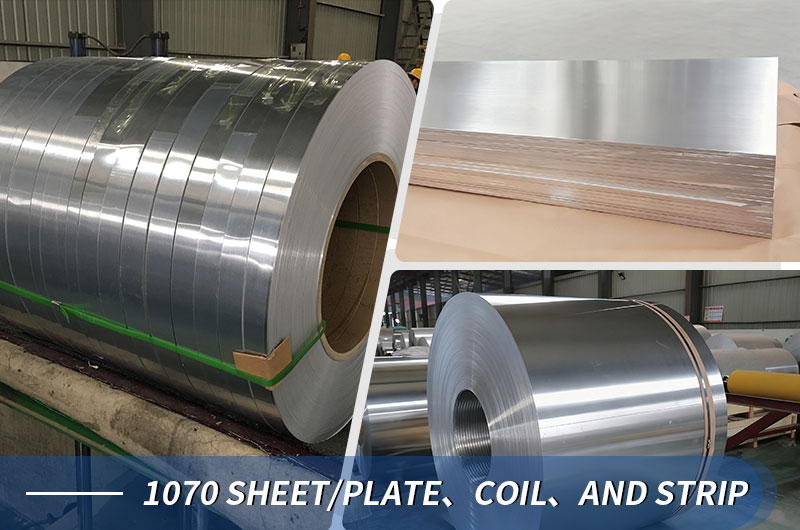
1070 Aluminum Sheet & Plate
Delivered as flat rectangular pieces after
hot or cold rolling, leveling, and shearing. By industry convention,
thicknesses ≤6.0mm are referred to as Sheet, while >6.0mm are called Plate.
This is a "ready-to-use" form—perfect for immediate blanking,
stamping, bending, or welding. It is ideal for projects with smaller batches
but diverse specification requirements.
- Alloy:1070 / 1070A
- Tempers:O, H12, H14, H16, H18, H22, H24, H26, H112
- Thickness:0.2 – 260 mm
- Width:100 – 2650 mm
- Length:500 – 12000 mm (Cut-to-length available)
- Standards:GB/T 3880, ASTM B209, EN 485
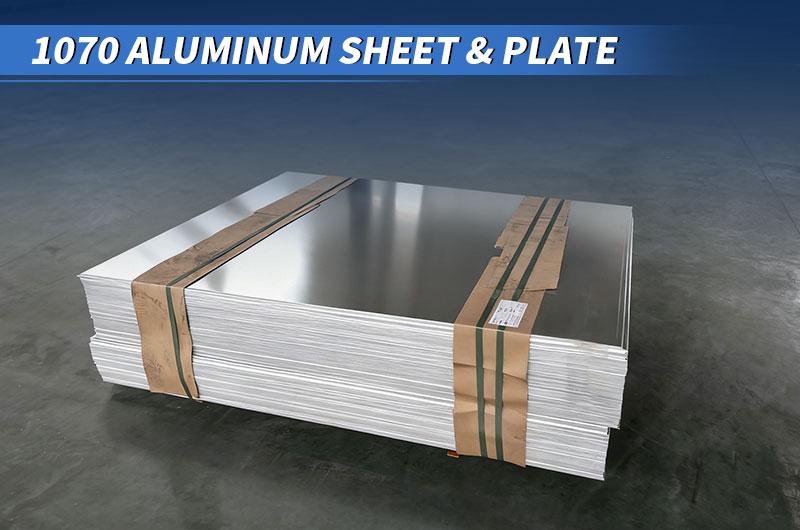
1070 Aluminum Coil
Delivered in continuous rolled cylinders, the core advantage of aluminum coil isefficiency and continuity. It is highly suitable for automated downstream production lines (slitting, continuous stamping, coating, etc.) with minimal material waste. For large annual usages, purchasing coils can generally save 5%–15% in overall costs compared to sheets.
- Alloy:1070 / 1070A
- Tempers:O, H12, H14, H16, H18, H22, H24, H26, H112
- Thickness:0.2 – 8.0 mm
- Width:100 – 2650 mm
- Inner Diameter (ID):76 / 150 / 305 / 405 / 505 / 610 mm
- Outer Diameter (OD):≤ 2000 mm (Negotiable)
- Coil Weight:2 – 10 Tons/coil (Negotiable)
- Standards:GB/T 3880, ASTM B209, EN 485
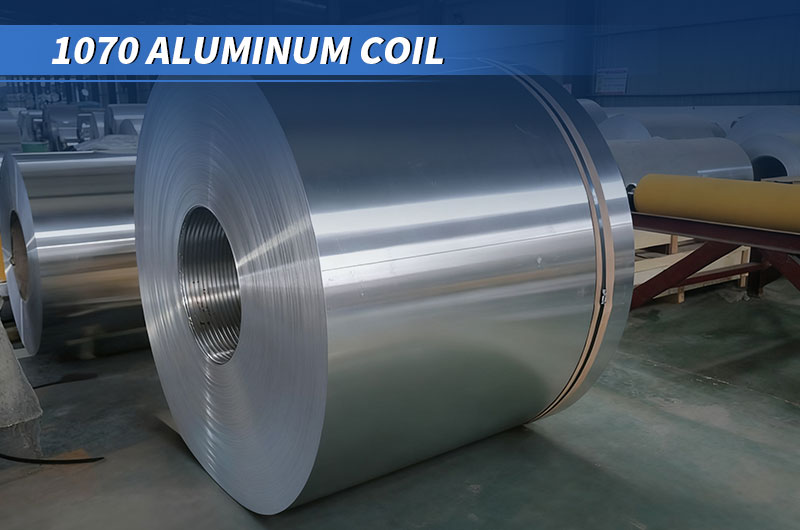
1070 Aluminum Strip
Essentially a "narrow aluminum coil," strip is precision-slit from wider coils, typically with widths ≤600mm. Compared to standard coils, aluminum strip has much stricter tolerances for thickness, width, and edge quality. It is the preferred material form for precision industries like electronics and electrical engineering.
- Alloy:1070 / 1070A
- Tempers:O, H12, H14, H16, H18, H22, H24, H26
- Thickness:0.1 – 3.0 mm
- Width:5 – 600 mm (Precision slitting)
- Inner Diameter (ID):75 / 150 / 200 / 300 mm (Customizable)
- Edge Type:Slit Edge / Round Edge
- Standards:GB/T 3880, GB/T 16475, ASTM B209, EN 485
Chemical Composition
(According to GB/T 3190 / ASTM B209 / EN 573-3)
| Element | Content (wt%) |
| Aluminum (Al) | ≥ 99.70 |
| Iron (Fe) | ≤ 0.25 |
| Silicon (Si) | ≤ 0.20 |
| Vanadium (V) | ≤ 0.05 |
| Copper (Cu) | ≤ 0.04 |
| Zinc (Zn) | ≤ 0.04 |
| Titanium (Ti) | ≤ 0.03 |
| Manganese (Mn) | ≤ 0.03 |
| Magnesium (Mg) | ≤ 0.03 |
| Others (Each) | ≤ 0.03 |
Technical Insight:1070 aluminum intentionally retains trace amounts of Vanadium (V). This effectively refines the grain structure and raises the recrystallization temperature, ensuring a more uniform microstructure and stable performance during fabrication. This is a key metallurgical highlight differentiating it from standard commercial pure aluminum.
Physical Properties
(Applicable to all tempers; physical properties do not change with temper)
| Property | Value | Unit |
| Density | 2.70 | g/cm³ |
| Melting Range | 640 – 660 | °C |
| Max Operating Temp | 170 | °C |
| Thermal Conductivity | 230 | W/(m·K) |
| Specific Heat Capacity | 900 | J/(kg·K) |
| Coefficient of Thermal Expansion | 23 × 10⁻⁶ | /K |
| Electrical Conductivity (Volumetric) | 61 | %IACS |
| Electrical Conductivity (by Weight) | 200 | %IACS |
| Electrical Resistivity (20°C) | 2.83 | μΩ·cm |
| Modulus of Elasticity | 69 | GPa |
| Shear Modulus | 26 | GPa |
| Poisson's Ratio | 0.33 | — |
| Light Reflectivity | ≥80 | % |
| Magnetic | None | — |
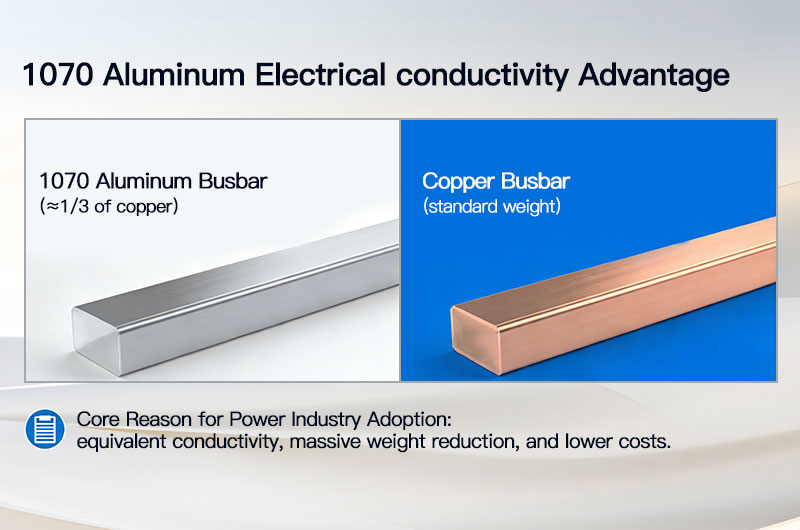
Engineering Insight:The mass electrical conductivity (by weight) of 1070 aluminum reaches 200% IACS. This means that for the same current-carrying capacity, 1070 aluminum busbar weighs only about 1/3 of copper busbar. This is the core reason the power industry is increasingly replacing copper busbars with aluminum: equivalent conductivity, massive weight reduction, and lower costs.
Mechanical Properties & Temper Selection Guide
1070 aluminum is a non-heat-treatable alloy; its strength is solely increased through cold working (strain hardening).
| Temper | Description | UTS (MPa) | Yield Strength (MPa) | Elongation (%) | Shear Strength (MPa) |
| O | Fully Annealed | 73 | 17 | 39 | 50 |
| H112 | As Fabricated (Slightly worked) | 78 | 40 | 17 | 48 |
| H12 | 1/4 Hard | 88 | 63 | 10 | 53 |
| H14 | 1/2 Hard | 100 | 74 | 6.7 | 59 |
| H16 | 3/4 Hard | 120 | 86 | 4.5 | 67 |
| H18 | Full Hard | 140 | 120 | 4.5 | 79 |
| H22 | 1/4 Hard + Partially Annealed | 88 | 63 | 10 | 53 |
| H24 | 1/2 Hard + Partially Annealed | 100 | 74 | 6.7 | 59 |
| H26 | 3/4 Hard + Partially Annealed | 120 | 86 | 4.5 | 67 |
How to Choose the Right Temper?
- H1x Series (H12/H14/H16/H18):Strain-hardened only. Strength increases and elongation decreases from H12 to H18.
- H2x Series (H22/H24/H26):Strain-hardened and then partially annealed. Mechanical properties are similar to H1x, but withlower residual stress and better dimensional stability.
- O Temper:Fully annealed. The softest temper with the highest elongation (39%), ideal for severe forming.
| Application Scenario | Recommended Temper |
| Deep drawing, spinning, complex bending | O |
| General stamping, moderate bending | H12 / H22 |
| Moderate strength + decent formability | H14 / H24 |
| Requires high hardness and flatness | H16 / H18 |
| Long-term dimensional stability required | H22 / H24 / H26 |
Machinability & Processing Performance
- Cold Forming (★★★★★):O-temper elongation reaches 39%. Excellent for deep drawing, spinning, and bending without cracking.
- Welding (★★★★★):Extremely low hot-cracking tendency. Suitable for TIG, MIG, gas welding, and brazing. Recommended filler metals: ER1070 or ER1100.
- Brazing (★★★★★):Widely recognized as a premium base material for aluminum brazing.
- Anodizing (★★★★★):High purity ensures a highly transparent, uniform anodic film with exceptional dyeing results.
- Polishing (★★★★☆):Easily achieves a mirror-like finish with light reflectivity ≥80%.
- CNC Machining (★★★☆☆):The material is soft and sticky, prone to built-up edge (BUE).Tip:Use sharp tools with large rake angles and ample cooling/lubrication.
Heat Treatment Guidelines
Strength can only be improved via cold rolling. Common thermal treatments are for annealing purposes:
- Full Annealing (390 – 430°C):Fully softens cold-worked material to O temper.
- Flash/Intermediate Annealing (350 – 370°C):Used between processing steps to shorten production cycles.
- Stress Relief Annealing:Short holding time at lower temperatures to remove residual stresses after cold forming.
Surface Treatments
Worthwill offers 7 customized surface finishes to precisely match your processing needs:
Basic & Protection
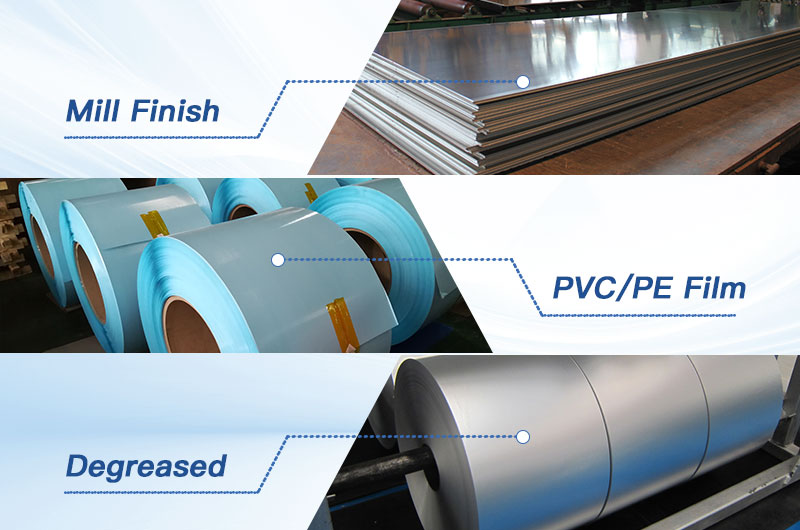
- Mill Finish:Retains the original silvery-white metallic luster. Ideal for general industrial and internal structural parts.
- PE/PVC Film:Single or double-sided film protection to prevent scratches during transport and machining. A must for cosmetic parts and pre-anodized substrates.
- Degreased:Chemically cleaned to remove all rolling oils. Designed for high-precision electronics, food packaging, and pre-welding preparation.
Texture & Reflection
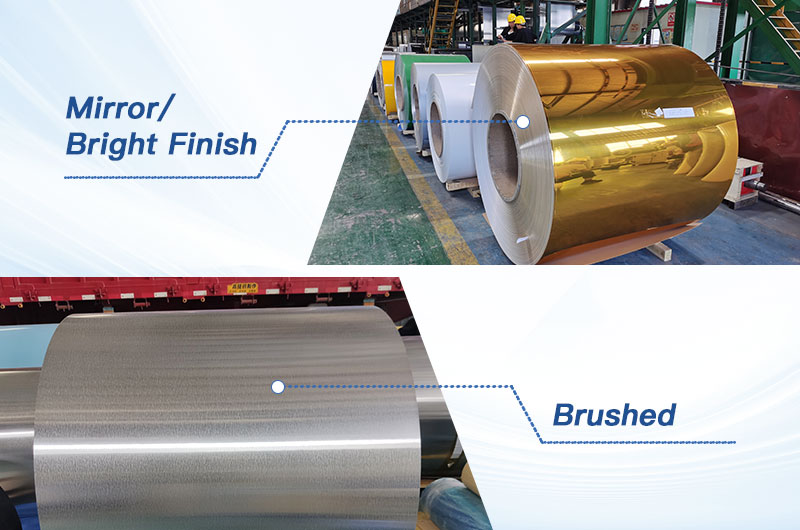
- Mirror/Bright Finish:Highly polished surface with light reflectivity ≥80%. Ideal for lighting reflectors and solar reflective panels.
- Brushed:Uniform, directional metallic texture. Suitable for 3C electronic casings and high-end nameplates.
Color & Coating
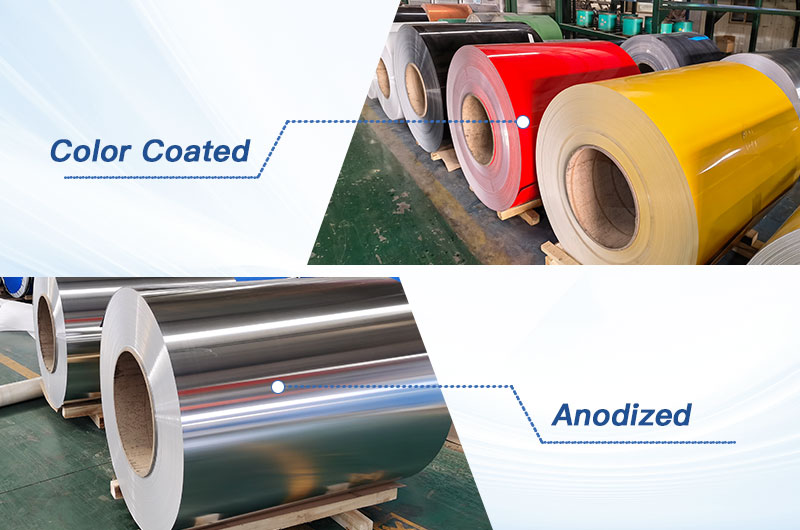
- Anodized:Forms an extremely transparent anodic film with excellent dyeing capabilities. Perfect for high-end architecture and outdoor signage.
- Color Coated (Prepainted):Durable PE or PVDF coatings available in various colors. Ideal for architectural curtain walls and roofing.
International Equivalent Designations
| Standard System | Standard No. | Designation / Grade |
| China GB | GB/T 3190 | 1070 / 1070A |
| USA AA / UNS | ASTM B209 | 1070 / UNS A91070 |
| International ISO | ISO 209 | Al99.7 |
| Europe EN | EN 573 / EN 485 | EN AW-1070 / EN AW-1070A |
| Japan JIS | JIS H4000 | A1070 / A1070P |
| Germany DIN | DIN 1712 | Al99.7 / 3.0275 |
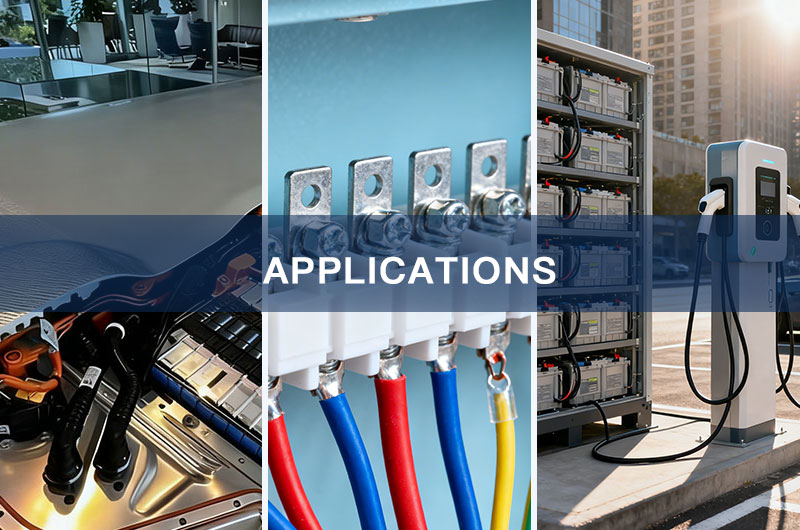
Applications
Leveraging its high conductivity, high thermal transfer, extreme formability, and perfect anodizing results, 1070 aluminum is widely utilized in the following sectors:
- Power & Electronics:Aluminum busbars, cable shielding, capacitor cases, battery foils.(Why: 61% IACS conductivity drastically reduces weight and cost vs. copper).
- Thermal Management:Heat sink fins, LED thermal substrates, heat exchangers, refrigerator evaporators.(Why: Excellent thermal conductivity at 230 W/m·K).
- Aesthetics & Hardware:Nameplates, lighting reflectors, decorative ceilings, cosmetic bottle caps.(Why: Outstanding mirror-polishing and clear anodizing capabilities).
- Food & Packaging:Pharmaceutical/food packaging foil, easy-open cans, deep-drawn kitchenware.(Why: Non-toxic, food-safe, and will not crack during deep drawing).
- Specialty Industrial:Charging pile casings, chemical tank linings, explosion-proof fuel tanks.(Why: Highly resistant to natural corrosion, non-magnetic, and non-sparking).
Similar Alloys Comparison (1050 vs 1060 vs 1070 vs 1100)
| Feature | 1050 (≥99.5% Al) | 1060 (≥99.6% Al) | 1070 (≥99.7% Al) | 1100 (≥99.0% Al) |
| Conductivity(%IACS) | ~59 | ~60 | ~61 | ~57 |
| Thermal Cond.(W/m·K) | ~222 | ~225 | ~230 | ~218 |
| Tensile (O Temper) | ~75 MPa | ~70 MPa | ~73 MPa | ~90 MPa |
| Formability | Excellent | Excellent | Superior | Excellent |
| Corrosion Resistance | Excellent | Excellent | Superior | Good |
How to Choose?
- Choose 1070 aluminum:When you need theabsolute highestelectrical/thermal conductivity (e.g., precision electronics, high-current busbars) or a flawless transparent anodized finish.
- Choose 1060/1050 aluminum:For general industrial or thermal applications where extreme purity is not strictly mandated, offering a slight cost advantage.
- Choose 1100 aluminum:When you need a bit more strength while still maintaining good formability.
Industry Experience:While 1070 and 1060 feel similar in general processing, the extra 0.1% purity of 1070 translates into measurable reductions in electrical resistance for high-current busbars. If your blueprint specifies "99.7% purity", do not substitute with 1060 aluminum.
Pros & Cons of 1070 Aluminum
Advantages
- Premium Conductivity:~61% IACS conductivity and 230 W/(m·K) thermal conductivity.
- Strong Corrosion Resistance:Natural Al₂O₃passivation layer protects against atmosphere and moisture.
- Supreme Formability:39% elongation (O temper) guarantees no cracking during deep drawing and spinning.
- Flawless Aesthetics:Achieves mirror finishes (≥80% reflectivity) and highly transparent anodic coatings.
- Safe & Lightweight:1/3 the weight of steel, non-toxic, non-magnetic, and non-sparking.
Limitations & Tips
- Low Strength:UTS is only 73–140 MPa.Tip: Do not use for load-bearing structures; switch to 5xxx/6xxx/7xxx alloys.
- Sticky Machining:The soft material tends to stick to cutting tools.Tip: Use sharp tools with large rake angles and plenty of coolant.
- Prone to Scratching:Surface hardness is low.Tip: Apply protective film during production and transport.
- Sensitive to Strong Acids/Bases:Extreme pH levels destroy the natural protective film.
Quality Control
Worthwill implements a strict, closed-loop quality control system covering raw materials to final delivery, fully complying withGB, ASTM, and ENstandards:
- Chemical Analysis:Full-element spectrometry ensures the 99.7% purity is strictly met.
- Dimensional Precision:Rigorous monitoring of thickness, width, length, and flatness tolerances.
- Mechanical Testing:Lab-certified tensile and hardness tests guarantee stable fabrication performance.
- Surface Inspection:Dual manual and instrument checks to eliminate scratches, oil spots, and oxidation marks.
- Export Packaging:"PE film + Desiccant + Wooden Pallet/Steel Band" packaging ensures moisture-proof, damage-free global delivery.
Authoritative Quality Guarantee
Every batch is shipped with aMill Test Certificate (MTC)containing actual measured values for chemistry, mechanics, and dimensions.EN 10204 Type 3.1certificates or third-party reports (e.g., SGS) can be provided upon request.
Frequently Asked Questions (FAQ)
Q1: How do I choose between 1070 and 1060 aluminum?
A:The core difference is purity and conductivity. 1070 is ≥99.7% Al (~61% IACS), while 1060 is ≥99.6% Al (~60% IACS).
Select 1070 if your project involves aluminum busbars, high-current conductors, precision electronics, or if the blueprint explicitly mandates "99.7% purity." Select1060for general stamping or standard heat sinks where cost-efficiency is the priority.
Q2: What is the difference between H14 and H24 tempers in 1070 aluminum? Why is the price different?
A:Both are "half-hard" with nearly identical strength, but the processing differs.
H14 is purely strain-hardened (cold-rolled) to half-hard.H24 is strain-hardened and then partially annealed. The annealing in H24 reduces residual stress, providingsuperior long-term dimensional stability(ideal for precision electronics and flat panels). The slight price difference reflects the cost of this extra annealing process.
Q3: Is 1070 aluminum suitable for anodizing?
A:Yes, exceptionally so. Because it has minimal impurities, the anodic film generated on 1070 is extremely dense and transparent. It naturally presents a brilliant, silvery-white metallic luster and absorbs dyes beautifully, making it the top choice for high-end decorative anodizing.
Q4: What are your thickness limits for 1070 sheet and strip?
A:Worthwill offers an extensive supply range: Aluminum sheet/plate thicknesses range from0.2mm to 500mm, while precision strips can be rolled as thin as0.1mm.
Q5: What is your Minimum Order Quantity (MOQ)?
A:We offer flexible procurement: Standard inventory specifications start at just500 kg. For custom sizes or special tempers, the MOQ is typically2 Tons. Contact us to negotiate based on our current production schedule.
Q6: Do you provide MTCs or material test reports?
A:Absolutely. Every shipment comes standard with aMill Test Certificate (MTC)detailing the actual chemical composition, mechanical properties, and dimensional checks. If you require anEN 10204 Type 3.1certificate or third-party SGS testing, simply inform us upon order placement.
Why Choose Worthwill?
- Deep Industry Expertise:Our team combines extensive commercial and technical backgrounds, offering one-stop solutions from material selection to fabrication to solve your industry-specific pain points.
- Extensive Inventory:We maintain massive stocks of 1070 Sheet, Coil, and Strip in full tempers (O to H18) to guarantee ultra-fast response and delivery times.
- Rigorous Quality Control:A 360° closed-loop QC system (spectrometry -> dimension control -> mechanical testing -> surface inspection) with MTCs provided for every batch.
- Flexible Customization:We easily accommodate non-standard sizes, special tempers, tight tolerances, and offer deep processing like filming, degreasing, and slitting.
- Transparent Factory-Direct Pricing:We cut out the middlemen. Our transparent pricing formula (Aluminum Ingot Price + Fabrication Fee) significantly lowers your procurement costs.
- Dedicated 1-on-1 Support:Every client is assigned a dedicated "Sales + Engineering" duo, ensuring lightning-fast quotes and round-the-clock technical support.