


Overview of 7075 Aluminum Plate
7075 aluminum plate is an Al-Zn-Mg-Cu series ultra-high strength aluminum alloy. Since its inception in 1943, it has become a core material in high-end manufacturing sectors such as aerospace and national defense, thanks to its outstanding performance—offering strength approaching that of steel at only one-third of the weight.
Core Performance Advantages
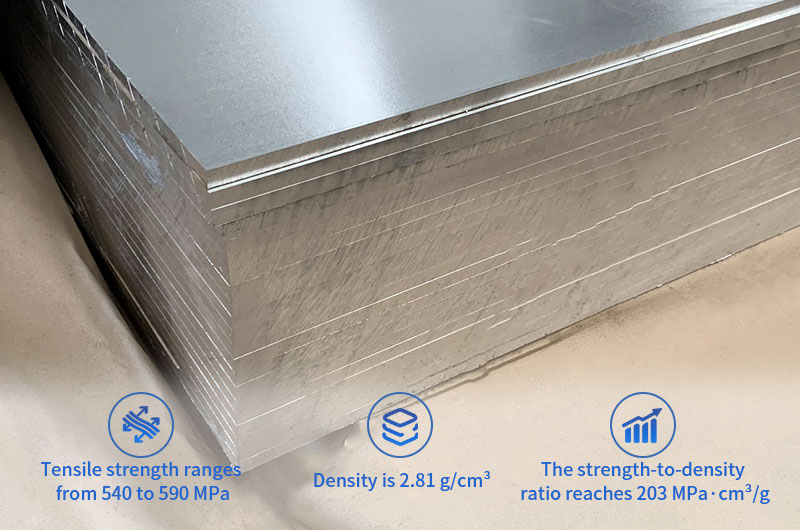
- Ultra-High Strength:Tensile strength ranges from 540 to 590 MPa, close to that of common structural steel.
- Lightweight:Density is 2.81 g/cm³, merely 36% of the weight of steel.
- Outstanding Specific Strength:The strength-to-density ratio reaches 203 MPa·cm³/g, which is 4.6 times that of ordinary steel.
Specifications and Parameters
Standard Plate Size Range
Thickness Series:
- Ultra-thin plate: 0.5 - 3.0mm
- Thin plate: 3.0 - 6.0mm
- Medium plate: 6.0 - 25mm
- Thick plate: 25 - 100mm
- Ultra-thick plate: 100 - 250mm
Width Specifications:
- Standard widths: 1000, 1200, 1500, 2000mm
- Wide-format plates: 2500, 3000, 4000mm
- Custom widths: Available upon customer request
Length Specifications:
- Standard lengths: 2000, 2500, 3000, 6000mm
- Cut-to-length: Supplied according to drawing dimensions (with a +30-50mm machining allowance)
- Coils: Available for thicknesses ≤6mm
Tolerances and Surface Quality Standards
Thickness Tolerance (ASTM B209):
| Thickness Range (mm) | Tolerance (mm) |
| 0.5 - 3.0 | ±0.05 - 0.10 |
| 3.0 - 6.0 | ±0.10 - 0.15 |
| 6.0 - 25 | ±0.20 - 0.40 |
| 25 - 50 | ±0.50 - 0.80 |
| 50 - 100 | ±1.00 - 1.50 |
| Precision-grade tolerances can reach 50% of the standard tolerances (requires customization). |
Flatness Requirements:
- Ordinary Grade:≤3mm/m
- Precision Grade:≤1mm/m
- Ultra-Flat Plate:≤0.1mm/m² (requires stretch-leveling treatment)
Surface Quality Grades:
- Grade A:No visible defects; used for cosmetic and anodized parts.
- Grade B:Minor scratches and dents allowed; used for general structural parts.
- Grade C:Certain defects allowed; used for non-cosmetic, non-critical areas.
Special Specification Products
Ultra-Thick Pre-Stretched Plate (6 - 250mm):
- Features:Undergoes 1.5-3% permanent stretching deformation; residual stress <30 MPa.
- Width:1500 - 4000mm
- Flatness:≤0.5mm/m
- Applications:Aircraft wing spars, large mold base plates, precision machinery frames.
Ultra-Flat Thin Plate (0.5 - 6mm):
- Flatness:≤0.1mm/m²
- Process:Multi-pass rolling + stretch leveling + stress relief.
- Applications:Precision electronics housings, optical instrument base plates.
Chemical Milling Plate:
- Thinning Accuracy:±0.02mm
- Surface Roughness:Ra 0.4 - 0.8 μm
- Process:Material removed via chemical etching to avoid mechanical stress.
- Applications:Aircraft skins (variable thickness design), spacecraft panels.
Military Armor Composite Plate:
- Structure:7075-T6 + Ceramic/Composite materials
- Ballistic Performance:V50 ≥ 650 m/s
- Applications:Light armored vehicles, protective equipment.
Chemical Composition and Strengthening Mechanism
Main Alloying Elements
| Element | Content (%) | Function |
| Zinc (Zn) | 5.1 - 6.1 | Core strengthening element; forms MgZn₂precipitates with magnesium. |
| Magnesium (Mg) | 2.1 - 2.9 | Synergizes with zinc to form precipitates; balances strength and corrosion resistance. |
| Copper (Cu) | 1.2 - 2.0 | Improves strength and heat resistance below 150°C. |
| Chromium (Cr) | 0.18 - 0.28 | Refines grain structure; improves resistance to stress corrosion cracking (SCC). |
Aerospace Grade Requirement: Composition controlled within ±0.1% accuracy to ensure batch-to-batch consistency.
Strengthening Mechanism
Precipitation Strengthening (Primary Mechanism):
- Solid solution treatment (465-480°C) → Quenching → Artificial aging (120°C/24h).
- Precipitation of the η' (eta prime) phase (5-10nm in diameter) provides the main strengthening effect.
- The T6 temper yield strength can reach up to 503 MPa.
Comparison with Common Aluminum Alloys
| Material | Tensile Strength (MPa) | Characteristics |
| 7075-T6 | 572 | Highest strength; main load-bearing structures in aerospace. |
| 2024-T3 | 470 | Good toughness; suitable for fuselage skins. |
| 6061-T6 | 310 | Good corrosion resistance; highly versatile.more differences between 6061 and 7075 |
Heat Treatment Tempers and Performance
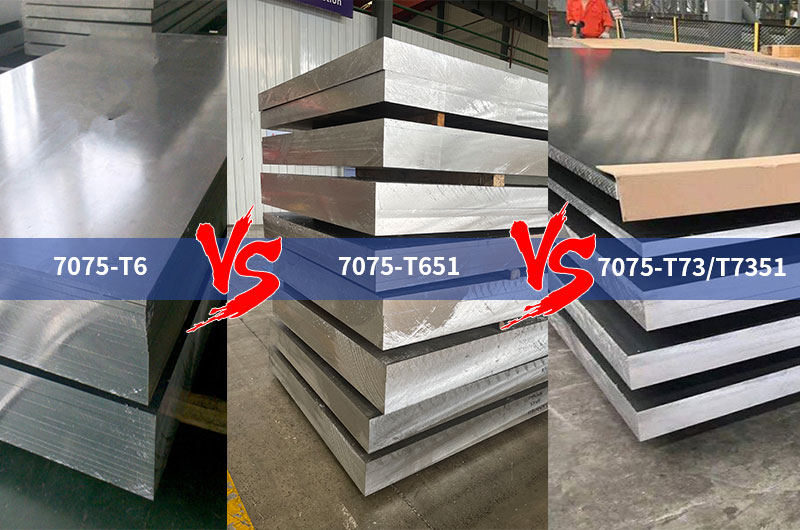
7075-T6 Temper: Peak Strength State
- Process:
- Solid solution: 470±3°C, 1-2 hours.
- Quenching: Transfer time ≤10 seconds, water temp 20-40°C.
- Artificial aging: 120±3°C for 24 hours.
- Performance:Tensile Strength: 572 MPa / Yield Strength: 503 MPa / Elongation: 11% / Hardness: 150 HB / Fatigue Strength: 160 MPa (at 5×10⁸cycles).
- Applications:Aircraft primary structures, high-performance racing suspensions, precision instrument frames.
- Limitations:High susceptibility to stress corrosion cracking (SCC); not suitable for marine or high-humidity environments.
7075-T651 Temper: First Choice for Precision Machining
Based on T6, it includes a 1.5-3% stretching deformation to eliminate residual stress.
- Technical Advantages:Residual stress drops from 80-120 MPa to ≤30 MPa; machining deformation is reduced by 60-80%; flatness can reach ≤0.1mm/m²; mechanical properties remain largely identical to T6.
- Engineering Value:When 70% of the material is removed via CNC, deformation is controlled to 0.05-0.2mm (down from 0.5-2mm).
- Applications:Machined aircraft structural parts, mold bases, semiconductor equipment frames.
7075-T73/T7351 Temper: Anti-Corrosion Optimization
- Process:Double-step aging (Step 1: 107°C × 8h; Step 2: 177°C × 8h).
- Performance Balance:Tensile strength drops to ~505 MPa (down 12%), yield strength drops to ~435 MPa (down 15%). However, the SCC threshold increases from 15-20 to 24 MPa·m^0.5, improving SCC resistance by 3-5 times.
- Application Standards:Mandatory for load-bearing structures exposed to the atmosphere by manufacturers like Boeing and Airbus.
Mechanical Properties
Strength and Load-Bearing Capacity
- Actual Load Calculation (10x10mm 7075-T6 cross-section):Theoretical load capacity = 572 MPa × 100 mm² = 57,200 N ≈ 5.8 metric tons of force.
- Recommended Design Stress:Allowable stress = Yield strength × 0.6 to 0.7 (Safety factor 1.5-1.67). For 7075-T6, the recommended design stress is 300-350 MPa.
Key Fatigue Performance Data
- S-N Curve Characteristics (No distinct fatigue limit):10⁶cycles: 200 MPa; 10⁷cycles: 170 MPa; 10⁸cycles: 160 MPa.
- Influencing Factors:Stress concentration (reducing fillet radius from 2mm to 0.5mm lowers lifespan by 50-70%); Surface finish (improving Ra from 1.6μm to 0.4μm increases lifespan by 30-50%); Corrosive environments (salt spray reduces fatigue strength by 40-60%).
Directionality of Fracture Toughness
| Direction | KIC Value (MPa·m^0.5) | Description |
| L-T | 29 | Crack perpendicular to rolling direction |
| T-L | 25 | Crack parallel to rolling direction |
| S-L | 20 | Short transverse (most unfavorable) |
Toughness Optimization: The T73 temper can push KIC values to 34-38, a 40-50% improvement.
Physical Properties and Design Parameters
While the tensile strength of 7075-T6 (572 MPa) surpasses Q235 and even some Q345 mild carbon steels, its density is only 2.81 g/cm³ (compared to steel's 7.85 g/cm³).
- Specific Strength:4-5 times that of standard structural steel, roughly equivalent to expensive titanium alloys (Ti-6Al-4V).
- High Hardness/Wear Resistance:150 HB Brinell hardness is among the highest for aluminum, suitable for wear-resistant guide rails and sliding components.
- Thermal Conductivity:130 W/(m·K); lower than 6061 but far superior to steel.
- Modulus of Elasticity:71.7 GPa, only 1/3 that of steel. When designing structures requiring high stiffness (minimal deflection), compensation must be made by increasing the cross-sectional area or changing the geometry (e.g., I-beams).
Practical Machining and Processing Guide
Recommended CNC Parameters
| Machining Type | Cutting Speed (m/min) | Feed (mm/tooth) | Depth of Cut (mm) |
| Rough Milling | 200 - 300 | 0.15 - 0.25 | 3 - 5 |
| Finish Milling | 300 - 400 | 0.08 - 0.15 | 0.5 - 2 |
| Drilling | 80 - 120 | 0.10 - 0.20 | - |
Tool Selection:Roughing (YG8 carbide coated tools); Finishing (YG6 or PCD - Polycrystalline Diamond); Threading (Form/roll taps to increase thread strength by 30%).
Deformation Control Techniques:
- Symmetrical Machining:Alternate machining on both sides to balance stresses.
- Intermediate Aging:Leave a machining allowance, then hold at 150-180°C for 2-4 hours after roughing.
- Optimized Clamping:Avoid over-clamping which introduces stress.
- Uniform Cooling:Use abundant coolant spray.
Welding and Joining
Highly difficult to weld due to:Hot cracking rates of 30-60%; Weld seam strength only retaining 25-35% of the base metal; Severely increased susceptibility to stress corrosion cracking. (Mechanical fastening is generally recommended).
Corrosion Resistance and Protection
Four-Tier Protection System:
- Material Selection:High-risk environments must use T73/T7351.
- Stress Control:Keep design stress ≤40% of yield strength.
- Surface Protection:Anodizing + sealing, or Alclad treatment.
- Environmental Management:Avoid chloride ions, control humidity <70% RH.
Exfoliation Corrosion Ratings (ASTM G34):
- EA (No exfoliation):Typical of T76 temper.
- EB (Slight exfoliation):Typical of T73 temper.
- EC-ED (Severe exfoliation):Typical of T6 temper.
Galvanic Corrosion Control:
- Use insulating gaskets (PTFE) when in contact with stainless steel or titanium.
- Apply protective coatings on contact surfaces.
- Install sacrificial anodes (zinc/magnesium blocks).
Typical Application Fields

Aerospace
- Wing Spars: 7075-T7351, thickness 15-50mm, single piece length >15m (e.g., Boeing 737).
- Wing Ribs and Stringers: CNC weight-reduction pocket design, reducing weight by 40-60%.
- Fuselage Frames: Riveted connections, using Hi-Lok bolts.
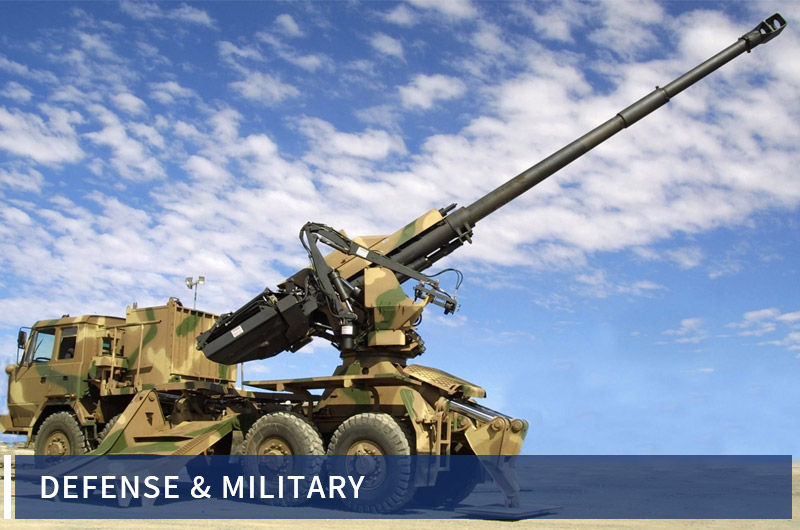
Defense & Military
- Armored Vehicle Bodies: 7075-T6, thickness 10-20mm, 40% lighter than steel vehicles.
- M16 Rifle Receivers: Weight is only 35% of their steel counterparts.
- Speedboat Keels: 7075-T7351 Alclad plate, highly resistant to seawater corrosion.
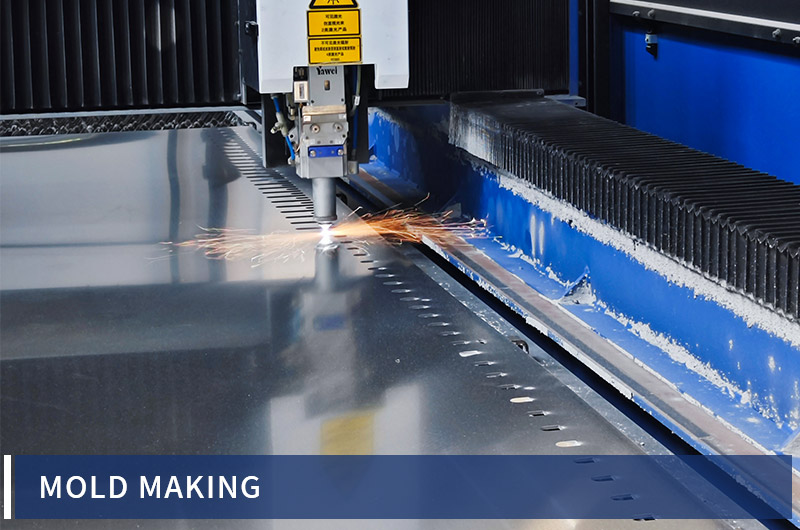
Mold Making
- Excellent Thermal Conductivity: 130 W/(m·K), ensuring uniform cooling.
- Fast Machining Speed: 3-5 times faster than machining steel.
- Service Life: Capable of 1 to 3 million cycles.

New Energy Vehicles (NEVs)
- Suspension Control Arms: 40% weight reduction, leading to improved handling response.
- Battery Tray Frames: High strength and excellent impact resistance.
- Weight Reduction Benefits: Every 100kg reduced adds 8-12km to the driving range.
Procurement Decision Guide
When purchasing 7075, temper and certification systems are just as critical as price.
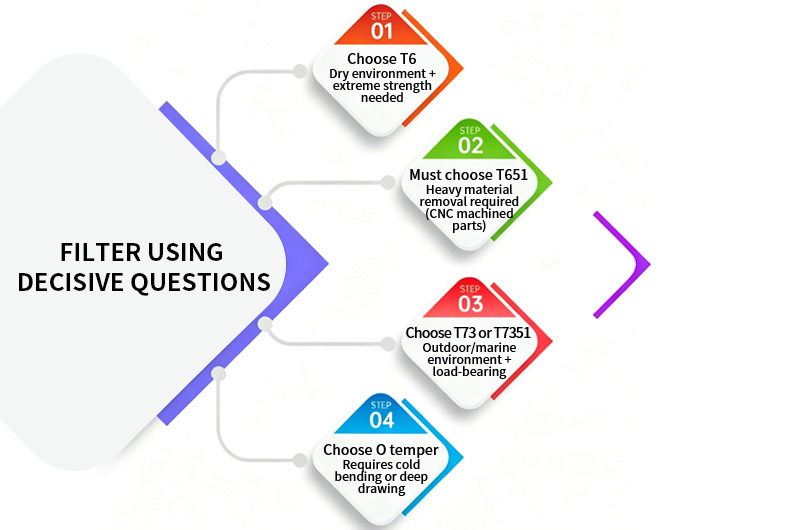
1.Temper Selection
- Dry environment + extreme strength needed =Choose T6
- Heavy material removal required (CNC machined parts) =Must choose T651
- Outdoor/marine environment + load-bearing =Choose T73 or T7351
- Requires cold bending or deep drawing =Choose O temper(requires re-heat treatment after forming).
2.Specs and Tolerance Tips
- Thickness:Standard medium-to-thick plates (6-100mm) are most common. For plates over 100mm, center quenchability is an issue; request a hardness gradient report (high-quality plates have a hardness drop of ≤5 HB from surface to core).
- Ultra-Flat Plates:For semiconductor and optical equipment, request custom "ultra-flat thin plates" (flatness ≤0.1mm/m²).
3.Supplier Audit Checklist (Avoiding Pitfalls)
For high-end applications (especially aerospace/military), require the supplier to provide:
- Mill Certificate:Verify the heat/batch number.
- Full Test Reports:Chemical composition (spectroscopy) and mechanical properties (tensile testing).
- NDT Reports:Aerospace grades require 100% Ultrasonic Testing (UT) to ensure no internal porosity or inclusions.
- QMS Certifications:Such as AS9100 (Aerospace Quality System), Nadcap (Special Processes), or ASTM B209 compliance declarations.
Frequently Asked Questions (FAQ)
Q1: Can 7075 directly replace Q235 or 45# steel?
A:Partially. It is a perfect substitute in "lightweighting" scenarios under tensile/compressive loads. However, if the component requires extremely high stiffness (resistance to bending) or extreme surface wear resistance, a direct dimensional replacement will lead to greater deflection, as 7075's elastic modulus is only 1/3 that of steel.
Q2: Why does the surface of machined 7075 look mottled and grayish?
A:7075 contains high amounts of zinc and magnesium, making it unsuitable for high-gloss, cosmetic decorative anodizing. If appearance is critical, switch to 6061, or use a sandblasting + black/dark gray hard anodizing process to mask the natural material color.
Q3: Should I choose 7075 or 7050?
A:If your plate thickness is under 100mm, 7075 offers the best cost-performance. If you are machining aerospace forgings or ultra-thick plates reaching 150mm or 200mm, the core strength of 7075 will drop significantly. In such cases, you must choose7050, which has far better quenchability (depth of hardening).
Q4: Why does my newly bought T6 plate warp immediately on the CNC machine?
A:You bought the wrong temper. For CNC machining (especially asymmetrical material removal), you must purchase theT651temper (pre-stretched to relieve internal stress). If a supplier passes off T6 as T651, it will warp immediately upon machining. Always run a first-article validation before full production.
Quick Reference Technical Parameters
7075 Standard Chemical Composition (GB/T 3190-2020 / ASTM B209)
| Element | Zn | Mg | Cu | Cr | Fe | Si | Al |
| Content (%) | 5.1-6.1 | 2.1-2.9 | 1.2-2.0 | 0.18-0.28 | ≤0.50 | ≤0.40 | Remainder |
Properties by Temper
| Temper | Tensile Strength (MPa) | Yield Strength (MPa) | Elongation (%) | Hardness (HB) | Characteristic |
| T6 | 572 | 503 | 11 | 150 | Highest strength |
| T651 | 550 | 460 | 11 | 150 | Precision machining |
| T73 | 505 | 435 | 13 | 140 | Corrosion resistance |
| T7351 | 510 | 435 | 10 | 140 | Aerospace standard |
Physical Properties Summary
- Density:2.81 g/cm³
- Melting Point:477 - 635°C
- Thermal Conductivity:130 W/(m·K)
- Coefficient of Thermal Expansion:23.6 × 10⁻⁶/K
- Modulus of Elasticity:71.7 GPa
- Electrical Conductivity:33% IACS
International Grade Equivalents
- China:7075 / 7A09 (GB/T 3190)
- USA:7075 (ASTM B209)
- EU:EN AW-7075 (EN 573-3)
- Japan:A7075 (JIS H4000)
Conclusion
7075 aluminum plate is an ultra-high-strength material with exceptional performance. By correctly selecting the temper (T6 for pure strength, T73 for corrosion resistance), strictly controlling machining processes, and applying proper anti-corrosion measures, engineers can fully leverage its lightweight advantages. It remains the absolute material of choice for aerospace, military, and high-end mold-making applications.