


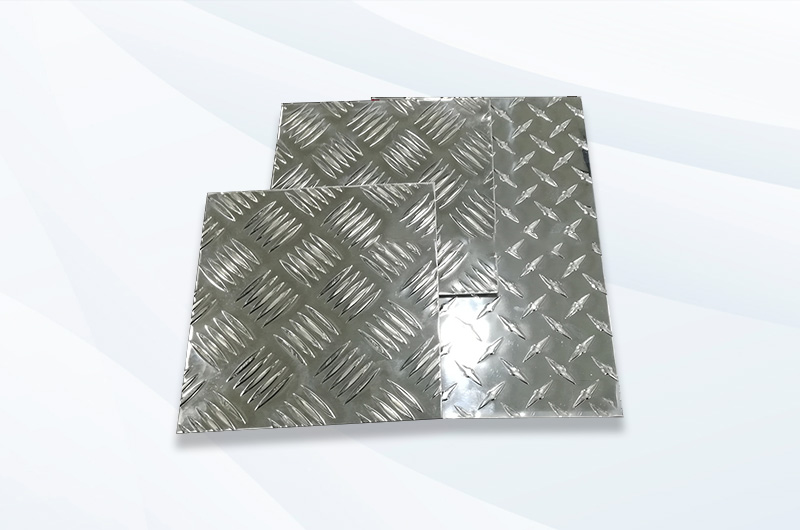
Aluminum Tread Plate
Worthwill delivers factory-direct aluminum tread plates featuring superior anti-slip traction, marine-grade durability, and high strength for demanding automotive, marine, and industrial applications.
- Alloy:
- 1050, 1060, 3003, 5052, 5083, 5086, 5754, 6082, 6061, etc.
- Temper:
- F, O, H111, H114, H116, H224, H244, T4, T6, T61 etc.
- Plate Thickness:
- 1.2mm - 8mm.
- Pattern Height:
- 0.8mm - 1.5mm.
- Width:
- 100mm - 1850mm
- Length:
- 500mm - 16000mm
- Pattern Type:
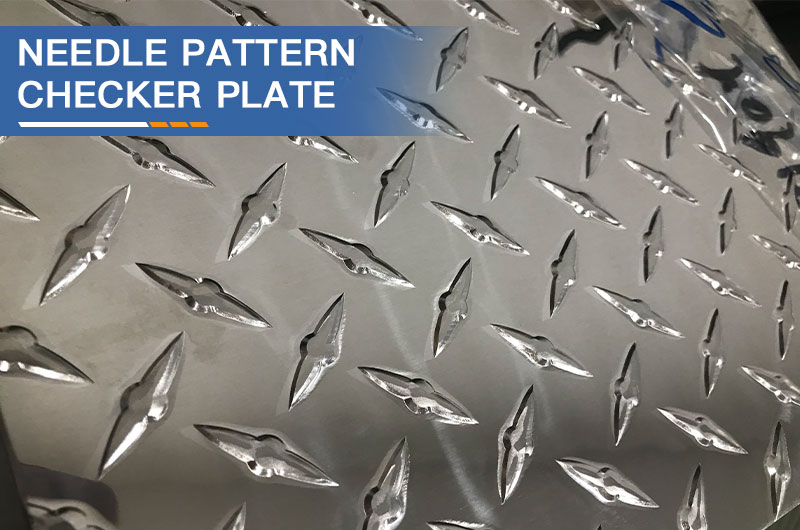
- Lentil pattern, needle pattern, diamond, 2-bar/3-bar/5-bar aluminum checker plate sheet, small 5-bar, big 5-bar.
- Surface Treatment:
- Mill finish, bright finish, anodized, etc.
- Standard:
- GB/T3618, Q/EL432, EN 1386, ASTM -B209 or customized to your needs
Overview of Aluminum Tread Plate
Everything you need to know about its features, patterns, specifications, and applications.
What is Aluminum Tread Plate?
Also known as checker or diamond plate, it is a lightweight, cold-rolled aluminum sheet featuring permanently embossed patterns (such as diamond or 5-bar). This engineered profile delivers superior, slip-resistant traction without the need for additional coatings.
Why Choose It?
- Anti-Slip Safety
- Lightweight & Strong
- Corrosion Resistant
- Easy Processing
- Low Maintenance
- 100% Recyclable
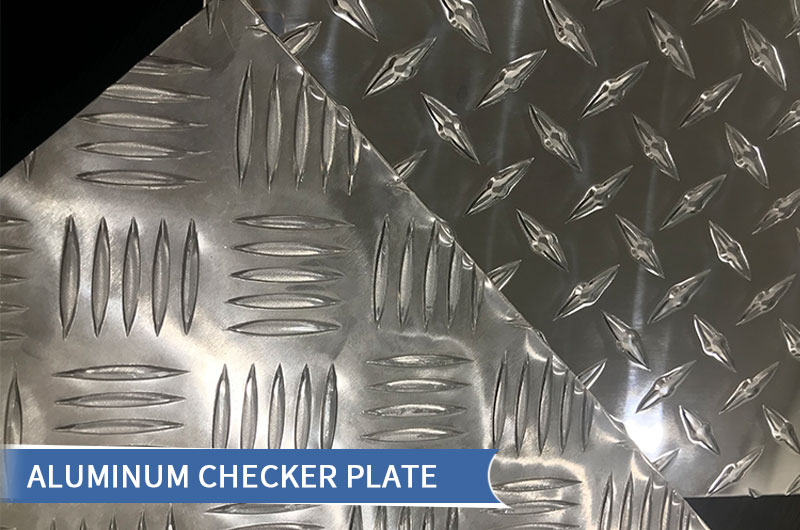
Aluminum Tread Plates By Alloy
We stock tread plates in 7 aluminum alloys. Each alloy offers different strength, corrosion resistance, and weldability — choose based on your application environment.
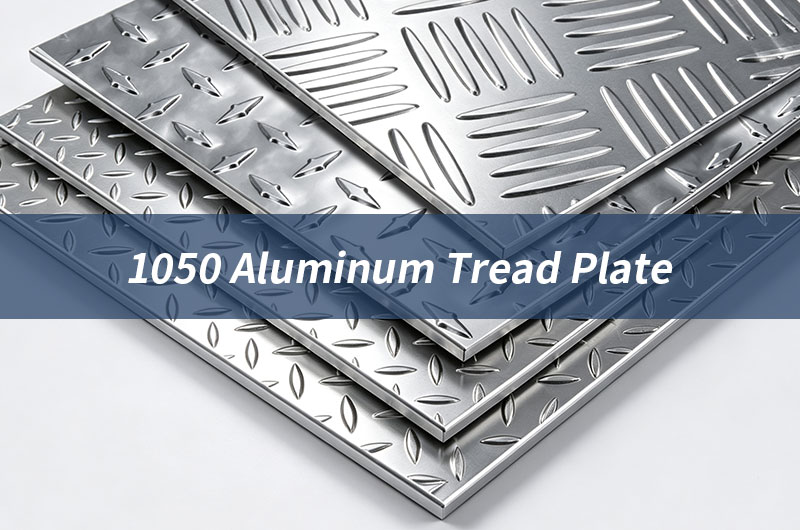
1050 Aluminum Tread Plate
99.5% pure aluminum. Excellent electrical and thermal conductivity. Best for light-duty decorative and chemical applications.
- Temper: H14, H24
- Thickness: 1.2 – 8 mm
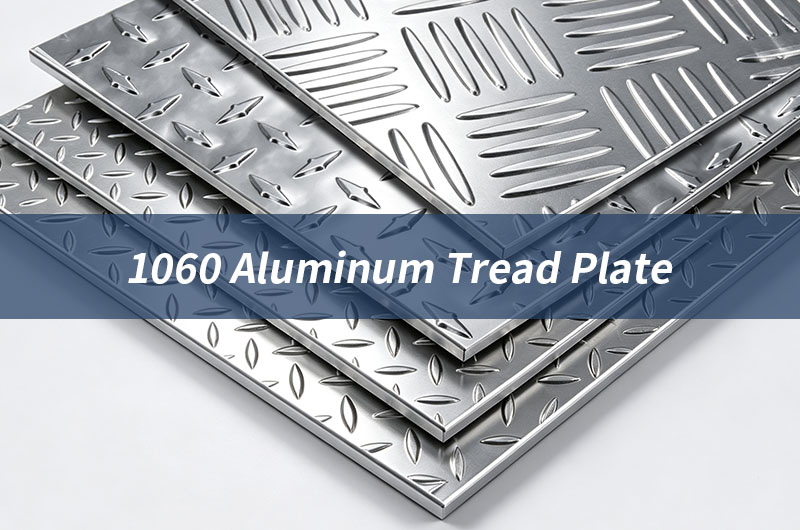
1060 Aluminum Tread Plate
99.6% pure aluminum. Low cost, good formability. Widely used in flooring, cold storage, and light industrial applications.
- Temper: H14, H24
- Thickness: 1.2 – 8 mm
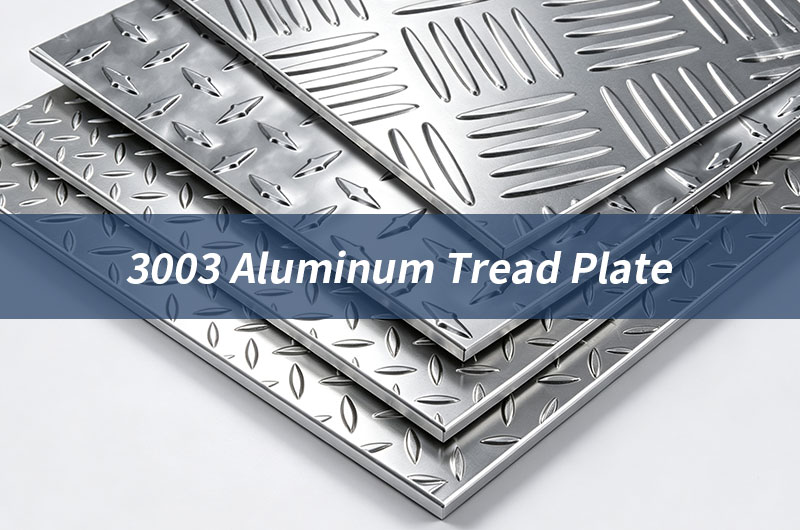
3003 Aluminum Tread Plate
Mn-Mg alloy. 20% stronger than 1xxx series with excellent corrosion resistance. Ideal for truck floors and building applications.
- Temper: H14, H22, H24
- Thickness: 1.2 – 8 mm
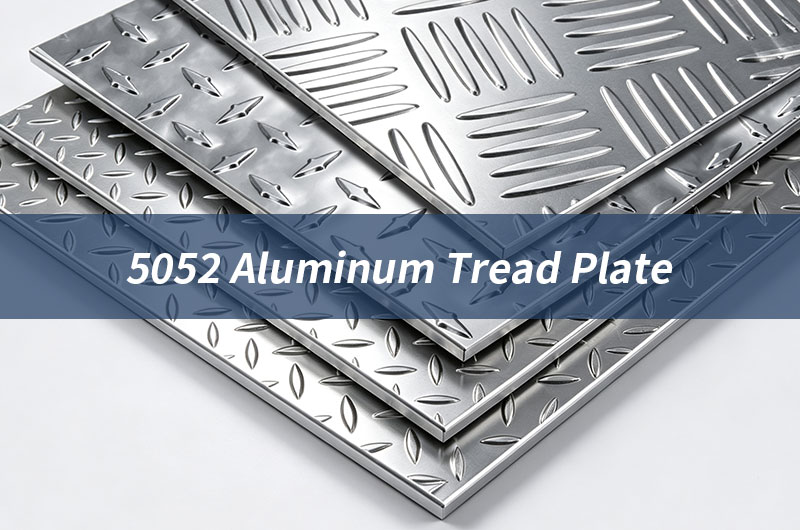
5052 Aluminum Tread Plate
Mg alloy with excellent saltwater corrosion resistance. Most popular choice for marine, automotive, and industrial flooring.
- Temper: H32, H34
- Thickness: 1.5 – 8 mm
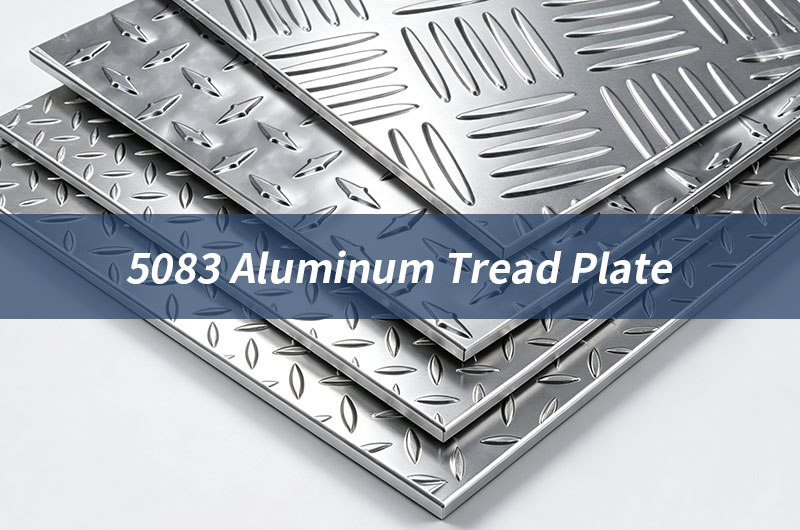
5083 Aluminum Tread Plate
Highest strength among non-heat-treatable alloys. Exceptional in marine, cryogenic, and pressure vessel applications.
- Temper: H111, H116, H321
- Thickness: 2.0 – 8 mm
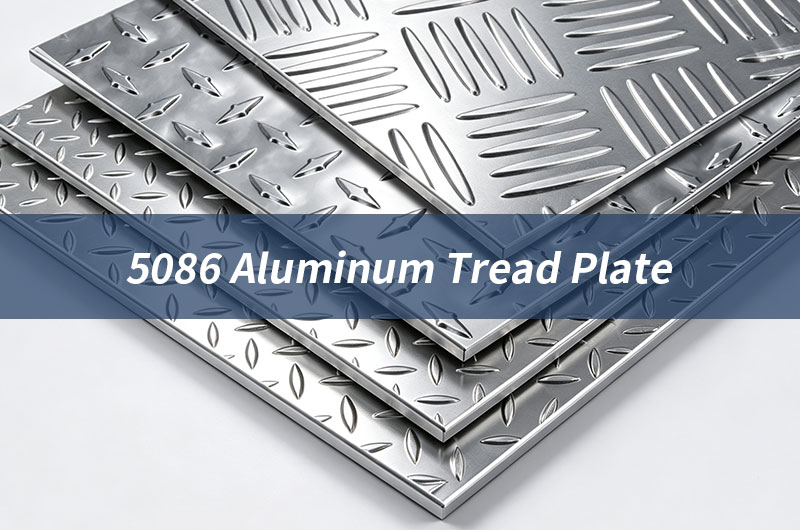
5086 Aluminum Tread Plate
Higher Mg content than 5052. Excellent seawater corrosion resistance and weldability. Common in shipbuilding and offshore structures.
- Temper: H32, H34, H116
- Thickness: 2.0 – 8 mm
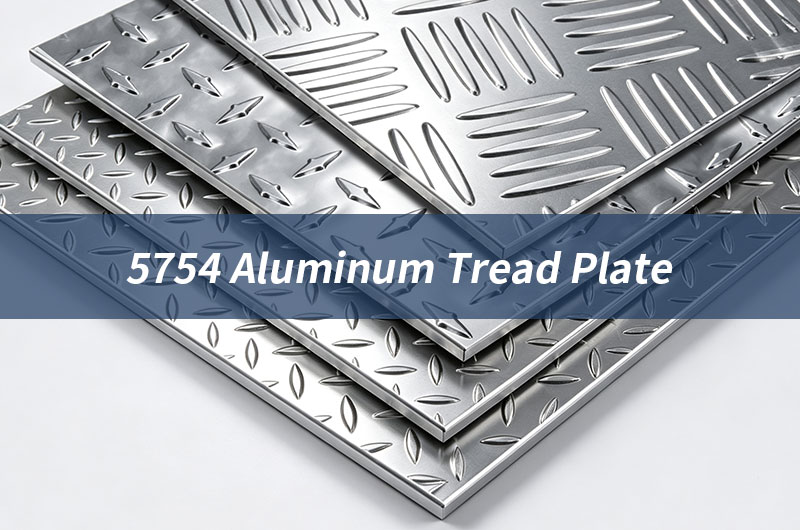
5754 Aluminum Tread Plate
Medium-high strength with excellent weldability. Widely used in automotive body panels, rail vehicles, and containers.
- Temper: H22, H24, H111
- Thickness: 1.5 – 8 mm
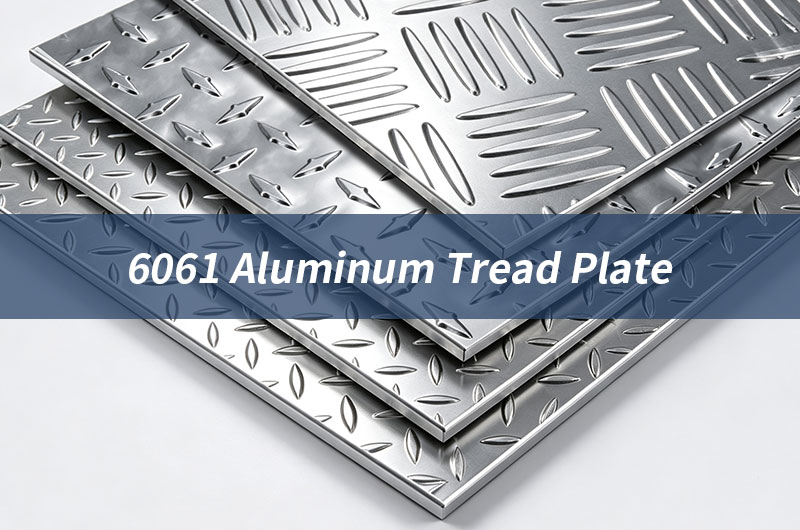
6061 Aluminum Tread Plate
Heat-treatable Mg-Si alloy. High strength in T6 temper, good machinability. Preferred for heavy-duty structural and aerospace applications.
- Temper: T4, T6
- Thickness: 1.5 – 8 mm
Aluminum Tread Plates By Pattern
Pattern selection affects both anti-slip performance and aesthetics. Choose based on load type, drainage needs, and design requirements.
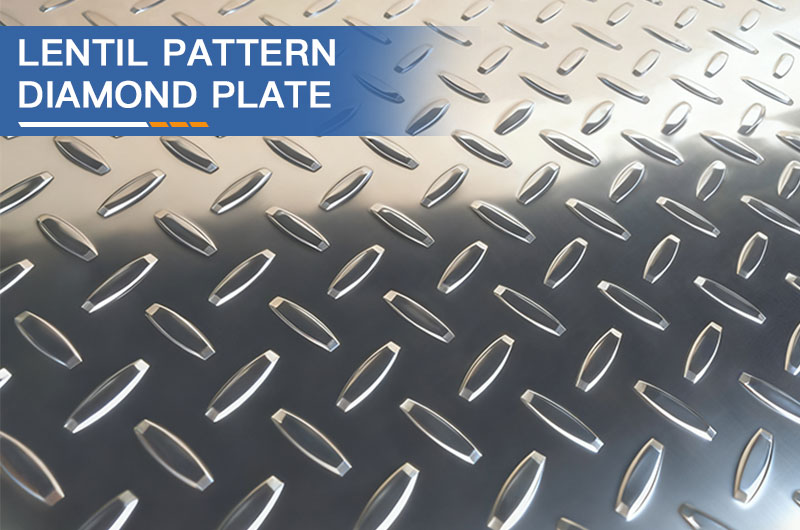
Lentil Diamond Tread Plate
Small rounded lens-shaped raised dots. Provides moderate anti-slip performance with a clean aesthetic. Common in decorative flooring and light-duty walkways.
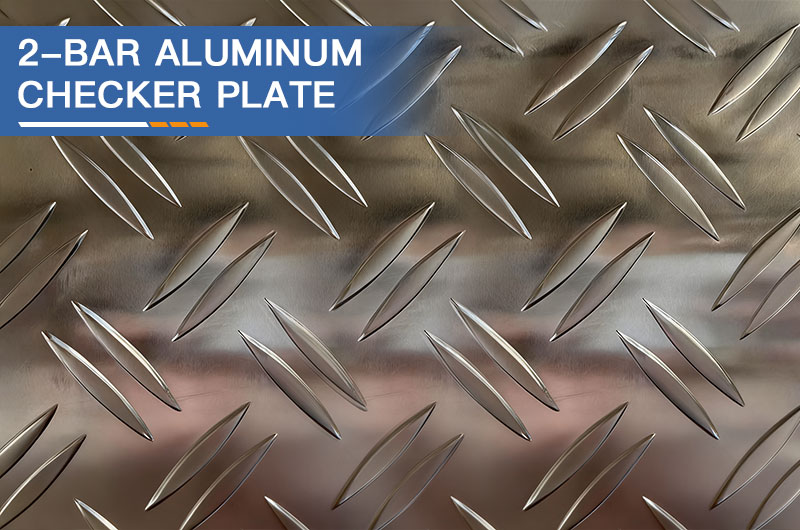
2-Bar Aluminum Checker Plate
Two parallel raised bars arranged in alternating directions. Good directional slip resistance. Used in stair treads and vehicle running boards.
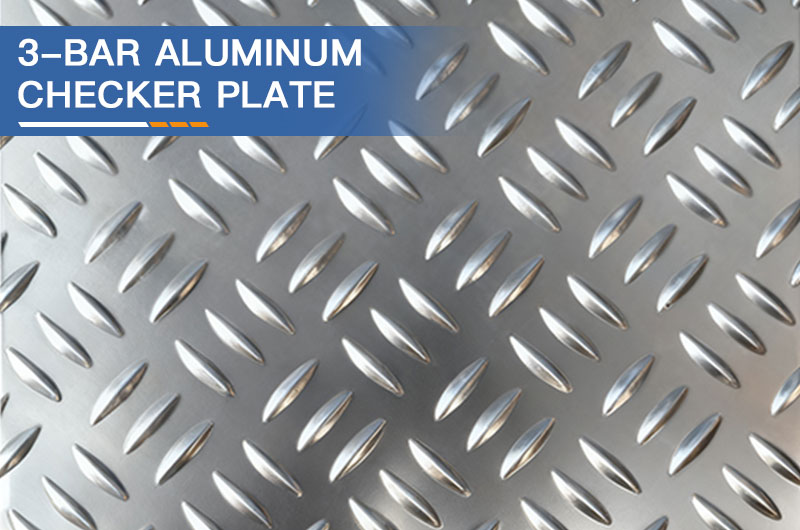
3-Bar Aluminum Checker Plate
Three parallel raised ribs per unit. Enhanced grip over 2-bar. Popular in European markets for truck bodies and industrial platforms.
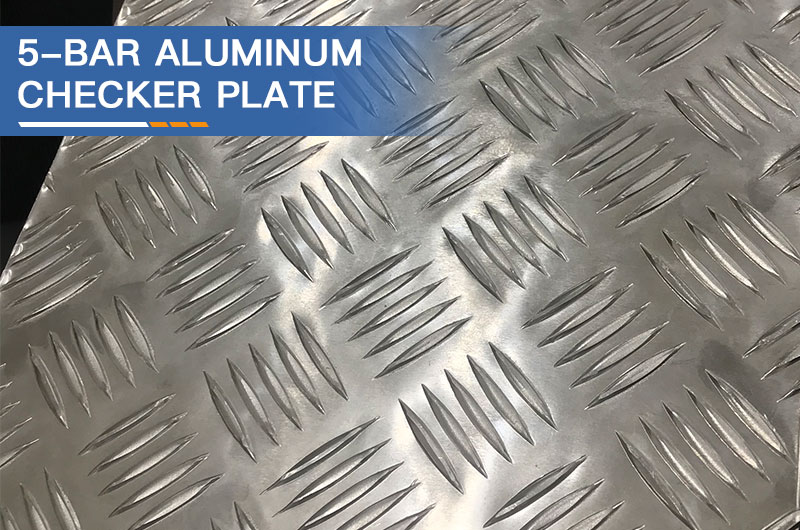
5-Bar Aluminum Checker Plate
Five parallel ribs per unit — the most widely used pattern globally. Maximum anti-slip performance. Standard choice for truck floors, bus steps, and industrial flooring.
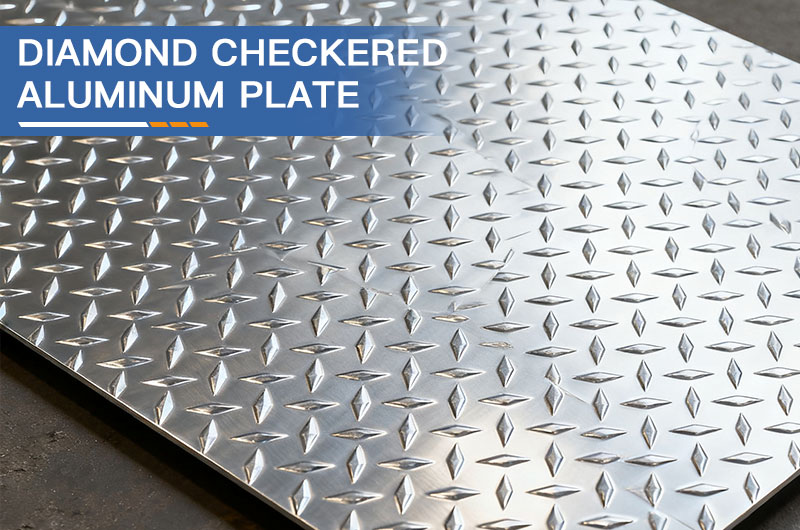
Aluminum Diamond Plate
Classic raised diamond shapes. Omnidirectional slip resistance. Most recognized pattern in North American markets. Used in toolboxes, trailers, and decorative applications.
1-Bar Checkered Aluminum Plate
Single raised rib pattern. Lightest texture profile. Primarily used in decorative cladding, wall panels, and applications where minimal protrusion is required.
Surface Treatments
Surface finish affects appearance, corrosion resistance, and maintenance requirements. Select the right finish for your environment.
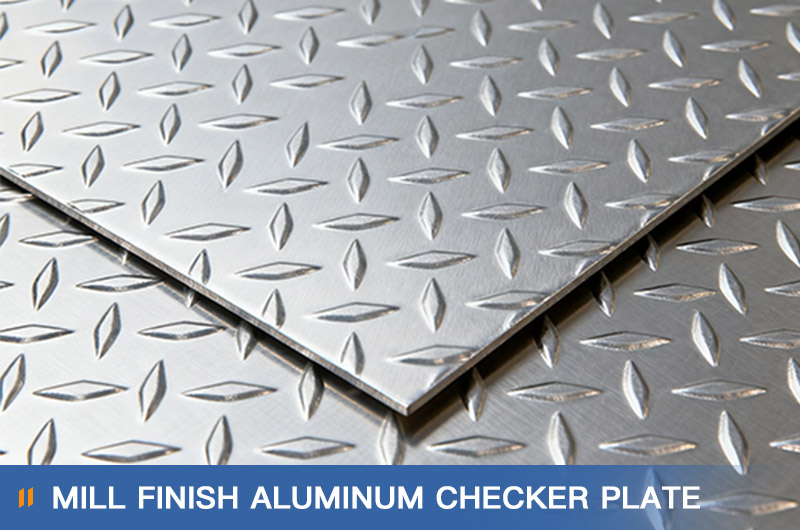
Mill Finish
Natural surface as rolled from the mill. No additional treatment. Most economical option. Suitable for industrial applications where appearance is not critical.
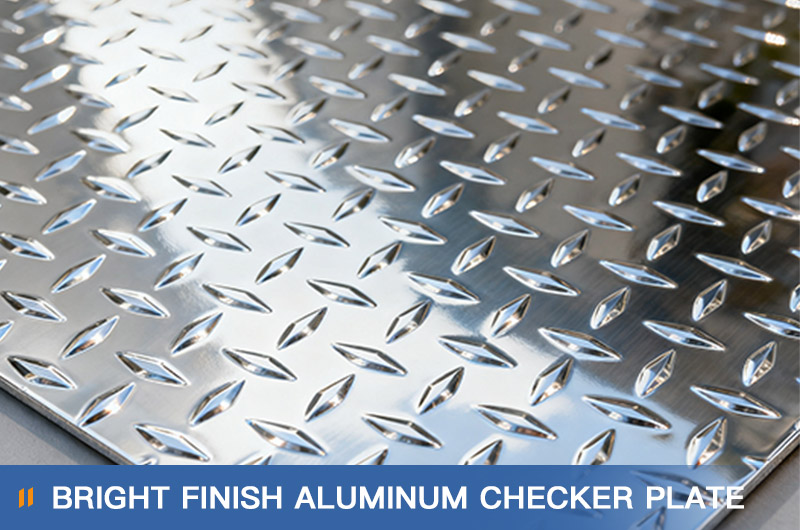
Bright Finish
Chemically or mechanically polished to a reflective surface. Used in decorative wall panels, retail displays, and automotive trim where visual impact matters.
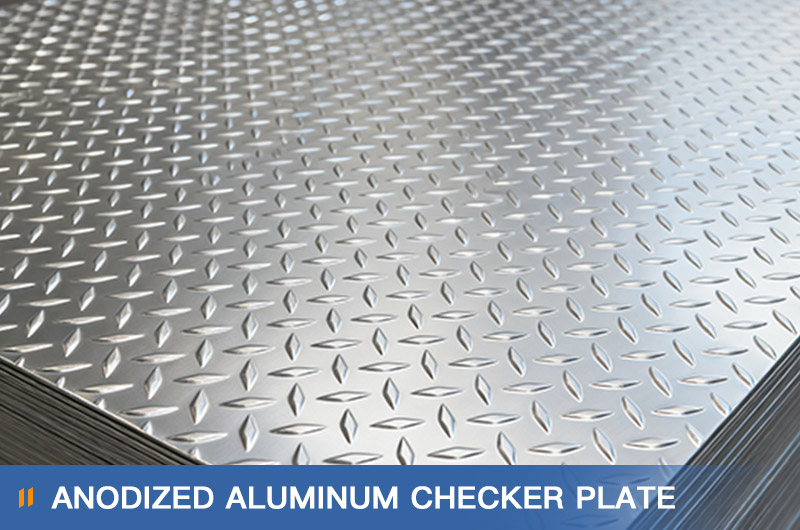
Anodized
Electrochemical process creates a hard, dense oxide layer. Superior scratch and corrosion resistance. Available in clear, silver, or colored finishes. Ideal for architectural and high-traffic applications.
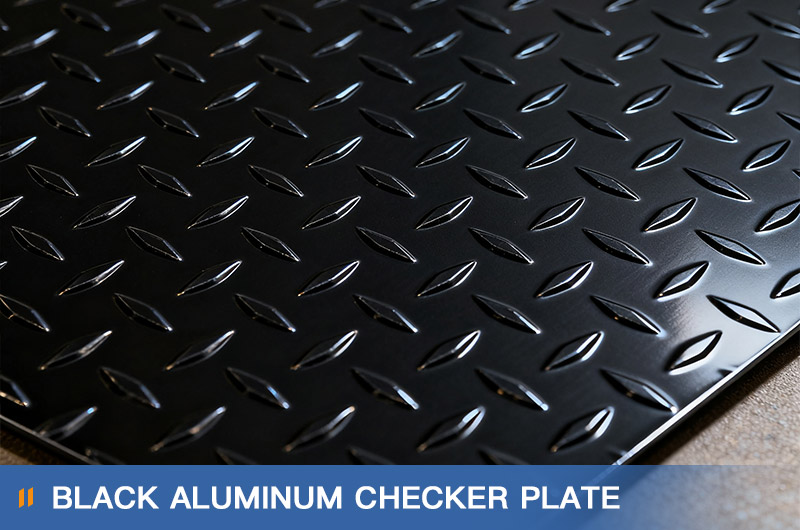
Black Finish
Black anodized or painted coating. Popular for automotive accessories, tool boxes, and interior design where a sleek dark appearance is desired.
Standard Specifications
Available dimensions, thickness ranges, and common standard sizes. Custom cutting is available on request.
| Size (ft) | Size (inches) | Size (mm) | Common Thickness |
|---|---|---|---|
| 4' x 8' | 48" x 96" | 1,219 x 2,438 | 1/8", 3/16", 1/4" |
| 4' x 16' | 48" x 192" | 1,219 x 4,877 | 1/8", 1/4" |
| 5' x 8' | 60" x 96" | 1,524 x 2,438 | 3/16", 1/4", 3/8" |
| 5' x 16' | 60" x 192" | 1,524 x 4,877 | 1/4", 3/8" |
Thickness Range
- Base plate: 1.2 mm – 8 mm
- Common imperial: 1/16", 1/8", 3/16", 1/4", 3/8"
- Pattern height: 0.5 – 2.5 mm above base
Width Range
- Standard: up to 1,600 mm
- Wide format: up to 2,200 mm
- Common: 48" (1,219 mm), 60" (1,524 mm)
Length Range
- Sheet: up to 6,000 mm
- Coil: custom lengths available
- Common: 96" (2,438 mm), 192" (4,877 mm)
Tolerance Specifications
All tolerances comply with GB/T 4437 and EN 485-2 standards. Please specify your required standard when ordering.
| Base Plate Thickness t (mm) | Nominal Pattern Height h (mm) | Allowable Deviation (mm) |
|---|---|---|
| 1.2 – 1.5 | 0.5 | ±0.20 |
| >1.5 – 2.5 | 1.0 | ±0.30 |
| >2.5 – 6.0 | 1.5 | ±0.40 |
| >6.0 – 20.0 | 2.5 | ±0.60 |
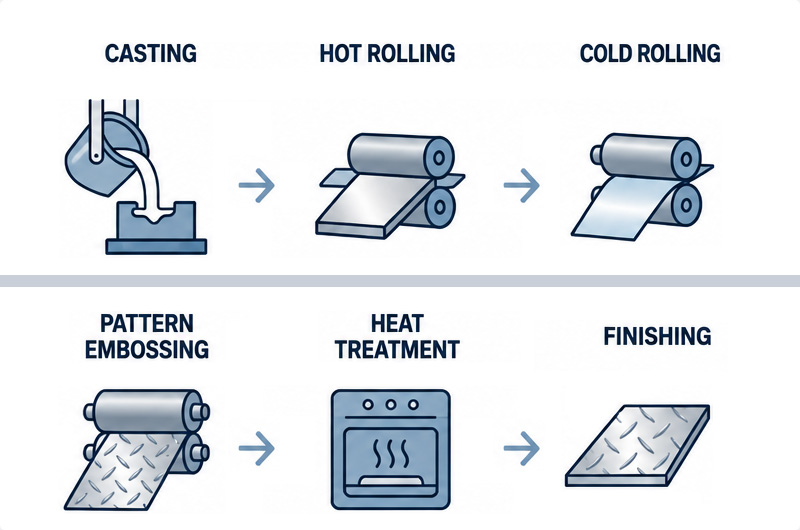
How Aluminum Tread Plate is Made
A quick look at the cold rolling and embossing process that ensures permanent durability and precise tolerances.
Produced via a high-pressure cold rolling process, the aluminum sheet passes through a specialized engraved steel cylinder. This mechanically embosses the raised texture onto the top surface while leaving the underside smooth—creating a permanent profile that will never peel or chip.
Key Production Steps
- Casting: Molten aluminum alloy is cast into slabs.
- Hot Rolling: Reduced to intermediate thickness at high heat.
- Cold Rolling: Room-temperature rolling improves strength and surface finish.
- Pattern Embossing: The final pass permanently presses the raised texture.
- Heat Treatment: Annealed or aged to achieve the target temper (e.g., H114, T6).
- Finishing: Cut to standard or custom sizes and inspected.
Applications
Aluminum tread plate is used across industries wherever anti-slip performance, durability, and lightweight construction are required.
Construction & Decoration
- Building exteriors and curtain walls
- Interior decorative wall panels
- Facade cladding and decorative strips
- Screen frames and wire troughs
Recommended alloys: 1060, 3003, 5052
Key features: Aesthetic, weather-resistant, lightweight
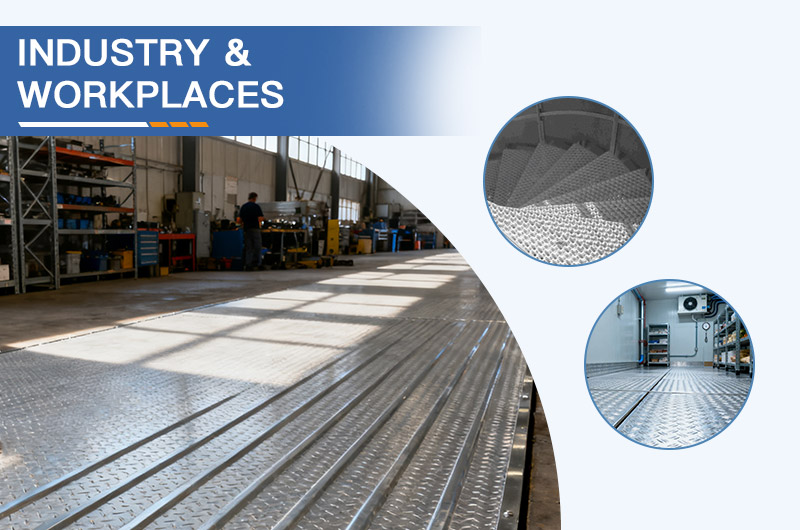
Industry & Workplaces
- Factory platforms and stair treads
- Ramps and loading areas
- Cold storage floors
- Workbenches and equipment covers
Recommended alloys: 3003, 5052, 5083, 6061
Key features: Anti-slip, load-bearing, easy to clean
Transportation
- Truck and trailer floors
- Bus steps and passenger floors
- RV and caravan interiors
- Train inspection covers
Recommended alloys: 3003, 5052, 5754, 6061
Key features: Lightweight, high strength, anti-slip
Marine & Offshore
- Ship decks and gangways
- Offshore platform walkways
- Boat hull lining
- Port facility flooring
Recommended alloys: 5052, 5083, 5086, 5754
Key features: Seawater resistant, high strength
Checker Plate vs. Tread Plate vs. Diamond Plate
These three terms are often used interchangeably — but they have subtle differences. Here's a quick reference:
| Feature | Checker Plate | Tread Plate | Diamond Plate |
|---|---|---|---|
| Definition | Refers to specific repeating patterns such as diamond or bar patterns | Umbrella term for all anti-slip raised pattern aluminum sheets | Specifically refers to diamond-shaped raised pattern only |
| Common Patterns | Diamond, 5-bar, 3-bar, 2-bar | Diamond, Rib, Coin, Needle Point, Zebra | Diamond only |
| Common Region | UK, Europe, Australia | Global / technical standard | North America |
| Scope | Narrower than Tread Plate | Broadest term | Narrowest — pattern specific |
In practice: Diamond Plate is a subset of Checker Plate, which is a subset of Tread Plate. All three refer to the same product family.
Aluminum Tread Plate vs. Alternatives
Not sure whether aluminum tread plate is right for your project? Compare it against the most common alternatives.
| Property | Aluminum Tread Plate | Steel Checker Plate | FRP Grating | Rubber Mat |
|---|---|---|---|---|
| Weight | Low (2.7 g/cm³) | High (7.85 g/cm³) | Very low | Low to medium |
| Corrosion Resistance | Excellent (self-passivating) | Poor (requires coating) | Excellent | Good |
| Strength | Medium to high | Very high | Medium | Low |
| Anti-Slip | Good | Good | Excellent | Excellent |
| Maintenance | Minimal | High (repainting) | Minimal | Medium (replacement) |
| Recyclability | 100% recyclable | 100% recyclable | Difficult | Limited |
| Relative Cost | Medium | Low to medium | Medium to high | Low |
| Best For | Transport, marine, architecture, general industrial | Heavy structural loads, budget-sensitive projects | Chemical plants, offshore platforms | Temporary flooring, low-load areas |
Mechanical Properties
Typical values per ASTM B209 and EN 485-2. Actual values may vary by thickness and supplier. Request mill test certificates for project-critical applications.
| Alloy & Temper | Ultimate Tensile Strength (MPa) | Yield Strength 0.2% (MPa) | Elongation (%) | Hardness (HB) | Density (g/cm³) |
|---|---|---|---|---|---|
| 1050-H14 | 105 | 85 | 8 | 30 | 2.71 |
| 1060-H14 | 110 | 90 | 8 | 32 | 2.71 |
| 3003-H14 | 150 | 130 | 8 | 40 | 2.73 |
| 5052-H32 | 230 | 195 | 12 | 60 | 2.68 |
| 5083-H116 | 305 | 215 | 12 | 75 | 2.66 |
| 5754-H22 | 220 | 170 | 11 | 58 | 2.67 |
| 6061-T6 | 310 | 276 | 10 | 95 | 2.70 |
Note: Values shown are typical minimums. Request certified mill test reports (MTR) for structural applications.
Fabrication & Installation Guide
Compatible with standard metalworking equipment. Follow these quick guidelines to ensure clean results and avoid common issues.
Cutting
Suitable for circular/band saws or plasma cutters.
- Tools: Use fine-tooth, carbide-tipped blades.
- Technique: Cut with the pattern facing up to prevent surface scratching.
- Cooling: Apply cutting fluid for thicker sheets.
- Finishing: Always deburr cut edges.
Bending
Best formed using a press brake. Softer tempers (H14, H24) are recommended.
- Bend Radius: 1.5x thickness for 3003/5052; 2x for 6061.
- Direction: Bend perpendicular to the rolling grain to avoid cracking.
- Hard Alloys: Anneal 6061-T6 before bending.
Welding
Easily joined using standard MIG (GMAW) or TIG (GTAW) methods.
- Prep: Clean surfaces thoroughly (e.g., with acetone).
- Filler Wire: ER4043 for 3003/6061; ER5356 for 5052/5083.
- Preheating: Rarely needed for plates under 8 mm thick.
- Warning: Welding reduces strength in the heat-affected zone of 6061-T6.
Installation
Secure via screws, rivets, bolts, or industrial adhesives.
- Fasteners: Use stainless steel or aluminum to prevent galvanic corrosion.
- Drilling: Pre-drill holes slightly oversized for thermal expansion.
- Spacing: Leave a 3–5 mm gap between panels outdoors.
How to Choose the Right Aluminum Tread Plate?
Use this quick decision guide to narrow down the right alloy, pattern, and specification for your project.
Step 1 — Evaluate the Usage Environment
Coastal or chemical environments: choose 5052, 5083, or 5086. Dry indoor environments: 1060 or 3003 are sufficient and more economical.
Step 2 — Consider Load Requirements
Heavy machinery or structural loads: choose 6061-T6. Light to medium pedestrian traffic: 3003 or 5052 are adequate.
Step 3 — Select Pattern Type
Safety-critical areas: 5-bar or diamond pattern recommended. Decorative applications: lentil, 1-bar, or custom patterns available.
Step 4 — Confirm Specifications
Thickness: 1.2 – 8 mm. Width: up to 2,200 mm. Temper: H14/H24 for formability, T6 for maximum strength. Standards: GB/T 4437, EN 485-2, or ASTM B209.
Standards & Certifications
Our aluminum tread plates are produced and tested in compliance with major international standards. Specify your required standard when placing an order.
ASTM B209
Standard specification for aluminum and aluminum-alloy sheet and plate. The primary standard used in North America (US and Canada) for mechanical and chemical composition requirements.
Common in: USA, Canada, Mexico
EN 485-2
European standard covering mechanical properties of aluminum alloy sheet, strip, and plate. Applies alongside EN 573-3 for chemical composition requirements.
Common in: EU, UK, Australia, Middle East
GB/T 4437
Chinese national standard for aluminum and aluminum alloy hot-rolled tread plates. Defines pattern requirements, dimensional tolerances, and surface quality specifications.
Common in: China, Southeast Asia
ISO 6361
International standard for wrought aluminum and aluminum alloy sheets, strips, and plates. Used as a harmonized reference across multiple national standards.
Common in: International projects
Mill Test Certificate (MTC)
Also known as a Material Test Report (MTR). Documents the actual chemical composition and mechanical test results for each production batch. Available on request for all orders.
Required for: Structural, marine, pressure vessel applications
RoHS / REACH Compliance
Our products comply with EU RoHS Directive 2011/65/EU and REACH Regulation (EC) 1907/2006, confirming the absence of restricted hazardous substances. Compliance documentation available on request.
Required for: EU market, electronics, food-contact applications
Frequently Asked Questions
What is the difference between aluminum tread plate and regular aluminum sheet?
Regular aluminum sheet has a flat, smooth surface on both sides. Aluminum tread plate has raised patterns embossed on one side during rolling. These patterns increase surface friction significantly compared to plain sheet, making tread plate the preferred choice for flooring, ramps, and stair treads where slip resistance is essential.
Which alloy is best for outdoor aluminum tread plate?
For general outdoor use, 3003-H14 offers a good balance of corrosion resistance and cost. For coastal or high-humidity environments, 5052-H32 or 5083-H116 are recommended due to their superior saltwater corrosion resistance. Anodized finish further extends outdoor service life.
What thickness of aluminum tread plate do I need for a truck floor?
For light-duty truck floors such as vans and pick-ups, 1/8" (3.18 mm) is typically sufficient. For medium-duty trucks or trailers with regular loading, 3/16" (4.76 mm) is recommended. For heavy-duty applications with frequent forklift or pallet jack use, 1/4" (6.35 mm) or thicker is advised. Most truck floor applications use 3003 or 5052 alloy with a 5-bar pattern.
Can aluminum checker plate be welded?
Yes. Most aluminum tread plate alloys are weldable using MIG or TIG processes. 5052, 5083, and 5754 alloys have excellent weldability. 3003 is also weldable. 6061-T6, while weldable, loses some strength in the heat-affected zone after welding. Post-weld heat treatment may be required for structural applications.
What is the standard size of aluminum tread plate?
The most common standard size is 4' x 8' (48" x 96" / 1,219 x 2,438 mm). Other common sizes include 4' x 16', 5' x 8', and 5' x 16'. Custom cutting to specific dimensions is available. Coil form is also available for high-volume or continuous-length requirements.
How do I clean and maintain aluminum tread plate?
Aluminum tread plate requires minimal maintenance. For routine cleaning, use mild soap or detergent with warm water and a soft brush or cloth. Avoid abrasive cleaners or steel brushes that can scratch the surface. For anodized or painted finishes, pH-neutral cleaners are recommended. In marine environments, periodic rinsing with fresh water removes salt deposits and helps prevent surface corrosion.