


In high-end manufacturing fields such as aerospace and defense, how do you balance lightweight, high strength, and excellent machinability? 2014 aluminum alloy plate provides a century-tested answer, having been successfully applied since 1928. As the most widely used classic grade in the 2000 series alloys, it is the ideal choice for high-end equipment.
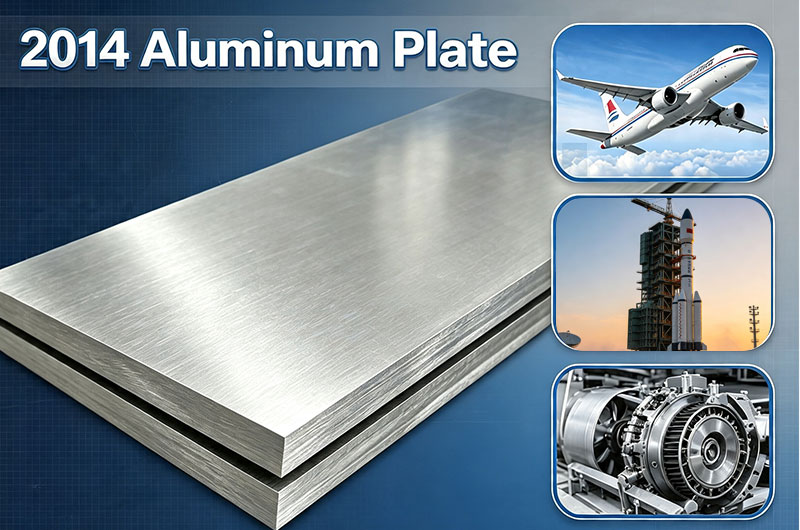
Worthwill focuses on the supply of high-performance aluminum materials. We can provide 2014 aluminum plates in full specifications and all tempers according to international standards such as ASTM, AMS, BS, and EN, offering you professional material solutions.
Overview of 2014 Aluminum Alloy
Grade Definition and Classification
2014 aluminum alloy belongs to the 2000 series aluminum-copper alloys, with copper as the primary alloying element. From the perspective of compositional characteristics, it possesses the dual attributes of both duralumin and forged aluminum, which is relatively rare among alloys in the same series.
The main international equivalent grades for this alloy are as follows:
| Standard System | Grade / Designation |
|---|---|
| Aluminum Association (AA) | 2014 |
| UNS Number | A92014 |
| ISO Chemical Designation | AlCu4SiMg |
| German DIN | 3.1255 / 3.1254 |
| French AFNOR | A-U4SG |
| British BS | H15 / HE15 / L168 |
| European EN | EN AW-2014 |
The Difference Between 2014 and 2014A
2014A is a stricter version under the European standard (EN 573-3). The chemical compositions of the two are highly similar, with the core difference reflecting in the upper limits of two elements:
- Iron (Fe) upper limit: 0.70% for 2014, 0.50% for 2014A.
- Silicon (Si) upper limit: 1.20% for 2014, 0.90% for 2014A.
The stricter impurity control of 2014A gives it an advantage in fatigue performance and stability, making it more commonly used in the European aerospace sector. When purchasing, it must be clearly distinguished based on the final end-use and customer-specified standards.
Chemical Composition (Dual Standard Comparison)
| Element | ASTM B209 (US Standard) | EN 573-3 (European Standard / 2014A) |
|---|---|---|
| Aluminum (Al) | Remainder | Remainder |
| Copper (Cu) | 3.9~5.0% | 3.9~5.0% |
| Silicon (Si) | 0.50~1.20% | 0.50~0.90% |
| Manganese (Mn) | 0.40~1.20% | 0.40~1.20% |
| Magnesium (Mg) | 0.20~0.80% | 0.20~0.80% |
| Iron (Fe) | ≤ 0.70% | ≤ 0.50% |
| Zinc (Zn) | ≤ 0.25% | ≤ 0.25% |
| Chromium (Cr) | ≤ 0.10% | ≤ 0.10% |
| Titanium (Ti) | ≤ 0.15% | ≤ 0.15% |
| Titanium + Zirconium (Ti+Zr) | ≤ 0.20% (Extrusions/Forgings) | ≤ 0.20% |
| Nickel (Ni) | — | ≤ 0.10% |
| Others (Each) | ≤ 0.05% | ≤ 0.05% |
| Others (Total) | ≤ 0.15% | ≤ 0.15% |
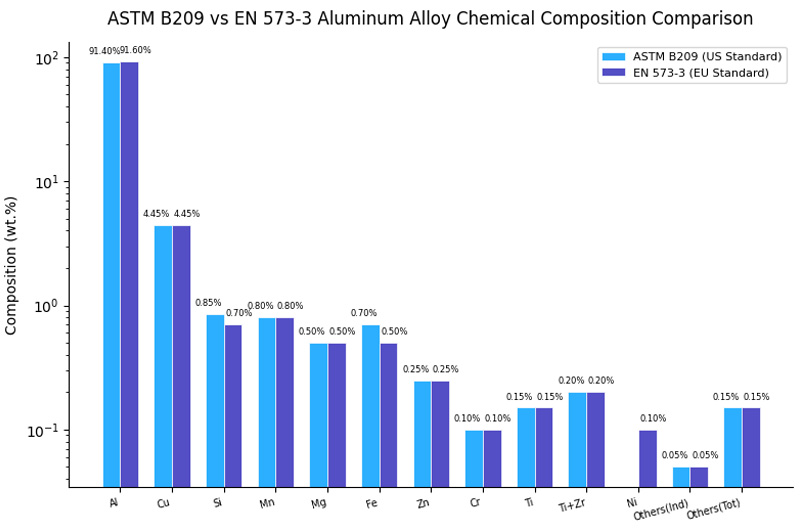
Interpretation of Core Elements:
- Copper (Cu): Core strengthening element; improves strength and high-temperature properties (at the expense of some corrosion resistance).
- Silicon/Magnesium (Si/Mg): Forms strengthening phases; improves hardness and heat treatment response.
- Manganese (Mn): Refines grain structure; enhances fatigue resistance and high-temperature stability.
- Zirconium (Zr): Raises the recrystallization temperature; extends high-temperature working life.
Product Specifications
Standard Plate Specifications
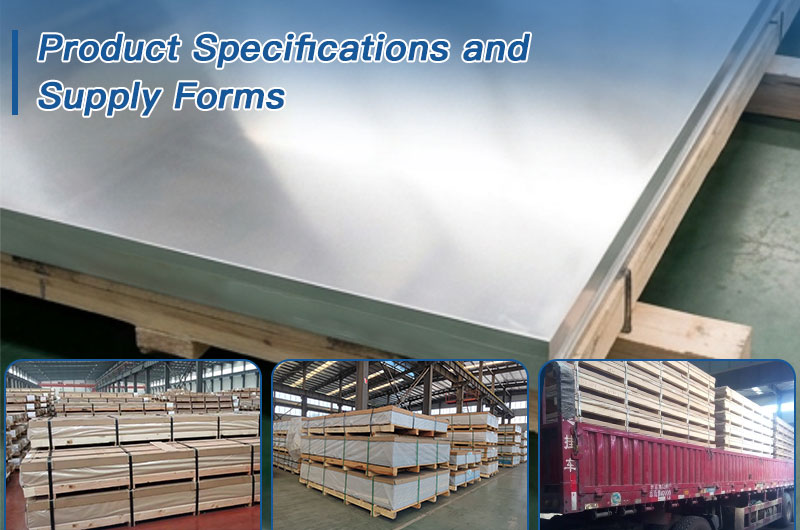
The 2014 aluminum alloy plates supplied by Worthwill cover a complete specification range from ultra-thin sheets to ultra-thick plates:
| Parameter | Specification Range |
|---|---|
| Thickness | 0.2 mm~250 mm |
| Width | 500 mm~2650 mm |
| Length | 500 mm~16000 mm |
| Supplied Tempers | O, T3, T4, T351, T6, T651, T62, T6510, T6511, H112, F |
Alclad Aluminum Sheet (Aerospace Specific Specifications)
| Temper | Thickness | Standard Size |
|---|---|---|
| T6 Alclad | 0.8~6.0 mm | 1500 × 3000 mm |
| T4 Alclad | 0.2~6.0 mm | Customizable |
Common Thickness Series (T6/T651 Temper, Custom Saw-Cutting Supported)
0.8mm, 1.0mm, 1.5mm, 2.0mm, 4.0mm, 5.0mm, 8.0mm, 10mm, 12mm, 16mm, 20mm, 25mm, 30mm, 40mm, 50mm, 60mm, 70mm, 80mm, 90mm, 100mm, 110mm, 120mm, 130mm, 140mm, 150mm, 160mm.
All the above specifications support custom saw-cutting. If larger thickness specifications are required (up to 600mm), please contact the Worthwill sales team.
Other Product Forms
In addition to plates, Worthwill simultaneously stocks 2014 aluminum alloy products in the following forms:
Round bar, flat bar, square bar, hex bar, wire, seamless tube, drawn tube, extruded profile, T-profile, channel profile, forging stock, rivet stock, strip, etc.
If there is a demand for spherical powder (specifically for 3D printing, particle size 15~105 μm), you can also contact the Worthwill technical team for customization.
Physical Properties
The density of 2014 aluminum alloy is only about 1/3 of that of steel, yet it possesses excellent thermal and electrical conductivity, making it suitable for weight-sensitive structural applications.
| Physical Property | Value |
|---|---|
| Density | 2.80~2.82 g/cm³ |
| Elastic Modulus | 71~73 GPa |
| Shear Modulus | 28 GPa |
| Poisson's Ratio | 0.33 |
| Thermal Conductivity | 138~154 W/m·K |
| Coefficient of Thermal Expansion (CTE) | 23 × 10⁻⁶/K (20~100°C) |
| Electrical Resistivity | 0.045 × 10⁻⁶ Ω·m |
| Electrical Conductivity | Approx. 40% IACS |
| Solidus Temperature | 507°C |
| Liquidus Temperature | 638°C |
| Latent Heat of Fusion | 400 J/g |
| Specific Heat Capacity | 0.88 J/g·°C |
| Thermal Diffusivity | 58 mm²/s |
| Maximum Service Temperature (Mechanical) | 210°C |
It should be particularly noted that the thermal conductivity of 2014 aluminum alloy is 2 to 3 times that of steel, which gives it a natural advantage in applications requiring rapid heat dissipation. Meanwhile, the thermal expansion coefficient of 23 × 10⁻⁶/K must be taken into account during structural design, especially in high-temperature conditions or environments with significant temperature differences.
Detailed Mechanical Properties
Summary Comparison of Mechanical Properties Across All Tempers
2014 aluminum alloy covers more than ten supply tempers from O temper to T652. The mechanical properties vary significantly between different tempers. Choosing the correct temper is the core aspect of a procurement decision:
| Temper | Tensile Strength | Yield Strength | Elongation | Hardness (HB) | Fatigue Strength |
|---|---|---|---|---|---|
| O | 190 MPa | 100 MPa | 16% | 48 | 90 MPa |
| H111 | 210 MPa | 110 MPa | 14% | — | 93 MPa |
| T3 | 450 MPa | 280 MPa | 14% | 110 | 130 MPa |
| T351/T3511 | 430 MPa | 330 MPa | 6.7% | — | 120 MPa |
| T3510 | 430 MPa | 320 MPa | 6.8% | — | 120 MPa |
| T4 | 430 MPa | 270 MPa | 14% | 110 | 140 MPa |
| T42 | 430 MPa | 250 MPa | 14% | 110 | 130 MPa |
| T451 | 440 MPa | 270 MPa | 15% | 110 | 140 MPa |
| T4510 | 410 MPa | 270 MPa | 11% | — | 130 MPa |
| T4511 | 400 MPa | 270 MPa | 10% | — | 130 MPa |
| T6 | 490 MPa | 420 MPa | 6.8% | 140 | 130 MPa |
| T651 | 490 MPa | 420 MPa | 7.5% | 140 | 130 MPa |
| T62 | 500 MPa | 440 MPa | 7.3% | 130 | 160 MPa |
| T6510/T6511 | 480 MPa | 400 MPa | 6.0% | — | 140 MPa |
| T652 | 460 MPa | 390 MPa | 1.5% | — | 120 MPa |
- From a strength perspective: T62 temper is the highest (500 MPa), followed by T6/T651 (490 MPa), making them the first choice for the vast majority of high-strength structural applications.
- From a plasticity perspective: O temper has the highest elongation (16%), and T451 reaches 15%, suitable for scenarios requiring subsequent forming operations.
- T652 temper has an elongation of only 1.5%, which is the lowest ductility among all tempers. However, its stress relief is achieved through compression, making it suitable for forgings that require extremely high dimensional stability.
Mechanical Properties of Plates by Thickness (EN 485-2, T651 Temper)
Plate thickness has a direct impact on mechanical properties. The following data provides a precise reference for engineering design:
| Thickness Range | Min Tensile Strength | Min Yield Strength | Min Elongation | Hardness (HB) |
|---|---|---|---|---|
| 0.4~6 mm | 440 MPa | 390 MPa | — | 133 |
| 6~12.5 mm | 450 MPa | 395 MPa | ≥7% | 135 |
| 12.5~40 mm | 460 MPa | 400 MPa | ≥6% | 138 |
| 40~60 mm | 450 MPa | 390 MPa | ≥5% | 135 |
| 60~80 mm | 435 MPa | 380 MPa | ≥4% | 131 |
The 12.5~40 mm thickness range offers the best comprehensive properties, with a minimum tensile strength of 460 MPa, making it the ideal interval for heavy structural parts and aerospace thick plates.
Beyond 40 mm, the properties show a regular decline as thickness increases. This is determined by the metallurgical characteristics of the aluminum alloy material, and a reasonable safety factor should be set during design accordingly.
Mechanical Properties of Bars by Diameter
| Temper | Diameter Range | Tensile Strength | Yield Strength | Elongation |
|---|---|---|---|---|
| T4 | < 20 mm | ≥370 MPa | ≥230 MPa | ≥11% |
| T4 | 20~75 mm | ≥390 MPa | ≥250 MPa | ≥11% |
| T4 | 75~150 mm | ≥390 MPa | ≥250 MPa | ≥9% |
| T4 | 150~200 mm | ≥370 MPa | ≥230 MPa | ≥8% |
| T6510 | 20~75 mm | ≥480 MPa | ≥435 MPa | ≥7% |
| T6510 | 75~150 mm | ≥465 MPa | ≥420 MPa | ≥7% |
| T6510 | 150~200 mm | ≥435 MPa | ≥390 MPa | ≥7% |
Performance Comparison Between Bare Sheet and Alclad Sheet (T4/T6)
Alclad sheet is produced by cladding a pure aluminum layer on the surface of the 2014 aluminum plate. Although it slightly reduces the mechanical properties, it significantly improves corrosion resistance, making it the standard material form in the aerospace skin sector:
| Type | Temper | Thickness | Tensile Strength | Yield Strength | Elongation |
|---|---|---|---|---|---|
| Bare | T4 | 0.2–6 mm | ≥400 MPa | ≥225 MPa | 13–14% |
| Bare | T6 | 0.2–6 mm | ≥440 MPa | ≥380 MPa | 6–8% |
| Alclad | T4 | 0.2–1.6 mm | ≥385 MPa | ≥240 MPa | 13–14% |
| Alclad | T4 | 1.6–6 mm | ≥395 MPa | ≥245 MPa | 14% |
| Alclad | T6 | 0.2–1.6 mm | ≥420 MPa | ≥345 MPa | 7–8% |
| Alclad | T6 | 1.6–6 mm | ≥420 MPa | ≥355 MPa | 9% |
Strength Variation Data at High Temperatures (T6/T651 Temper)
This set of data is crucial for engineers dealing with operating conditions such as aero-engine parts and high-temperature structural components:
| Temperature | Tensile Strength | Yield Strength | Elongation |
|---|---|---|---|
| -196°C | 579 MPa | 496 MPa | 14% |
| -80°C | 510 MPa | 448 MPa | 13% |
| -28°C | 496 MPa | 427 MPa | 13% |
| 24°C (Room Temp) | 483 MPa | 414 MPa | 13% |
| 100°C | 439 MPa | 393 MPa | 15% |
| 149°C | 276 MPa | 241 MPa | 20% |
| 204°C | 110 MPa | 90 MPa | 38% |
| 260°C | 66 MPa | 52 MPa | 52% |
| 316°C | 45 MPa | 34 MPa | 65% |
| 371°C | 30 MPa | 24 MPa | 72% |
2014 aluminum alloy shows a significant performance improvement at low temperatures. At -196°C, its tensile strength reaches a high of 579 MPa while maintaining a good elongation of 14%, exhibiting excellent low-temperature toughness suitable for cryogenic applications.
Regarding high temperatures, the strength begins to drop rapidly after exceeding 149°C. At 204°C, the strength is only about 23% of that at room temperature. Therefore, it is recommended that the maximum service temperature not exceed 210°C. Going beyond this range requires evaluating material replacement or structural reinforcement plans.
Other Key Mechanical Parameters (T6/T651 Temper)
| Parameter | Value |
|---|---|
| Compressive Strength | 470 MPa |
| Shear Strength | 290 MPa |
| Bearing Ultimate Strength | 889 MPa (e/D=2.0) |
| Bearing Yield Strength | 662 MPa (e/D=2.0) |
| Notch Tensile Strength | 414 MPa (Kt=17) |
| Fracture Toughness KIC | 19.0 MPa·m½ (TL direction) |
| Fatigue Strength | 124 MPa (5×10⁸ cycles) |
| Machinability Score | 70% (0–100 scale for Al alloys) |
Heat Treatment Specifications and Temper Selection
2014 aluminum alloy is a heat-treatable strengthening alloy. Common processes include homogenizing annealing (475–490°C), full annealing (O temper), and solution quenching + aging (solution temperature 495–505°C followed by water quenching; natural aging → T4, artificial aging → T6).
Common supply tempers and applicable scenarios are as follows:
| Temper | Characteristics | Applicable Scenarios |
|---|---|---|
| O | Highest plasticity | Bending and forming |
| T3/T4 | Medium strength, good ductility | Structural formed parts |
| T6 | Highest strength | Heavy-duty structural parts |
| T651 | Low residual stress, dimensionally stable | Precision machining of thick plates (Recommended) |
Selection Advice: Choose T3/T4 for forming and processing, T6 for high-strength load-bearing, and T651 as the first choice for precision machining. Pay attention to surface protection after artificial aging to prevent intergranular corrosion.
Processing and Joining Properties
Machinability: 2014 aluminum alloy has excellent machinability, with a comprehensive score of about 70% (based on 2011 alloy as the benchmark). O temper has the best machinability, and T6 temper also performs well. It is recommended to use cutting oil for lubrication throughout the process to effectively control cutting heat and extend tool life.
Welding Performance:
Influenced by the high copper content, the fusion weldability of 2014 aluminum alloy is limited. Resistance welding (spot welding/seam welding) is the preferred method. If fusion welding is necessary, MIG is recommended with strict process control; gas welding and brazing are not recommended.
Aerospace structural components usually prioritize the following joining methods:
- Riveting: The standard solution for high-stress areas, offering high reliability.
- Bolting: Suitable for parts requiring regular disassembly and maintenance.
- Adhesive Bonding + Riveting: Hybrid joining for more uniform stress distribution.
Formability:
Cold forming is recommended in the T3 or T4 temper, avoiding excessively small bending radii. Hot forming temperature ranges from 150 to 205°C, and forging temperature is between 400 and 455°C. If the upper forging limit is exceeded, re-solution heat treatment is required to restore mechanical properties.
Corrosion Protection Solutions
Due to its high copper content, 2014 aluminum alloy has relatively weak resistance to atmospheric corrosion. In humid or marine environments, surface protection must be incorporated during the design phase. Worthwill offers the following complete protection options:
- Alclad Treatment: Aerospace standard solution. Double-sided cladding with high-purity aluminum provides the best anti-corrosion with minimal strength loss, widely used in aircraft skins and fuselage structures.
- Hard Anodizing: Forms a dense, hard oxide film, significantly enhancing wear and corrosion resistance. Suitable for high-hardness structural parts and is the mainstream treatment for 2014A.
- Normal Anodizing: Balances corrosion protection and appearance with a moderate protection level, suitable for general industrial structural parts and civilian sectors.
- Electroplating: Provides nickel or zinc plating to further improve corrosion and wear resistance, specifically used for the surface protection of precision-fitted parts.
- Protective Grease Coating: Lanolin-based protective oil is recommended. It is easy to apply and is the most reliable short-term protection scheme during storage and transportation.
- Painting: Effectively isolates corrosive media, representing the most economical and effective long-term protection scheme for outdoor or atmospheric exposure environments.
Executed Standard Systems
Worthwill can supply materials according to the following international standards and provide complete quality certificates, covering the certification requirements of major global markets:
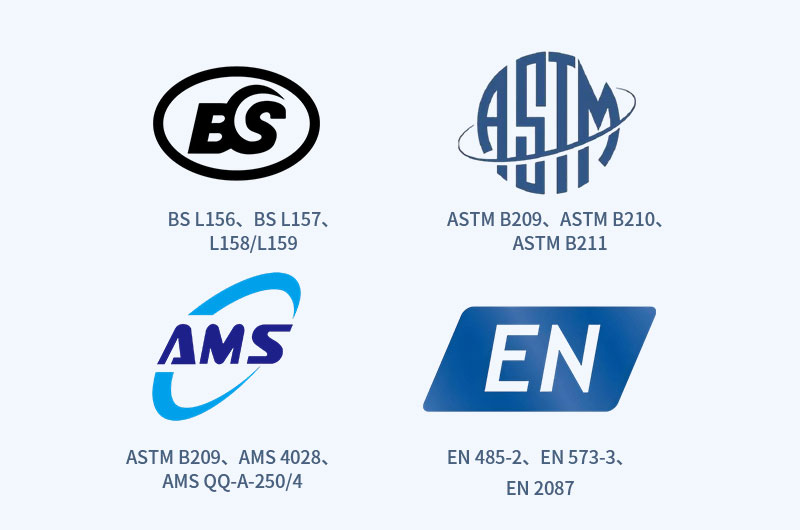
ASTM Standards (USA): B209 (Plate/Sheet), B210 (Drawn Seamless Tube), B211 (Bar/Wire), B221 (Extruded Bar/Wire/Profile), B241 (Seamless Pipe/Tube), B247 (Forgings)
AMS Aerospace Material Specifications:
| Standard No. | Applicable Product | Temper |
|---|---|---|
| AMS 4028 | Plate/Sheet | T0 |
| AMS 4029 | Plate/Sheet | T651 |
| AMS 4121 | Bar/Wire | T6 |
| AMS 4133 | Forgings/Rolled Rings | T6 |
| AMS 4134 | Die Forgings | T4 |
| AMS 4153 | Extrusions | T6 |
British BS Standards: L156 (Sheet T4), L157 (Sheet T6), L158/L159 (Close tolerance sheet), L163/L164/L165/L166/L167 (Alclad sheet various tempers), L168 (Bar T6/T6510/T6511), 2L77 (Forging T6), 2L93 (Plate 2014A), 7L37 (Rivet stock), H15 (General purpose)
European EN Standards: EN 485-2 (Mechanical properties), EN 573-3 (Chemical composition), EN 2088, EN 2089, EN 2395 (Sheet), EN 2100, EN 2634, EN 2635 (Bar), AECMA 2387
Military and Government Standards: QQ-A-250/3, QQ-A-250/4, QQ-A-200/2, QQ-A-225/4, MIL-A-12545, MIL-T-15089, DTD 5010, DTD 5030
Horizontal Comparison of 2014 Alloy with Same-Series Alloys
During the material selection phase, the question engineers face most often is: Why choose 2014 instead of 2024, 7075, or 6061?
| Comparison Dimension | 2014-T6 | 2024-T3 | 7075-T6 | 6061-T6 |
|---|---|---|---|---|
| Typical Tensile Strength | 483 MPa | 485 MPa | 572 MPa | 310 MPa |
| Typical Yield Strength | 414 MPa | 345 MPa | 503 MPa | 276 MPa |
| Fatigue Strength | 124 MPa | 138 MPa | 159 MPa | 97 MPa |
| Hardness HB | 135 | 120 | 150 | 95 |
| Machinability | Excellent (70%) | Good | Good | Good |
| Corrosion Resistance | Weak | Weak | Weak | Good |
| Weldability | Limited | Limited | Limited | Good |
| Density | 2.80 g/cm³ | 2.78 g/cm³ | 2.81 g/cm³ | 2.70 g/cm³ |
| Typical Advantage Scenario | Forgings/Thick plates/Molds | Skins/Fatigue parts | Highest strength requirement | General structural parts |
Core Positioning: When the requirement demands both high strength (>400 MPa) and excellent machinability, 2014 is the best balanced choice.
Competitive Advantages:
- Vs. 7075: Better machinability, more mature heat treatment process, more competitive cost. It is the first choice for forgings and precision machining.
- Vs. 2024: Richer engineering experience in the field of thick plates and forgings, slightly better high-temperature strength, and higher hardness (HB 135 vs 120).
- Vs. 6061: Tensile strength is about 56% higher, and hardness is about 42% higher. It has an overwhelming advantage in high-strength application scenarios.
Core Application Fields

Aerospace
- Core structural parts: Fuselage frames, wing spars, hydraulic cylinder brackets, and engine structural components.
- Extreme condition parts: T6 forgings are used to withstand high impact, variable loads, and fatigue, such as landing gear.
- High anti-corrosion parts: Alclad sheet is used to balance the high strength of the base material with high corrosion resistance, such as aircraft skins.

Space and Defense
- Space lightweighting: First-stage fuel tanks of rockets, spacecraft precision components, missile structural parts.
- Military impact resistance: Military vehicle chassis and suspensions, military bridge load-bearing components, precision weapon parts adapted to harsh battlefields.
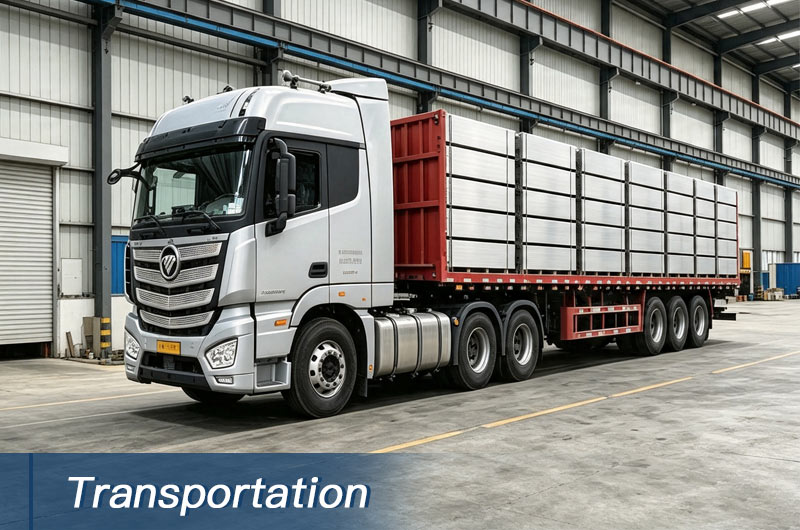
Transportation (Commercial Heavy Truck Lightweighting)
- Typical applications: Truck hubs and frames.
- Weight & Cost Reduction: Replaces traditional steel, reducing weight by 50%~60% without compromising strength, thereby drastically lowering overall vehicle fuel consumption.
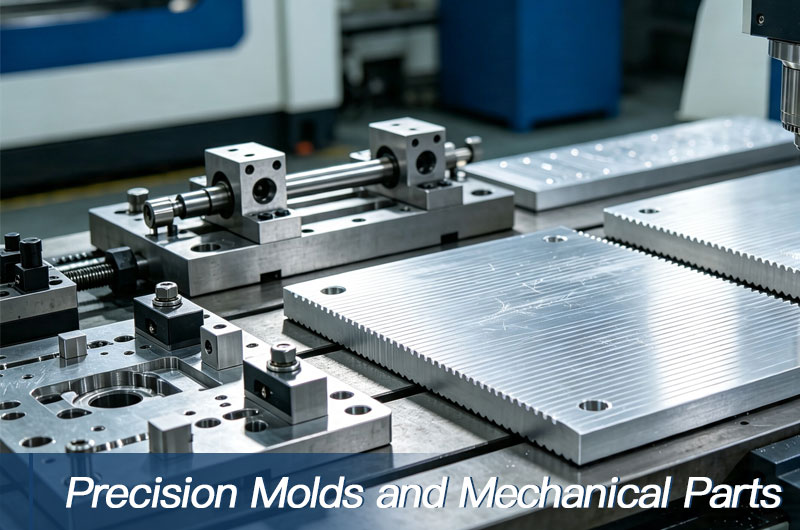
Precision Molds and Mechanical Parts
- Material advantages: Brinell hardness reaches up to 135 HB, excellent machinability (up to 70%).
- Typical applications: Automotive injection molds, high-precision fixtures, propeller components, hydraulic parts, and high-strength rivets.
- Specification coverage: Thicknesses from 0.3 mm to 600 mm, meeting demands from thin-walled parts to ultra-large mold blanks.
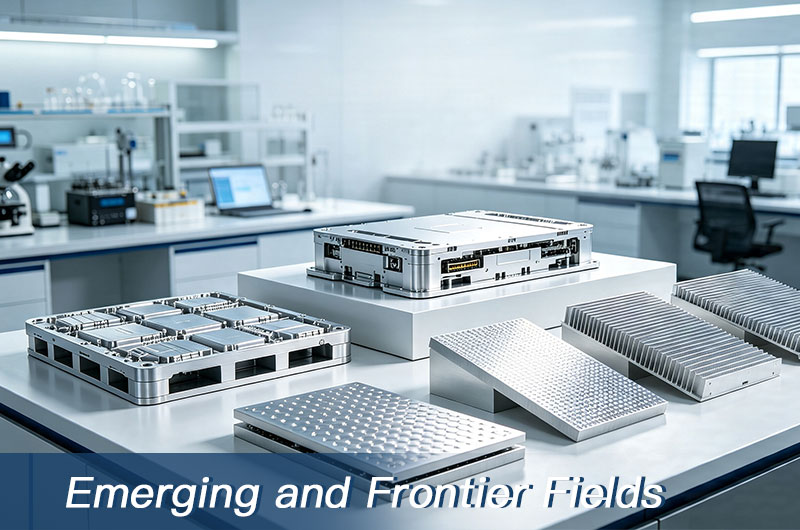
Emerging and Frontier Fields
- Additive Manufacturing: Made into alloy powder (15~105 μm) for 3D printing of complex parts, powder metallurgy, and thermal spraying.
- High-end Racing: Race cars (Formula car bodies and suspensions) and high-end sports equipment, meeting the dual requirement of being "extremely light + extremely strong."
Procurement Selection Guide
Quick Temper Selection
- Highest Strength / Heavy Forgings: Choose T6 or T651
- Subsequent Bending / Skin Surfaces: Choose O temper
- Precision Machining / Low Stress Thick Plates: Choose T651 or T351
- Comprehensive Strength / Fuselage Frames: Choose T4 or T451
- Low Stress Extruded Profiles / Tubes: Choose T6510 or T6511
- Ultimate Strength / Self-Heat Treatable: Choose T62
Quality Acceptance Key Points
- Mandatory MTR Certificate Check: Verify chemical composition, mechanical properties, heat treatment records, and executed standards.
- T6 Temper Plates: Focus on Intergranular Corrosion (IGC) test results and protective measures.
- Thick Plates (>40 mm): Must request an Ultrasonic Testing (UT) report to rule out internal metallurgical defects.
Storage and Packaging Specifications
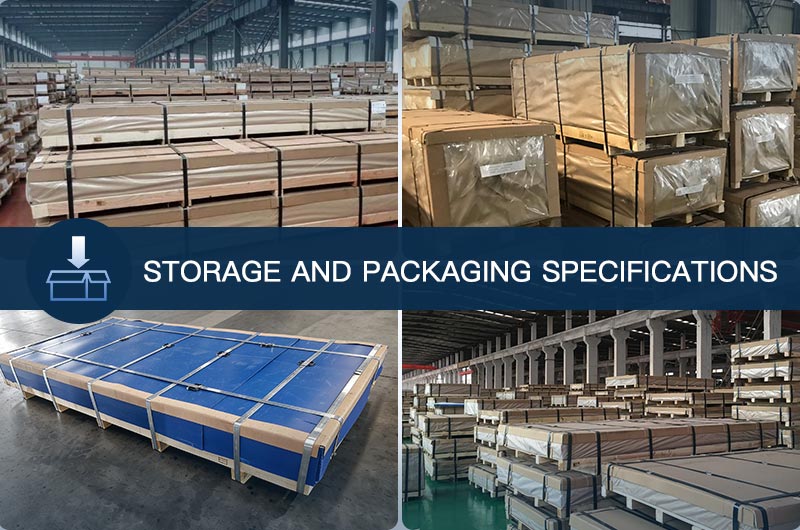
Worthwill strictly implements standard packaging to ensure delivery quality:
- Anti-scratch: Plate surfaces covered with film or interleaved with paper.
- Moisture & Rain-proof: Multi-layer plastic/kraft paper wrapping + built-in desiccants.
- Anti-collision & Anti-deformation: Wooden pallet base + steel band fastening.
- Export Compliant: Use of fumigation-marked wooden boxes/pallets to ensure smooth customs clearance.
Why Choose Worthwill?
Henan Worthwill Industry Co., Ltd. has been deeply engaged in the field of aluminum alloy material supply for many years and possesses the following core competitive advantages for 2014 aluminum alloy plates:
- Complete Specifications: Thickness 0.3–600 mm, Width 500–2650 mm, full temper coverage for one-stop procurement.
- International Standards: Compliant with ASTM/AMS/BS/EN/MIL standards, providing complete MTR material certificates.
- Custom Processing: Supports precise saw-cutting according to drawings, providing professional material selection technical consulting.
- Safe Packaging: Film-covered for moisture proofing, steel band reinforcement, export wooden boxes—tailor-made transport packaging.
- Fast Delivery: Spot shipping for regular specifications, fast scheduling for special specifications to shorten delivery time.
Frequently Asked Questions (FAQ)
- Q1: How should I choose between 2014 and 2024 aluminum plates?
- Both have similar strength. 2014 has a higher hardness (HB 135) and superior machinability, making it suitable for forgings, thick plates, and precision machining; 2024 has better fatigue resistance and is mostly used for thin sheet applications like aircraft skins.
- Q2: 2014 aluminum plate has relatively weak corrosion resistance; can it be used outdoors?
- Yes, but surface protection is required. For general environments, anodizing + painting is recommended. For aerospace parts, Alclad is recommended. High-corrosion environments like marine applications require hard anodizing or electroplating followed by a topcoat.
- Q3: Can 2014 aluminum plate be welded?
- Traditional fusion welding (TIG/MIG) is not recommended as it is prone to cracking; riveting or bolting is the preferred choice. If welding is absolutely necessary, Friction Stir Welding (FSW) is recommended, which can achieve a joint strength of about 78% of the base metal.
- Q4: How can I get a real-time quote from Worthwill?
- Quotes are floating based on "the day's average aluminum ingot price + processing fee." Please contact our sales team and provide the alloy, temper, specifications (thickness/width/length), and quantity. We will provide an accurate quote within 24 hours.
- Q5: Does Worthwill support small-batch or sample orders?
- Yes. We offer flexible Minimum Order Quantities (MOQ) and can provide samples or small-batch supplies according to your needs. Please contact our sales team to explain your requirements, and we will quickly evaluate and provide a dedicated solution.
Conclusion
Having undergone a century of engineering verification, 2014 aluminum alloy plate continues to empower global high-end manufacturing with its ultra-high strength and excellent machinability.
From aerospace Alclad thin sheets less than 1 mm thick to ultra-large mold blanks up to 600 mm thick; from T6/T651 thick plates pursuing ultimate strength to O temper thin sheets focusing on formability, Henan Worthwill can provide high-quality 2014 aluminum plates in full specifications and all tempers according to international standards, supported by comprehensive technical and logistical guarantees.
Welcome to contact the Worthwill professional team for product details and custom quotes.