


Introduction
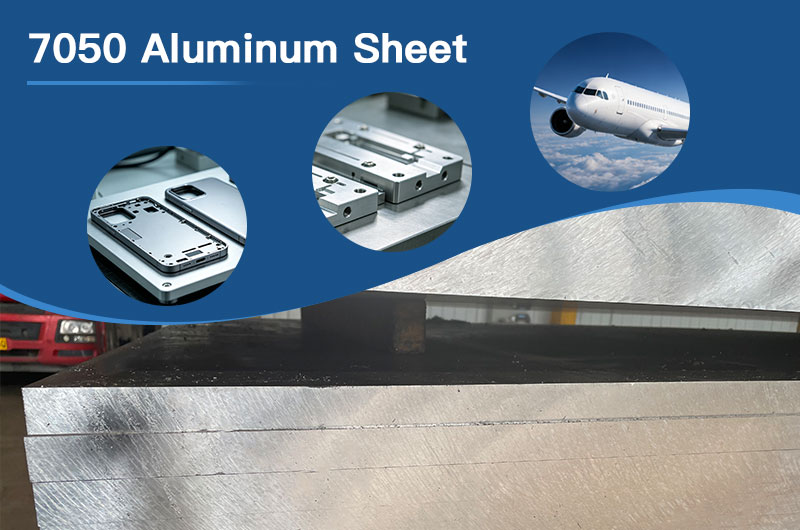
In the fields of aerospace, defense equipment, and high-end mold manufacturing, the requirement for materials is never just "good enough," but rather "the ultimate."
The 7050 aluminum plate is exactly the material born for this "ultimate" demand.
As a third-generation ultra-hard aluminum alloy of the Al-Zn-Mg-Cu series, 7050 has become one of the most trusted aluminum alloy plates in the global aerospace structural components field since it was registered by the Aluminum Association (AA) in the United States in 1971. It is not only renowned for its high tensile strength of up to 552 MPa, but also relies on its outstanding resistance to Stress Corrosion Cracking (SCC) and excellent fracture toughness to become the core material for key load-bearing components, such as the wing spars and fuselage frames of the C919 large passenger aircraft.
Introduction to 7050 Aluminum Plate
7050 aluminum plate is a high-strength, heat-treatable wrought aluminum alloy belonging to the 7000 series (Al-Zn-Mg-Cu series) ultra-hard aluminum alloys.
Its standard designation was officially registered with the Aluminum Association (AA) in 1971. The Chinese National Standard GB/T 3190 has also included it, with the international general standard code ISO AlZn6CuMgZr and the UNS number A97050.
7050 aluminum alloy possesses four core properties that make it irreplaceable in high-end industrial fields:
- High strength
- High fracture toughness
- Excellent stress corrosion resistance
- Low quench sensitivity
Best-Selling 7050 Aluminum Plates
The delivery temper of the 7050 aluminum plate directly determines its mechanical properties and application scenarios. Choosing the correct temper is the key to purchasing decisions.
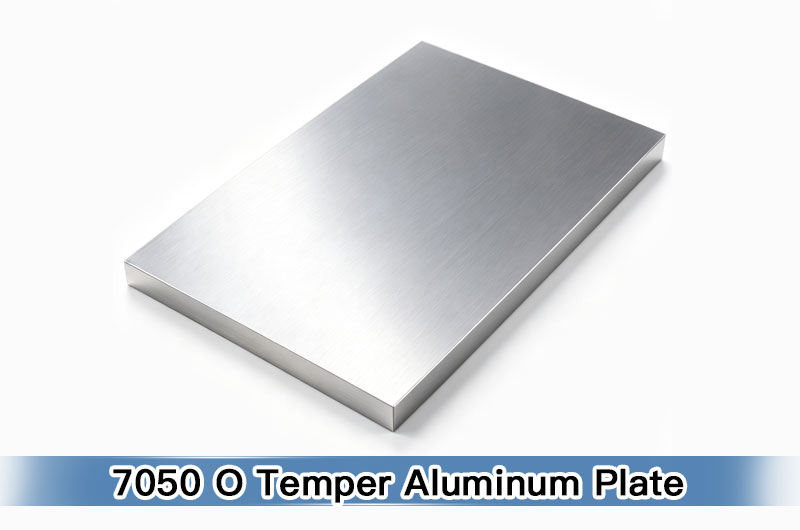
7050 O Temper Aluminum Plate
Fully annealed, lowest hardness, with a strength generally below 280 MPa. Suitable for parts requiring complex forming and processing.
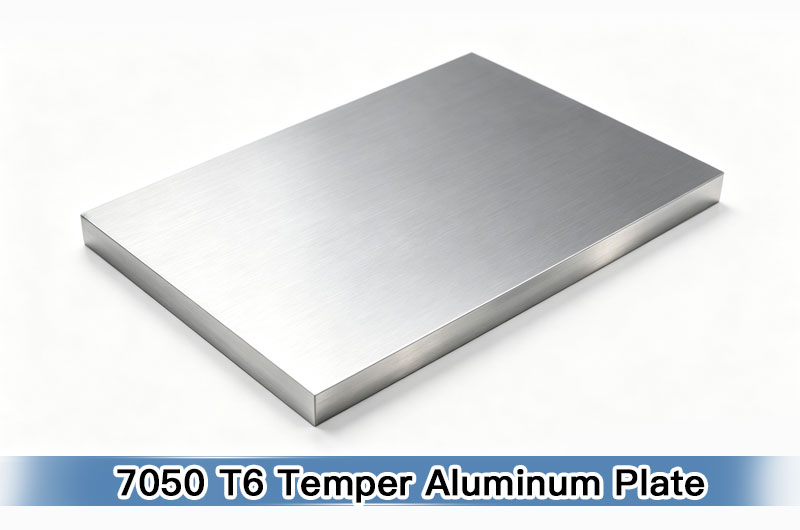
7050 T6 Temper Aluminum Plate
Solution heat-treated + artificially aged. Has the highest strength, with tensile strength exceeding 570 MPa, but its stress corrosion resistance is weaker than the T7 series. Suitable for occasions requiring extremely high strength but in relatively mild corrosive environments.
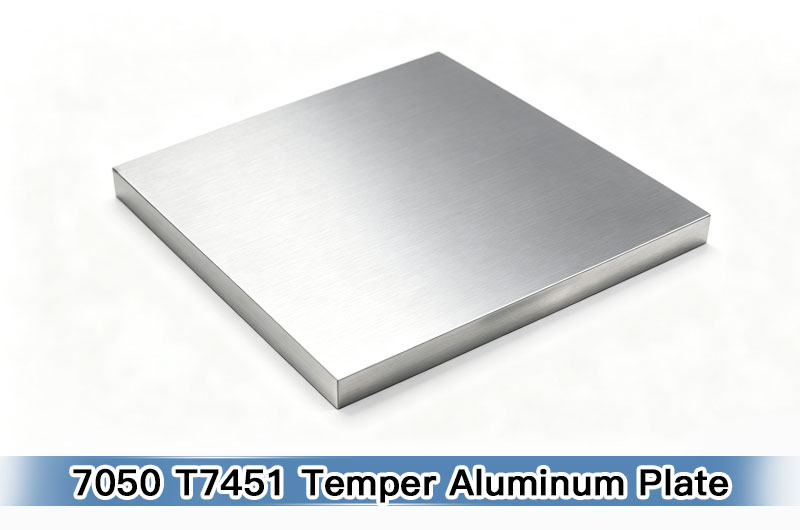
7050 T7451 Temper Aluminum Plate
Solution heat-treated + stress-relieved by stretching + double-stage overaged. Offers the optimal comprehensive performance, balancing strength, fracture toughness, and anti-SCC properties. Corresponding to AMS 4050, it is the preferred temper for aerospace thick plates.
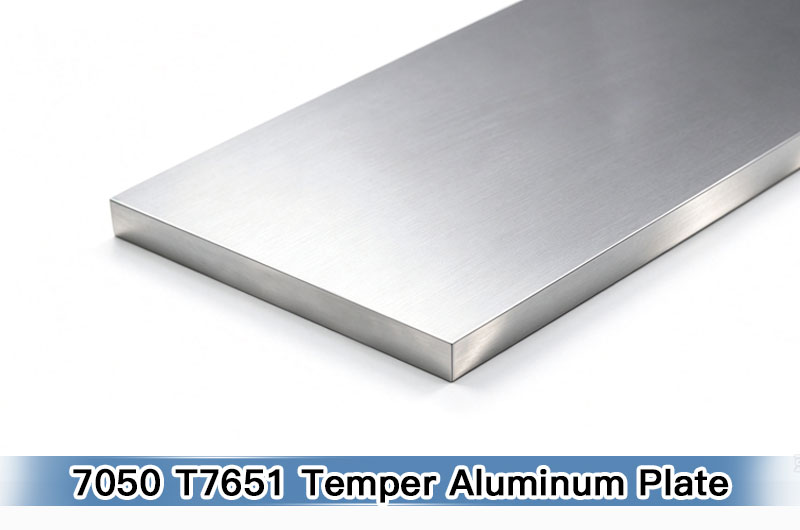
7050 T7651 Temper Aluminum Plate
Solution heat-treated + stress-relieved by stretching + overaged. Focuses on exfoliation corrosion resistance. It is the highest strength overaged temper with excellent anti-exfoliation corrosion properties, corresponding to AMS 4201. Suitable for structural parts requiring higher surface corrosion resistance.
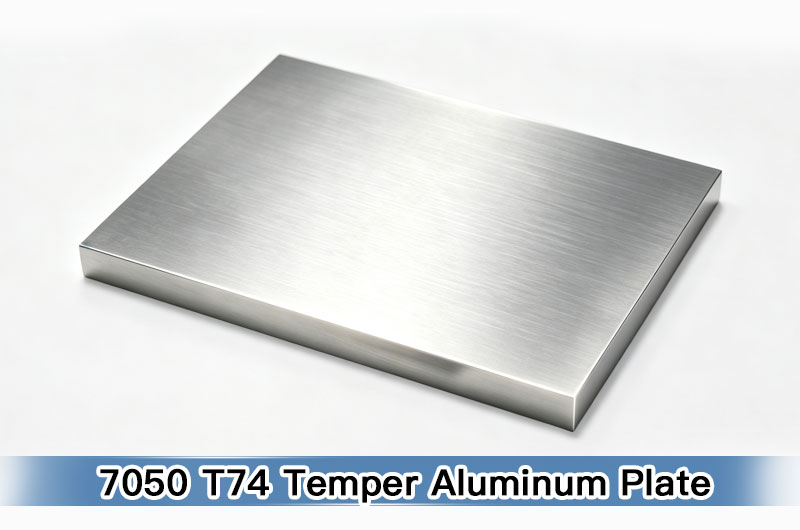
7050 T74 Temper Aluminum Plate
Solution heat-treated + overaged. A balanced plate that achieves an effective equilibrium between strength, toughness, fatigue performance, and SCC resistance, especially suitable for thick, large cross-section structural parts. Mostly used for closed-die forgings.
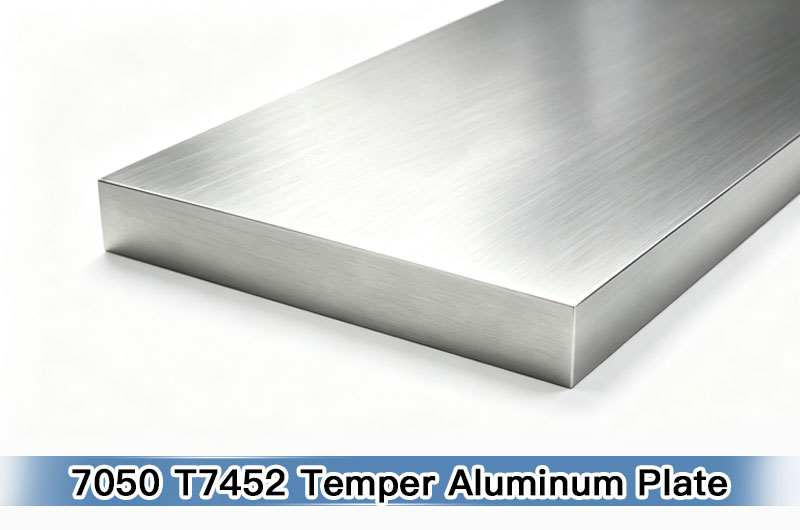
7050 T7452 Temper Aluminum Plate
Solution heat-treated + stress-relieved by compression + overaged. Relieves internal stress through 1-5% compressive deformation. Suitable for open-die forgings (hand forgings), it is the forging counterpart to T7451.
7050 Aluminum Plate Specifications
Customizable Sizes
The 7050 aluminum plates provided by Worthwill cover a complete thickness range from thin sheets to ultra-thick plates, meeting diverse needs from precision parts machining to aerospace-grade thick plates.
| Dimension | Specification Range |
|---|---|
| Thickness | 1 mm - 600 mm |
| Width | Max. 2,500 mm |
| Length | Max. 10,000 mm |
Common Stock Sizes
Below are the most common standard stock sizes of 7050 aluminum plates in the market, which can be ordered directly without waiting for a customization cycle:
| Standard Size (Length × Width) | Applicable Thickness Range |
|---|---|
| 2,000 mm × 1,000 mm | 1 mm - 150 mm |
| 2,500 mm × 1,250 mm | 1 mm - 150 mm |
| 3,000 mm × 1,500 mm | 1 mm - 200 mm |
For special specifications beyond the above size ranges, Worthwill supports custom production on demand. You are welcome to provide drawings or specific requirements.
Thickness Tolerances
The thickness tolerances of 7050 aluminum plates are implemented in accordance with ASTM B209 and relevant AMS standards. Below are typical reference values:
| Thickness Range (mm) | Standard Tolerance (mm) | Precision Tolerance (mm) |
|---|---|---|
| 1.0 - 3.0 | ±0.13 | ±0.08 |
| 3.0 - 6.0 | ±0.15 | ±0.10 |
| 6.0 - 12.5 | ±0.20 | ±0.13 |
| 12.5 - 25.0 | ±0.30 | ±0.18 |
| 25.0 - 50.0 | ±0.40 | ±0.25 |
| 50.0 - 100.0 | ±0.50 | ±0.38 |
| 100.0 - 200.0 | ±0.80 | ±0.50 |
| Over 200.0 | ±1.00 | Upon Request |
If stricter custom tolerances are required (e.g., for CNC precision machining plates), please contact the Worthwill technical team for confirmation.
Flatness Tolerances
Flatness is a crucial indicator affecting machining precision, especially for thick plates and precision structural parts:
| Thickness Range (mm) | Allowable Flatness Deviation (mm/m) |
|---|---|
| 6.0 - 12.5 | ≤ 6 |
| 12.5 - 25.0 | ≤ 5 |
| 25.0 - 50.0 | ≤ 4 |
| Over 50.0 | ≤ 3 |
T7451 and T7651 temper plates undergo a pre-stretching process. Their flatness and internal stress release are superior to non-pre-stretched products, making them the preferred choice for precision machining.
Surface Conditions
| Surface Condition | Description |
|---|---|
| Mill Finish | Original rolled surface, no extra treatment |
| Polished | Bright surface, low Ra value |
| Hairline/Brush | Unidirectional texture, matte finish |
| Sand Blast | Uniform sand surface, increased surface adhesion |
| Paper Interleaved | Paper interleaved between plates for protection |
| Single-Sided Film | Protective film applied to one side |
| Double-Sided Film | Protective film applied to both sides |
Surface Treatment Options
After dispatch, 7050 aluminum plates can undergo various post-treatments based on customer requirements to enhance hardness, wear resistance, or aesthetics.
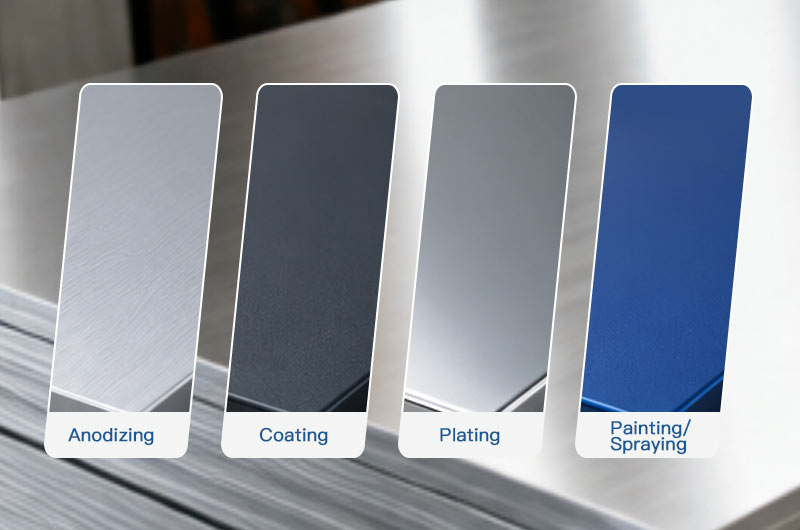
Anodizing
7050 aluminum alloy has good anodizing reactivity and can undergo regular anodizing or hard anodizing. The anodic coating thickness is typically 5-25 μm (regular) or 25-100 μm (hard), which significantly improves surface hardness, wear resistance, and corrosion resistance.
Coating
| Coating Type | Min. Thickness | Features |
|---|---|---|
| PVDF (Fluorocarbon) | 25 μm | Excellent weather resistance, suitable for outdoor and harsh environments |
| Polyester (PE) | 18 μm | Highly cost-effective, suitable for general industrial use |
| Epoxy | Upon Request | Strong chemical resistance, suitable for anti-corrosion applications |
| Polyurethane (PU) | Upon Request | Good elasticity, suitable for applications requiring impact resistance |
Plating & Painting
Plating treatments such as electroless nickel and hard chrome can be applied upon request to further enhance surface hardness and wear resistance. We also support customer color-specified painting/spraying treatments. The coating hardness (pencil hardness) is ≥2H, and adhesion is no less than Grade 1.
Benefits of 7050 Aluminum Plate
- Thick Plates Do Not Warps (Exclusive Advantage): Customized for large thick parts (75-150mm). Internal stress during cooling is extremely small, ensuring consistent strength inside and out of ultra-thick plates, and guaranteeing no warping or deformation during machining.
- Ultimate Safety and Toughness: Toughness far exceeds similar materials. Even under heavy loads and high-frequency vibrations, it can effectively prevent the propagation of micro-cracks, ensuring that core structural parts "bend rather than break" for absolute safety.
- Fearless in Harsh Environments: Possesses extremely excellent rust and corrosion resistance. Even during long-term service in extreme and harsh environments like marine or hot and humid conditions, it remains highly reliable, reducing late-stage maintenance costs.
- Extremely High Precision Machining Yield Rate: Residual stress is eliminated before the material leaves the factory. During complex machining such as high-precision milling and grinding, the dimensions are extremely stable, drastically reducing the scrap rate.
- Full Process Compatibility: "Not picky about processes." Whether it is rolled plates, extruded profiles, or various complex forgings, it can be easily formed to meet diverse production needs.
Key Differences Between 7050 and 7075 Aluminum
The main alloying element of the 7000 series aluminum alloy is zinc. Adding magnesium (Mg) to an alloy containing 3%-7.5% zinc forms the MgZn₂phase, which provides a significant strengthening effect. Compared to 7075, 7050 increases the Zn and Cu content as well as the Cu/Mg ratio, and replaces Cr with Zr. As a result, it possesses higher strength, fracture toughness, and stress corrosion resistance.
Among the 7000 series aluminum alloys, the 7050-T7451 temper offers excellent comprehensive performance and high strength. At the same time, due to the high content of alloying elements, this alloy is prone to cracking during casting and is widely recognized in the industry as one of the more difficult aluminum alloys to cast.
Chemical Composition of 7050 Aluminum Plate
| Element | Symbol | Min (%) | Max (%) |
|---|---|---|---|
| Aluminum | Al | 87.3 | 90.3 (Remainder) |
| Zinc | Zn | 5.70 | 6.70 |
| Copper | Cu | 2.00 | 2.60 |
| Magnesium | Mg | 1.90 | 2.60 |
| Zirconium | Zr | 0.08 | 0.15 |
| Iron | Fe | — | 0.15 |
| Silicon | Si | — | 0.12 |
| Manganese | Mn | — | 0.10 |
| Titanium | Ti | — | 0.06 |
| Chromium | Cr | — | 0.04 |
| Others (Each) | — | — | 0.05 |
| Others (Total) | — | — | 0.15 |
Simply put, 7050 is the perfect commercial upgrade to 7075. By optimizing the formula, it resolves three major pain points in high-end manufacturing at once: "large parts easily deform, load-bearing parts easily fracture, and long-term use leads to corrosion."
Properties of 7050 Aluminum Plate
Physical Properties
| Property | Value | Unit |
|---|---|---|
| Density (20℃) | 2.83 | g/cm³ |
| Melting Range (Liquidus) | 629 | ℃ |
| Melting Range (Solidus) | 488 | ℃ |
| Coefficient of Thermal Expansion (20-100℃) | 23.5 | μm/m·K |
| Coefficient of Thermal Expansion (20-300℃) | 25.4 | μm/m·K |
| Thermal Conductivity (20℃, T76 temper) | 153-155 | W/m·K |
| Elastic Modulus | 70-71.7 | GPa |
| Poisson's Ratio | 0.33 | — |
| Electrical Conductivity (20℃) | Approx. 40-41 | %IACS |
Mechanical Properties Comparison
| Temper | Tensile Strength (MPa) | Yield Strength (MPa) | Elongation (%) | Hardness (HB) | Shear Strength (MPa) |
|---|---|---|---|---|---|
| T73510 / T73511 | 496 | 434 | 12 | 132 | 300 |
| T74 | 530 | 440 | 4.5 | 150 | 310 |
| T7451 | 524-540 | 469-480 | 10-11 | 135 | 310 |
| T7452 | 490 | 390 | 2.2 | — | 280 |
| T7651 | 552-570 | 490-500 | 10-11 | 147 | 324-330 |
Fracture Toughness & Welding
Fracture toughness (7050-T7651): L-T Direction 34 MPa·m½, T-L Direction 31 MPa·m½, S-L Direction 26 MPa·m½.
Welding Properties: 7050 is not suitable for fusion welding. Gas Tungsten Arc Welding (GTAW) or Gas Metal Arc Welding (GMAW) are not applicable to this alloy, as welding usually causes hot cracking. Structural connections should prioritize mechanical fastening (riveting, bolting) or Friction Stir Welding (FSW).
Main Application Areas
Relying on its outstanding comprehensive performance, 7050 aluminum plate is widely active in the following high-end industrial fields:

Aerospace
- Commercial and Military Aircraft: Widely used in key load-bearing components like wing spars, fuselage frames, landing gear components.
- Aerospace and Missiles: Used for rocket forged rings, satellite main load-bearing structures, and missile casings.
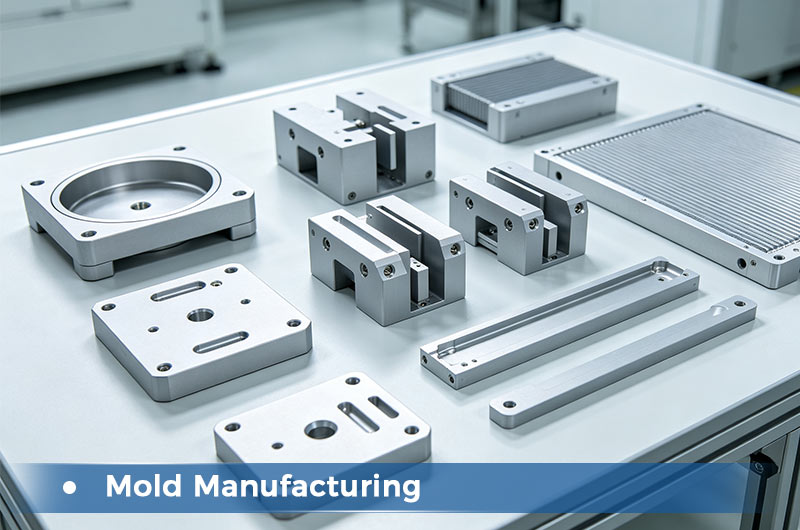
Mold Manufacturing
Because its internal performance in thick plates is uniform, and its anti-deformation ability and dimensional stability are superior to 7075, it is extremely suitable for manufacturing large precision molds (such as automotive injection molds, blow molds, shoe molds, and ultrasonic plastic welding molds).
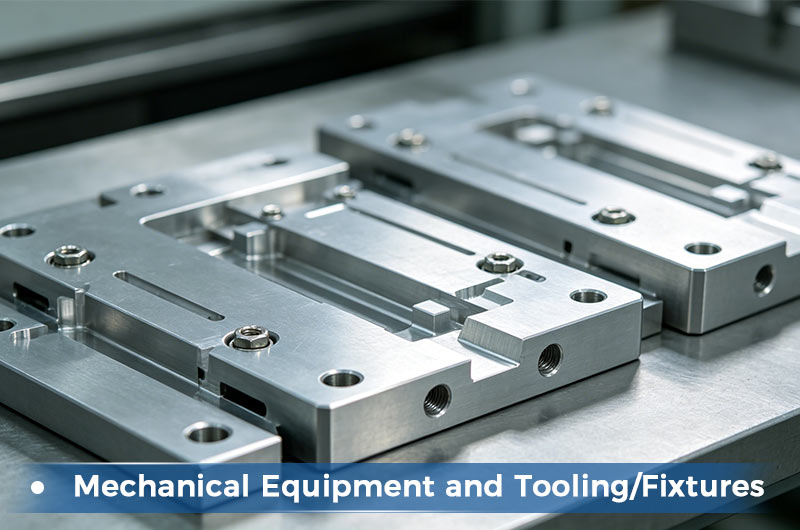
Mechanical Equipment
Suitable for scenarios requiring high strength, high precision, and corrosion resistance, including: semiconductor equipment parts, precision bearings, gears, CNC milling machine tables, and various checking fixtures.
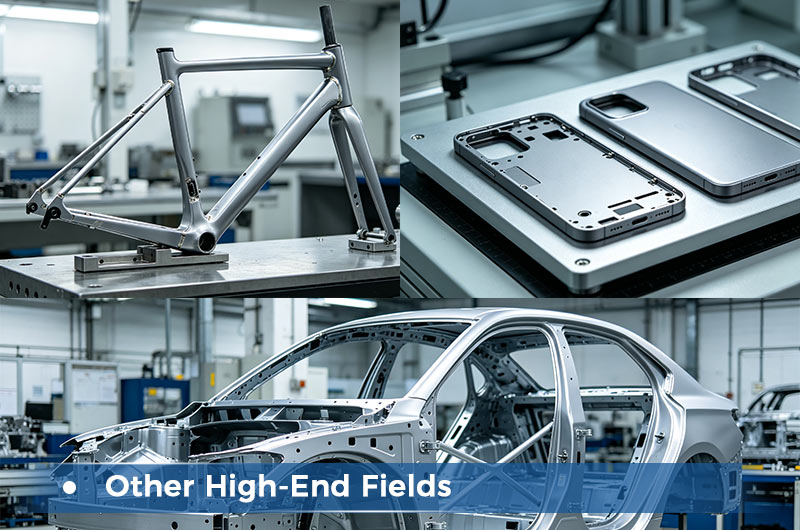
Other High-End Fields
- Sports Equipment: Golf club heads and high-end bicycle frames.
- Automotive and Medical: Lightweight automotive body structural parts, high-strength medical instruments.
- Consumer Electronics: Precision digital product casings adapting to precision manufacturing needs.
International Standards and Specifications
| AMS Specification No. | Corresponding Product |
|---|---|
| AMS 4050 | 7050-T7451 Thick Plate |
| AMS 4201 | 7050-T7651 Thick Plate |
| AMS 4107 | 7050-T74 Closed-Die Forgings |
| AMS 4108 / AMS 4333 | 7050-T7452 Forgings |
| AMS 4340 / 4341 / 4342 | Extrusions |
How to choose the right 7050 aluminum plate?
-
1. Match the Heat Treatment Temper:
- T7451 (Preferred): Best comprehensive performance and pre-stretched (stress-relieved), suitable for aerospace load-bearing parts and massive milling operations.
- T7651: Suitable for scenarios with extremely high requirements for resistance to exfoliation corrosion.
- T74 / T7452: Suitable for forgings with thick and large cross-sections.
- 2. Confirm the Cross-Sectional Thickness: The core advantage of 7050 lies in thick plates (approx. 75-150mm); if thin plates are required, it is recommended to consider 7075-T6.
- 3. Check Qualifications: For rigorous applications like aerospace, confirm compliance with corresponding standards (e.g., AMS 4050/4201) and require traceable Material Test Reports (MTR).
Packaging and Delivery
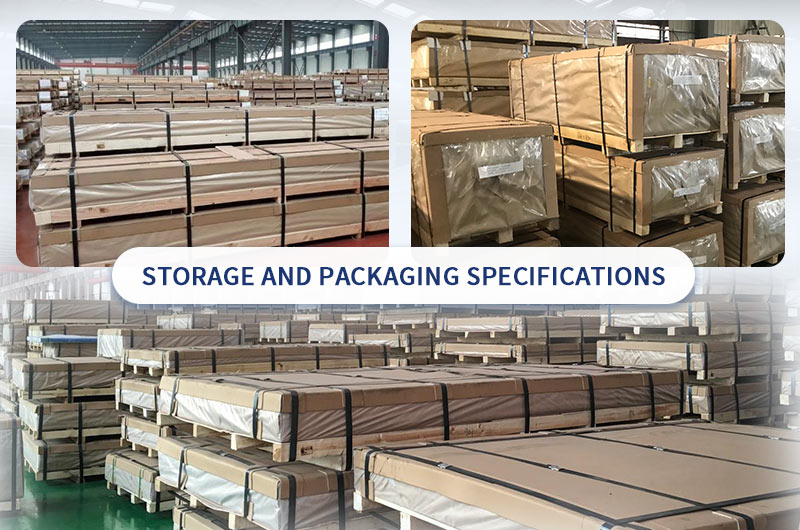
Standard Packaging Method
- A protective polyester material (≥6 μm) is laid at the bottom of the plates.
- Paper interleaving or protective films are applied between plates.
- Secured with steel straps (2 across the width, 3 along the length).
- Weight per pallet: Approx. 2-3 tons.
- Loading: 20GP container (18-20 tons), 40GP container (24 tons).
Frequently Asked Questions (FAQ)
- Q1: Which is better, 7050 aluminum plate or 7075 aluminum plate?
- Both have their own advantages. 7050 outperforms 7075 in thick-section strength retention, fracture toughness, and anti-SCC performance; 7075 has a slight advantage in raw tensile strength. The choice depends on the specific application scenario.
- Q2: Can 7050 aluminum plate be welded?
- Fusion welding processes like GTAW or GMAW are not recommended as they cause cracks and porosity. Friction Stir Welding (FSW) or mechanical fastening is highly recommended.
- Q3: What is the difference between 7050 T7451 and T7651?
- T7451 comprehensively balances strength, fracture toughness, and anti-SCC properties, making it the preferred choice for thick plates; T7651 has slightly higher strength and better exfoliation corrosion resistance, but slightly lower anti-SCC performance.
- Q4: Can 7050 aluminum plate be anodized?
- Yes. 7050 aluminum alloy has good anodizing response and can undergo hard anodizing and decorative anodizing to improve surface wear and corrosion resistance.
Why Choose Worthwill?
Henan Worthwill Industry Co., Ltd. is a professional aluminum alloy material supplier dedicated to providing high-quality 7050 aluminum plates and other high-strength aluminum alloy products to global customers.
- Complete Specification Coverage: Plate thickness ranges from 1-250mm, width ≤2500mm, with a minimum order quantity as low as 1 piece (if in stock).
- Multi-Temper Supply: T6, T651, T6511, T7451, H112, O, etc., available in stock or produced on demand, complying with AMS, ASTM, and GB/T.
- Strict Quality Control: Products pass chemical composition inspections, mechanical tests, and ultrasonic flaw detection. Complete Material Test Reports (MTR) provided.
- Technical Support: Professional team provides material selection advice, specification confirmation, and processing consultation.
If you need a quote or technical data for 7050 aluminum plates, please feel free to contact the Worthwill sales team at any time.