


PVDF vs PE vs HDP Coating
PVDF (polyvinylidene fluoride), PE (polyester), and HDP (high durability polyester) coatings are the three most common coating systems used for aluminum panels and coils. Each offers distinct performance characteristics, durability levels, and cost considerations, making them suitable for different applications. Understanding the differences between PVDF, PE, and HDP coatings helps you choose the right coating for your project.
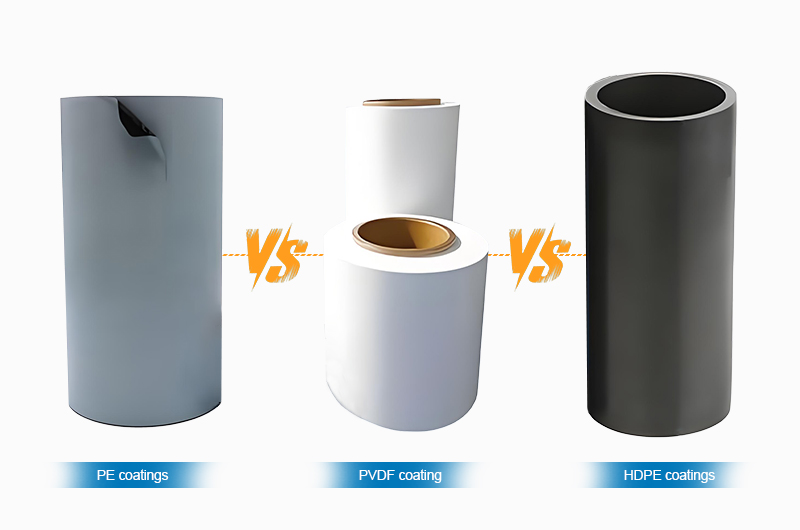
PVDF Coating: The Premium High-Performance Choice
PVDF coatings are fluoropolymer-based coatings made from polyvinylidene fluoride resin. The chemical structure of PVDF can be expressed as: (C2H2F2)n. PVDF coatings are typically composed of 70% PVDF fluorocarbon resin and 30% acrylic resin, providing an outstanding balance of flexibility, hardness, and long-term weather resistance. They are widely recognized as the gold standard for exterior architectural coatings on aluminum.
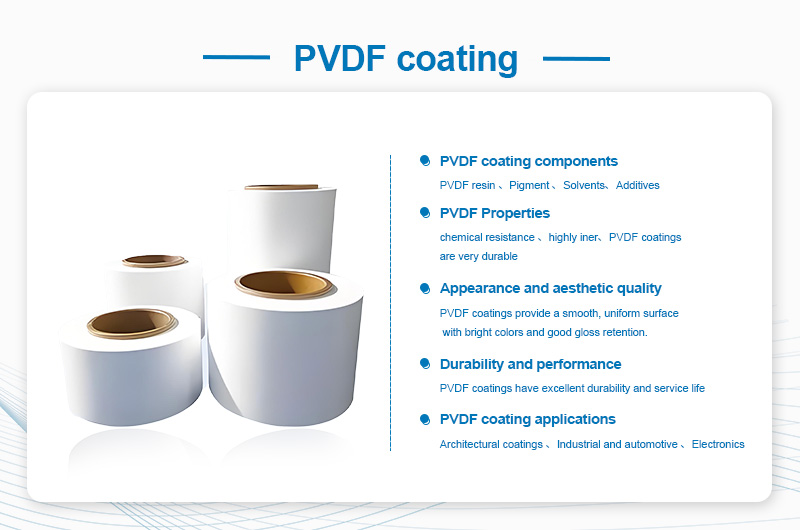
PVDF Coating Components
- PVDF resin (70%): The primary film-forming substance, provides exceptional weather resistance, UV resistance, and chemical resistance.
- Acrylic resin (30%): Enhances adhesion, gloss, and processability of the coating.
- Pigments: Provide color and hiding power. Commonly used pigments include titanium dioxide, iron oxide, and inorganic pigments for superior color stability.
- Solvents: Used to adjust the viscosity and leveling of the coating, commonly used solvents include toluene, xylene, etc.
- Additives: Improve the processing properties and final performance of the coating, such as leveling agents, defoamers, UV stabilizers, etc.
Key Properties of PVDF Coating
- Excellent chemical resistance, weather resistance, and UV resistance.
- Outstanding color retention — resists fading, chalking, and environmental degradation for 20+ years.
- Highly inert surface that does not react with most chemicals and pollutants.
- Superior gloss retention under prolonged outdoor exposure.
- Meets or exceeds AAMA 2605 specification for high-performance exterior coatings.
Appearance and Aesthetic Quality
- PVDF coatings provide a smooth, uniform surface with vibrant colors and excellent long-term gloss retention.
- Available in a wide range of solid colors, metallic finishes, and special effects, making it the preferred choice for high-end architectural cladding.
- Colors remain consistent and vivid even after decades of outdoor exposure.
Durability and Performance
- PVDF coatings offer the longest service life among the three coating types — typically 20 to 30 years or more.
- Exceptional resistance to harsh weather conditions, acid rain, industrial pollutants, and salt spray.
- QUV-B test: Gloss retention ≥90%, color difference ΔE ≤ 2 after 1, 000 hours.
PVDF Coating Applications
- Architectural exteriors: High-rise building facades, curtain walls, aluminum composite panels (ACP/ACM), and exterior cladding systems.
- Roofing systems: Premium metal roofing panels requiring long-term color and gloss retention.
- Industrial applications: Chemical plants, coastal buildings, and other harsh environments requiring maximum corrosion protection.
- Signage and canopies: Exterior signage, gas station canopies, and other structures exposed to extreme weathering.
PE Coating: The Cost-Effective Choice
PE coatings, also known as polyester coatings, are made from polyester resin and are widely used on aluminum coils and panels. Polyester coatings offer good flexibility, excellent color variety, and an attractive price point, making them the most commonly used coating type for interior applications and general-purpose exterior use where extreme weather resistance is not required.
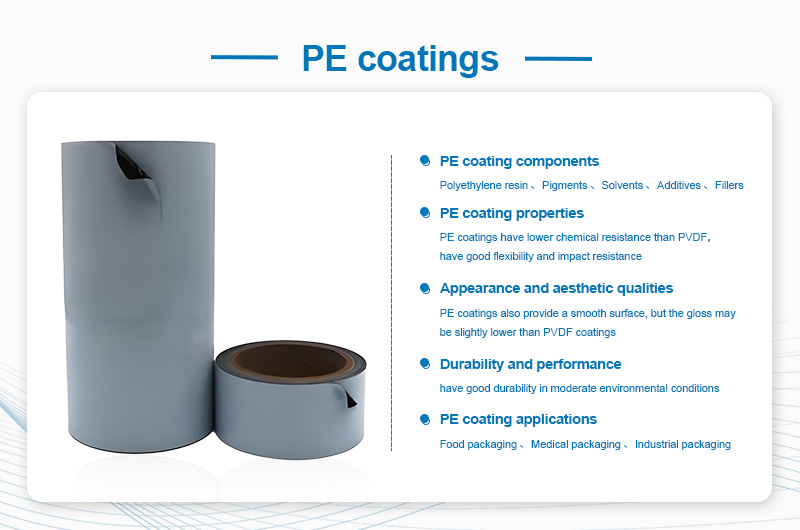
PE Coating Components
- Polyester resin: The primary film-forming substance, provides good adhesion, flexibility, and decorative properties.
- Pigments: Provide color and opacity. Commonly used pigments include titanium dioxide, iron oxide, carbon black, and various organic pigments.
- Solvents: Used to form the coating in liquid form for easy application, which evaporates during the curing process.
-
Additives:
- UV stabilizers: Provide basic protection against UV-induced degradation.
- Antioxidants: Prevent oxidation and extend the life of the coating.
- Leveling agents: Improve the leveling of the coating and reduce surface defects.
- Defoamers: Eliminate bubbles generated during the coating process.
- Crosslinkers: Such as melamine resin, used to improve hardness, chemical resistance, and curing performance.
Key Properties of PE Coating
- Good flexibility, adhesion, and impact resistance.
- Wide color range with good initial gloss and color vibrancy.
- Lower chemical and weather resistance compared to PVDF and HDP coatings.
- May experience fading, chalking, and gloss loss with prolonged outdoor UV exposure.
- The most affordable option among the three coating types.
Appearance and Aesthetic Quality
- PE coatings provide a smooth, attractive surface with a wide selection of colors and finishes.
- Initial gloss and color quality are good, but may degrade faster than PVDF or HDP coatings when exposed to outdoor conditions over time.
- Well suited for interior applications where UV exposure is minimal.
Durability and Performance
- PE coatings provide adequate durability for interior use and short-to-medium-term exterior applications (typically 5–8 years outdoors).
- Good scratch and corrosion resistance for general use.
- QUV-B test: Gloss retention ≥30%, color difference ΔE ≤ 5 after 500 hours — significantly lower than PVDF and HDP coatings.
PE Coating Applications
- Interior decoration: Ceiling panels, interior wall panels, partitions, and decorative trim.
- General building exteriors: Exterior cladding in mild climates or where shorter service life is acceptable.
- Household appliances: Refrigerator panels, washing machine housings, air conditioner casings, and other home appliance surfaces.
- Roller shutters and garage doors: Cost-effective coated aluminum for residential and light commercial use.
HDP Coating: The Balanced Mid-Range Choice
HDP coatings — short for High Durability Polyester (also known as HQPE, high-quality polyester enamel) — are an enhanced version of standard polyester coatings. By using modified polyester resins, improved UV stabilizers, and optimized formulations, HDP coatings offer significantly better weather resistance and color retention than standard PE coatings, while remaining more affordable than PVDF. This makes HDP the ideal mid-range solution for exterior applications that require good durability without the premium cost of PVDF.
Note: In some markets, HDP coatings may also be labeled as "HDPE coatings." This should not be confused with HDPE (High Density Polyethylene), which is a plastic material used in a completely different industry. In the aluminum coil coating industry, HDP/HDPE always refers to High Durability Polyester.
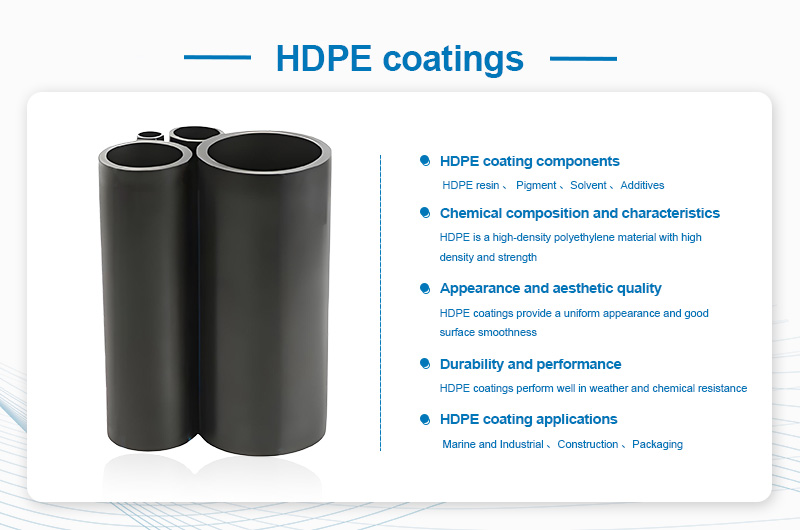
HDP Coating Components
- Modified polyester resin: The primary film-forming substance, engineered with enhanced molecular structure for improved UV resistance and weatherability compared to standard polyester.
- Pigments: Provide color and hiding power. High-quality inorganic pigments are often used for better lightfastness and durability.
- Solvents: Used to adjust the viscosity and leveling of the coating.
- Additives: Include enhanced UV stabilizers, HALS (hindered amine light stabilizers), leveling agents, defoamers, and other performance additives that distinguish HDP from standard PE coatings.
- Crosslinkers: Improve curing, hardness, and overall coating durability.
Key Properties of HDP Coating
- Significantly improved weather resistance and UV resistance compared to standard PE coatings.
- Good chemical resistance, flexibility, and adhesion.
- Better color retention and gloss stability than PE, though not as high as PVDF.
- A cost-effective upgrade from standard PE for exterior applications.
Appearance and Aesthetic Quality
- HDP coatings provide a uniform, smooth surface with good color consistency.
- Available in a wide range of colors, though specialty metallic effects may be more limited compared to PVDF.
- Colors hold up significantly better than standard PE coatings under outdoor exposure.
Durability and Performance
- HDP coatings offer a moderate-to-long service life, typically 10–15 years for outdoor applications.
- QUV-B test: Gloss retention ≥80%, color difference ΔE ≤ 3 after 1, 000 hours — a major improvement over standard PE.
- Well-suited for climates and environments where PVDF may be over-specified but standard PE is insufficient.
HDP Coating Applications
- Building exteriors: Mid-range facade cladding, wall panels, and column covers for commercial and residential buildings.
- Metal roofing: Roofing panels and standing seam systems requiring good outdoor durability at a moderate cost.
- Industrial buildings: Factory wall cladding, warehouse panels, and industrial enclosures.
- Soffits and fascias: Exterior trim elements where weather resistance is important but budget is a consideration.
PVDF vs PE vs HDP Coating: Comparison at a Glance
| Property | PVDF Coating | HDP Coating | PE Coating |
| Resin Type | 70% PVDF + 30% Acrylic | Modified Polyester | Standard Polyester |
| Weather Resistance | Superior (20–30 years) | Good (10–15 years) | Moderate (5–8 years) |
| UV Resistance | Excellent | Good | Moderate |
| Chemical Resistance | Excellent | Good | Moderate |
| Color Retention | Excellent | Good | Moderate |
| Gloss Retention | Excellent | Good | Moderate |
| Flexibility | Good | Good | Excellent |
| Cost | High | Moderate | Low |
| Typical Applications | High-end facades, curtain walls, premium roofing | Mid-range exteriors, metal roofing, industrial buildings | Interior panels, appliances, general-purpose exteriors |
Performance Testing Data
The following table summarizes the key performance test results for PVDF, HDP, and standard PE coatings on aluminum, based on industry standards including EN 1396.
| Test Item | PVDF | HDP / HQPE | Standard PE |
| Coating Thickness (Color) | 20 ± 2 μm | 18–20 ± 2 μm | 18–20 ± 2 μm or as per specification |
| Primer | 5 ± 2 μm or as per specification | 5 ± 2 μm or as per specification | Not applicable |
| Gloss | Standard ±5% | Standard ±5% | Standard ±5% |
| Color Difference | ΔE < 1 (non-metallic colors) | ΔE < 1 (non-metallic colors) | ΔE < 1 (non-metallic colors) |
| Polymerization Degree | >100 DF | >100 DF | >100 DF |
| Pencil Hardness | ≥F | ≥F | ≥F |
| Impact Resistance | 100% | 100% | 100% |
| Adhesion (Cross Cut + Erichsen) | >75% | >75% | >75% |
| Bending | ≤1T | ≤1T | ≤1T |
| Salt Spray Resistance | 1000 hours / Grade 3 (EN 1396/C.6.5) | 1000 hours / Grade 3 (EN 1396/C.6.5) | 1000 hours / Grade 1 (EN 1396/C.6.5) |
| Water Immersion Resistance | 1000 hours – B2S2 | 1000 hours – B2S2 | Not applicable |
| QUV-B Resistance | 1000 hours, Gloss retention ≥90%, ΔE ≤ 2 | 1000 hours, Gloss retention ≥80%, ΔE ≤ 3 | 500 hours, Gloss retention ≥30%, ΔE ≤ 5 |
| Florida Test | Grade 3 (EN 1396/C.6.3) | Grade 3 (EN 1396/C.6.3) | Grade 3 (EN 1396/C.6.3) |
How to Choose the Right Coating for Your Project
Selecting the right coating depends on your project requirements, budget, and the environment where the coated aluminum will be used:
- Choose PVDF coating when your project demands the highest level of weather resistance, color retention, and long-term durability — especially for premium building facades, curtain walls, and structures in coastal, industrial, or harsh climatic environments. PVDF is the best choice when appearance must remain pristine for 20+ years.
- Choose HDP coating when you need a reliable exterior coating with good durability at a more moderate price point. HDP is ideal for mid-range commercial and industrial building exteriors, metal roofing, and applications where standard PE falls short but PVDF is not required.
- Choose PE coating when cost-effectiveness is the primary concern, especially for interior applications, household appliances, and general-purpose projects with limited outdoor exposure. PE coatings offer excellent flexibility and a rich color palette at the lowest cost.
By understanding the strengths and limitations of PVDF, PE, and HDP coatings, you can make an informed decision that balances performance, aesthetics, durability, and budget for your specific application.