


5083 vs. 5086 Aluminum
Introduction: Two Marine Aluminum Champions
In the world of marine grade aluminum, 5083 and 5086 are the undisputed workhorses. Both are non-heat-treatable aluminum-magnesium alloys, prized for their exceptional resistance to seawater corrosion and high welded strength.
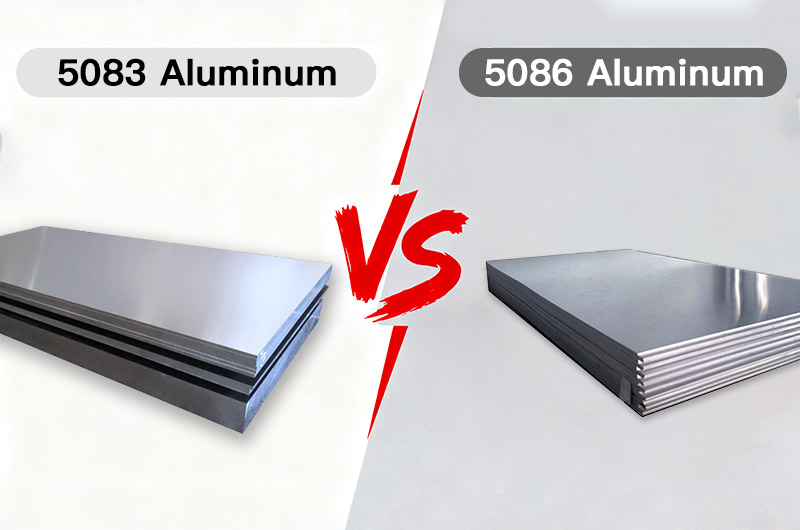
Engineers often face a dilemma: These alloys are more alike than different.
- 5083 aluminum is the "Strength Champion, " offering the highest strength of non-heat-treatable alloys.
- 5086 aluminum is the "Versatile Alternative, " offering slightly better formability and lower cost.
This guide provides a technical breakdown to help shipbuilders and engineers choose the right alloy for the right application.
Key Performance Summary:
| Metric | 5083 Advantage | Practical Significance |
| Strength | +10-15% | Meaningful for high-stress structures |
| Corrosion Resistance | +10-12% | Valuable for below-waterline long-term service |
| Weld Strength | +9-15% | Provides greater safety margin |
| Formability | Negligible difference | Not a selection factor |
| Cryogenic Performance | Both excellent | Both fully approved |
| Cost | -3-8% disadvantage | Offset by performance benefits in demanding applications |
Sources include the Aluminum Association (AA) standards, Alcoa technical documentation, Matweb, and other verified materials databases.
Chemical Composition: The Blueprint of Performance
The performance difference stems directly from the Magnesium (Mg) and Manganese (Mn) content.
| Element | 5083 (wt%) | 5086 (wt%) | Impact on Performance |
| Magnesium (Mg) | 4.0 - 4.9 | 3.5 - 4.5 | 5083 averages 4.5% Mg vs. 4.0% in 5086. This extra 0.5% Mg drives 5083's 10-15% strength advantage. |
| Manganese (Mn) | 0.4 - 1.0 | 0.2 - 0.7 | 5083's higher Mn improves grain structure and toughness. |
| Chromium (Cr) | 0.05 - 0.25 | 0.05 - 0.25 | Identical. Aids corrosion resistance. |
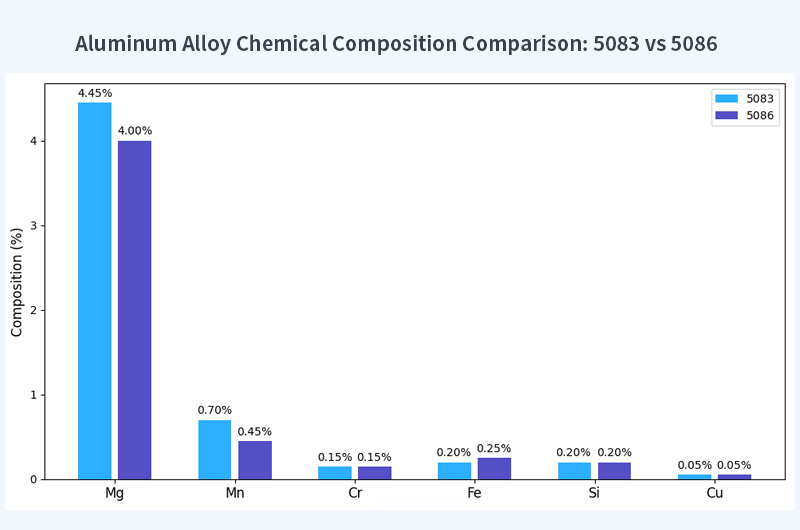
Key Insight: 5083 is essentially a "super-charged" version of 5086. The higher alloying content gives it superior mechanical properties but makes it slightly harder to form.
Mechanical Properties Comparison
We compare the two most common marine tempers: H116 (Standard for Hull Plating) and H32 (General Fabrication).
H116 Temper (Marine Hull Standard)
H116 is mandated by classification societies (ABS, DNV) to prevent intergranular corrosion.
| Property | 5083-H116 | 5086-H116 | 5083 Advantage |
| Tensile Strength | 317 MPa (46 ksi) | 290 MPa (42 ksi) | +9% Stronger |
| Yield Strength | 228 MPa (33 ksi) | 207 MPa (30 ksi) | +10% Stronger |
| Fatigue Strength | 159 MPa (23 ksi) | 150 MPa (22 ksi) | +6% Higher |
| Hardness (Brinell) | 83 HB | 78 HB | +6% Harder |
Engineering Implication:
- Weight Savings: A 40-meter vessel hull built with 5083 can often use thinner plating (e.g., 8mm vs. 9mm) compared to 5086, resulting in a 3-5% lighter structure.
- Safety Factor: 5083 provides a higher margin of safety for critical structural components.
H32 Temper (General Fabrication)
For non-hull applications like decks, superstructures, and tanks.
| Property | 5083-H32 | 5086-H32 | Difference |
| Tensile Strength | 330 MPa | 300 MPa | 5083 is 10% stronger. |
| Formability | 2.5T Radius | 2.5T Radius | Virtually Identical. |
Corrosion Resistance: The Saltwater Test
Both alloys are "Marine Grade" because they rely on magnesium, not copper, for strength. This creates a robust oxide layer that resists chloride attack.
ASTM G85 Salt Spray Test Results (1000 hours):
- Pitting: 5083 exhibits 12% less pitting depth than 5086.
- Mass Loss: 5083 loses 8% less material.
Real-World Service Life (Continuous Immersion):
- 5083: 35-45 years.
- 5086: 30-40 years.
Verdict: While 5083 is technically superior, 5086 is entirely adequate for most applications. The difference only becomes critical in extreme environments like:
- Ice-class vessels (abrasion + corrosion).
- Highly polluted harbors.
- Permanent offshore structures.
Welding Performance: The Critical Joint
In aluminum construction, the welded joint is often the limiting design factor.
Weld Strength (ASME Section VIII):
- 5083 Welds: Typical tensile strength 285-300 MPa.
- 5086 Welds: Typical tensile strength 261 MPa.
- Result: 5083 welded joints are 9-15% stronger.
Fabrication Notes:
- Weldability: Both alloys weld excellently with TIG and MIG.
- Filler Metals:
- Use ER5183 for 5083 to match strength.
- Use ER5356 for 5086 (industry standard).
- Mixing: You can weld 5083 to 5086 using ER5356 or ER5183.
Code Compliance: Both meet ASME pressure vessel codes, but 5083 allows for higher design allowables, potentially reducing wall thickness in pressure vessels.
Cryogenic Performance (LNG)
Both alloys are approved for cryogenic service (-162°C / -260°F) for Liquefied Natural Gas (LNG) transport.
- Behavior: Unlike steel, both alloys gain strength and retain ductility at cryogenic temperatures.
- Market Usage:
- 5083: Dominates (~60%) due to higher strength.
- 5086: Used (~25%) where fracture toughness is the priority over absolute strength.
Cost Analysis: The Bottom Line
Material Price:
- 5083 typically commands a 3-8% price premium over 5086.
- Reason: Higher Mg content and stricter certification requirements for H116.
Total Cost of Ownership (TCO) - 30 Year Vessel:
- Upfront: 5086 is cheaper (lower material cost).
- Operations: 5083 can be lighter (thinner plates), saving fuel over the vessel's life.
- Resale: 5083 hulls often retain higher resale value due to perceived longevity.
Strategy: For long-term assets (>25 years), 5083 is often the better investment. For budget-constrained projects or shorter lifecycles, 5086 offers better immediate value.
Application Recommendations
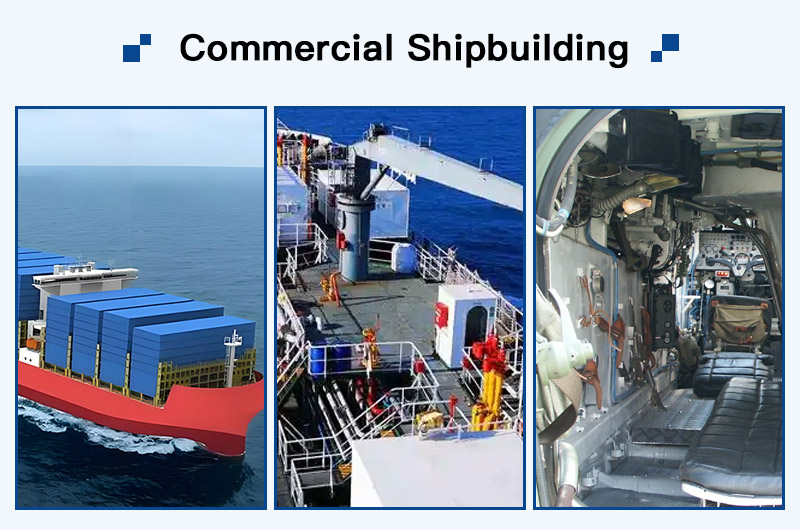
Commercial Shipbuilding
| Component | Recommended | Reasoning |
| Underwater Hull | 5083-H116 | Max strength & corrosion resistance for critical immersion. |
| Superstructure | 5086-H116 | Adequate strength; lower cost; lighter loads. |
| Decks | 5086-H32 | Good wear resistance; cost savings. |
| Workboats | 5086 | Often sufficient for 20-year design life; easy repair. |
| High-Speed Ferries | 5083 | Weight savings (thinner gauge) is critical for speed. |
Industrial & Offshore
| Component | Recommended | Reasoning |
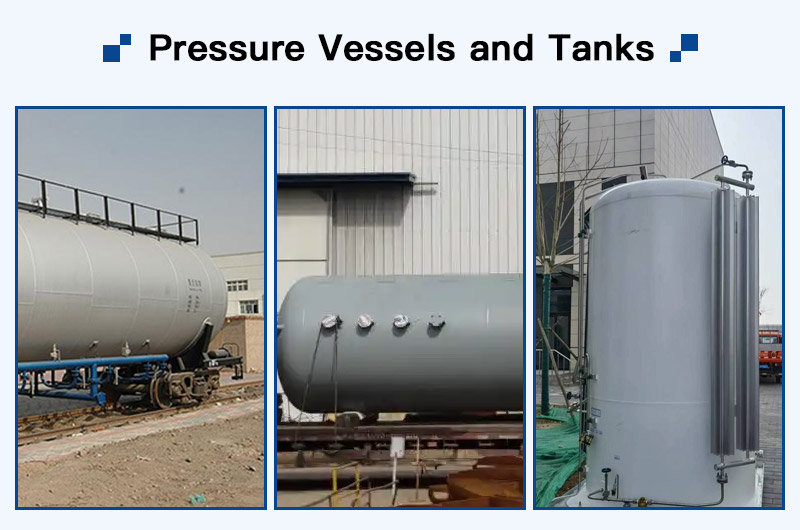
| Pressure Vessels | 5083-H321 | Higher ASME allowable stress = thinner walls. |
| Offshore Platforms | 5083 | Primary structural members need max safety margin. |
| Walkways/Grating | 5086 | Cost-effective for secondary structures. |
| Tank Trailers | 5086 | Standard industry choice; sufficient durability. |
The Hybrid Strategy: Best of Both Worlds
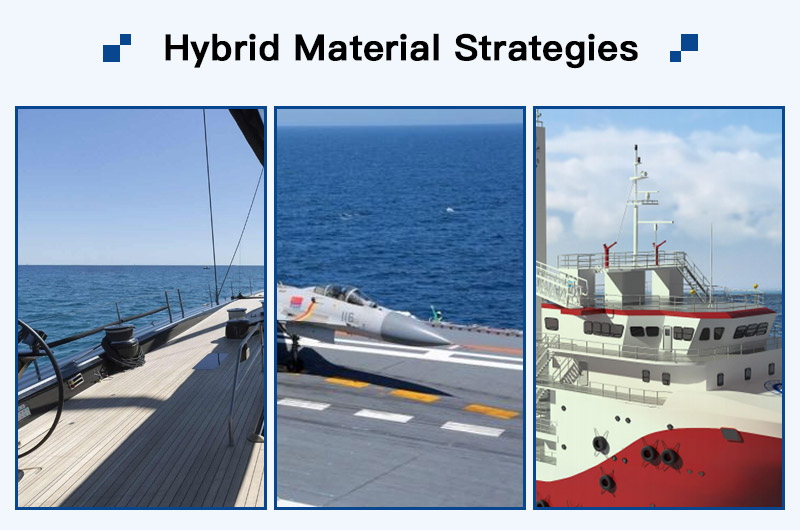
Smart engineers often mix these alloys to optimize cost and performance.
Example: 50-Meter Catamaran Ferry
- Lower Hull (Immersed): 5083-H116 (6mm). Ensures maximum longevity and impact resistance.
- Upper Hull/Superstructure: 5086-H116 (5mm). Reduces material cost by ~5% without compromising safety.
- Interior Bulkheads: 5086-H32 (4mm). Dry environment, lower stress.
Result: A vessel that is structurally sound, corrosion-resistant, and 5-8% cheaper to build than an all-5083 design.
Decision Framework: Quick Selection Guide
Use this matrix to finalize your choice.
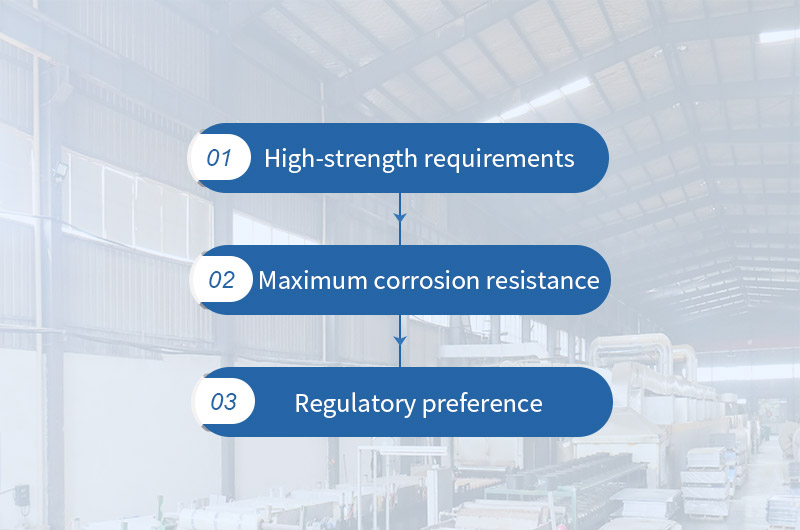
Choose 5083 Aluminum If:
- Strength is Critical: You need the absolute strongest non-heat-treatable alloy (10-15% stronger).
- Weight Sensitivity: You can reduce plate thickness to save weight (e.g., high-speed craft).
- Extreme Corrosion: Continuous saltwater immersion for 30+ years or ice-class operations.
- ASME Codes: You need higher weld strength design values for pressure vessels.
- Resale Value: Building a premium asset for long-term retention.
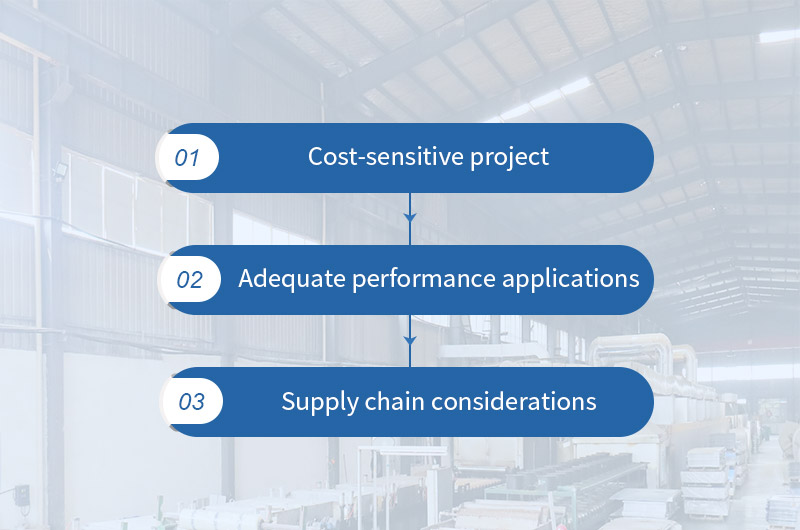
Choose 5086 Aluminum If:
- Budget Constraint: Initial material cost is a primary driver (saves 3-8%).
- Standard Application: General workboats, barges, or superstructures where 5083 is "overkill."
- Availability: 5086 is sometimes more readily available in specific sheet sizes.
- Forming: While similar, 5086 can be slightly more forgiving in complex forming operations.
- Secondary Structure: Walkways, tanks, cabinets, and interior framing.
Conclusion
Don't overthink the debate.
- 5083 is the High-Performance Choice—ideal for primary hull structures and critical pressure vessels where every bit of strength and longevity counts.
- 5086 is the Value Choice—a reliable, marine-proven alloy that delivers 90% of the performance at a lower cost.
For many projects, the smartest answer is "Both": 5083 where you need it, and 5086 where you don't.