


What is the Cable Armoring Aluminum Tape
Cable armoring aluminum tape (also widely known as aluminum strip in the metallurgical and raw material sectors) is a metal strip product made from aluminum or aluminum alloys through rolling and slitting processes. It is specifically designed to serve as the armored protective layer for power cables, communication cables, and other cable products.
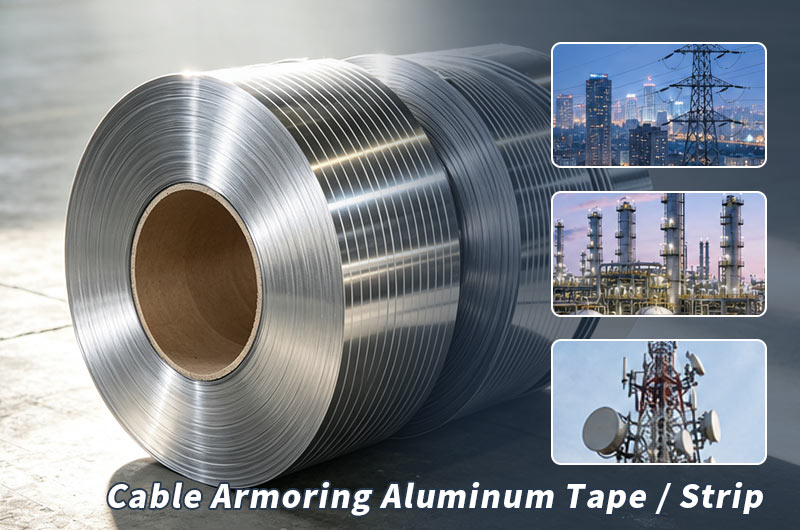
The armor layer is located between the cable's insulation layer and the outer sheath, acting as a physical "shield" against external damage. Compared to traditional steel tape armoring (STA), aluminum tape armoring (ATA) is becoming increasingly prevalent in modern cable manufacturing due to its lightweight nature, non-magnetic properties, excellent electrical conductivity, and corrosion resistance. It has gradually become the mainstream choice, particularly in medium and high-voltage single-core power cables.
Specifications and Parameters
Dimensional Specifications
| Parameter | Common Range | Remarks |
|---|---|---|
| Strip Thickness | 0.3 mm – 2.5 mm | Most common: 0.5 mm, 0.8 mm, 1.0 mm |
| Strip Width | 10 mm – 200 mm | Matched according to cable outer diameter |
| Inner Diameter (Core) | 150 mm – 600 mm | Matched with the pay-off stand/machine |
| Weight per Coil | 50 kg – 500 kg | Depending on specifications |
Mechanical Properties (Taking 1060 Aluminum Strip as an example)
| Performance Indicator | Value Range | Reference Standard |
|---|---|---|
| Tensile Strength | ≥ 60 MPa | GB/T 3880 |
| Elongation after Fracture | ≥ 15% | GB/T 3880 |
| Vickers Hardness | 20 – 35 HV | — |
Electrical Properties
| Performance Indicator | Value | Description |
|---|---|---|
| Resistivity (20℃) | ≤ 0.028 Ω·mm²/m | Pure aluminum |
| Electrical Conductivity | ≥ 61% IACS | International Annealed Copper Standard |
Reference Standards: Industry standards such as GB/T 12754, IEC 60228, and YB/T 024 all have clear regulations regarding the performance of metal strips for cable armouring.
What is the Function of Armoring Aluminum Tape?
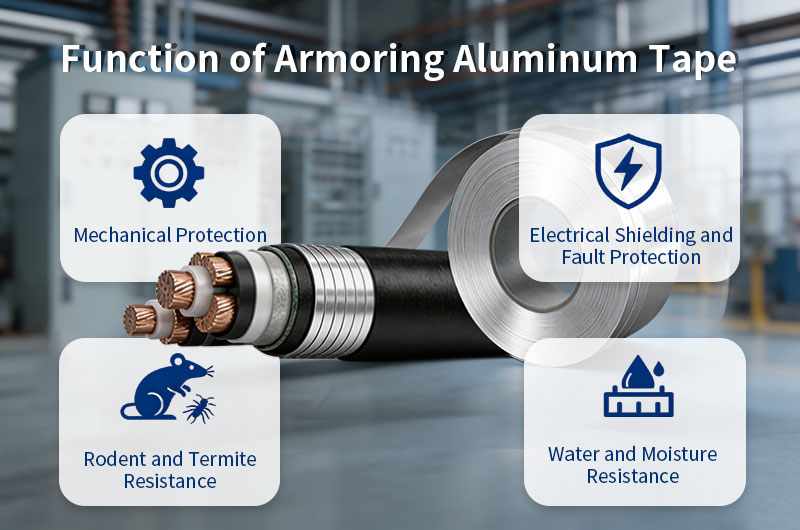
Simply put, the aluminum armor strip serves as the "protective shell" of the cable, undertaking multiple protective responsibilities:
- Mechanical Protection: Prevents physical damage.
- Rodent and Termite Resistance: Protects internal structures from pests.
- Electrical Shielding and Fault Protection: Acts as a grounding layer.
- Water and Moisture Resistance: Keeps the cable interior dry.
Structural Features
The structural design of the aluminum tape mainly relies on two aspects: the taping method and surface treatment.
Wrapping / Taping Methods
- Helical Wrapping: The aluminum tape is wrapped layer by layer at a specific helical angle, with an overlap rate of adjacent tapes at about 5% to 15%. This method offers flexible construction and is suitable for cables with smaller cross-sections.
- Longitudinal Covering: The aluminum strip is wrapped along the cable's axis, and the overlapping seams are welded or pressed together. This provides better sealing and superior waterproofing, making it suitable for cables with large cross-sections or high waterproofing requirements.
Surface Treatment
Some aluminum strips undergo a corrugation process, forming regular wavy or diamond-shaped patterns on the surface. This can improve the tape's longitudinal bending strength, increase the flexibility of the armor layer, and simultaneously enhance the adhesion between the aluminum metal and the sheath layer.
Why Choose Aluminum Over Other Materials?
Aluminum vs. Steel
| Comparison Dimension | Aluminum Tape Armor (ATA) | Steel Tape Armor (STA) |
|---|---|---|
| Density | 2.7 g/cm³ | 7.85 g/cm³ |
| Magnetic Properties | Non-magnetic | Magnetic (Ferromagnetic) |
| Eddy Current Loss | Extremely low | Higher |
| Corrosion Resistance | Good (protected by natural oxide film) | Requires galvanization |
| Conductivity | Good (can serve as grounding conductor) | Poor |
| Applicable Cables | Suitable for single-core and three-core | Mainly for three-core cables |
Why can't single-core cables use steel tape armor? When a large current passes through a single-core cable, a strong alternating magnetic field is generated. Steel tape, being ferromagnetic, will generate severe eddy current and hysteresis losses, causing the cable's ampacity to drop by 20% to 40%. Aluminum strip is completely non-magnetic, perfectly avoiding this issue. Therefore, single-core high-voltage cables almost exclusively utilize aluminum tape armouring.
Aluminum vs. Copper
While copper has better conductivity than aluminum, its density is 8.9 g/cm³ (about 3.3 times that of aluminum), and its price is typically 3 to 5 times higher. Considering weight and cost, the aluminum strip is the most cost-effective choice for most engineering applications.
Comparison of Common Aluminum Alloy Grades (Raw Material Strip)
| Alloy Grade | Tensile Strength | Conductivity | Corrosion Resistance | Main Advantages |
|---|---|---|---|---|
| 1060 | 60 – 100 MPa | ≥61% IACS | Good | Good conductivity, excellent ductility, low cost |
| 1050 | 65 – 110 MPa | ≥60% IACS | Good | Performance similar to 1060, widely available |
| 3003 | 100 – 150 MPa | ~41% IACS | Excellent | Higher strength, outstanding corrosion resistance |
| 5052 | 170 – 230 MPa | ~35% IACS | Excellent | High strength, superior marine corrosion resistance |
| 8011 | 80 – 120 MPa | ~55% IACS | Moderate | Well-balanced overall performance |
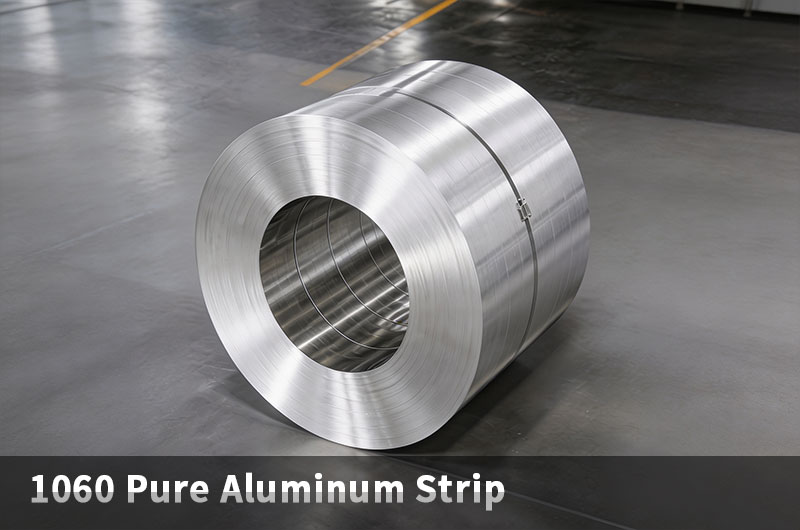
1060 Pure Aluminum Strip
Purity ≥99.6%, conductivity over 61% IACS. It has good ductility, is not prone to cracking during the taping process, and is affordable.
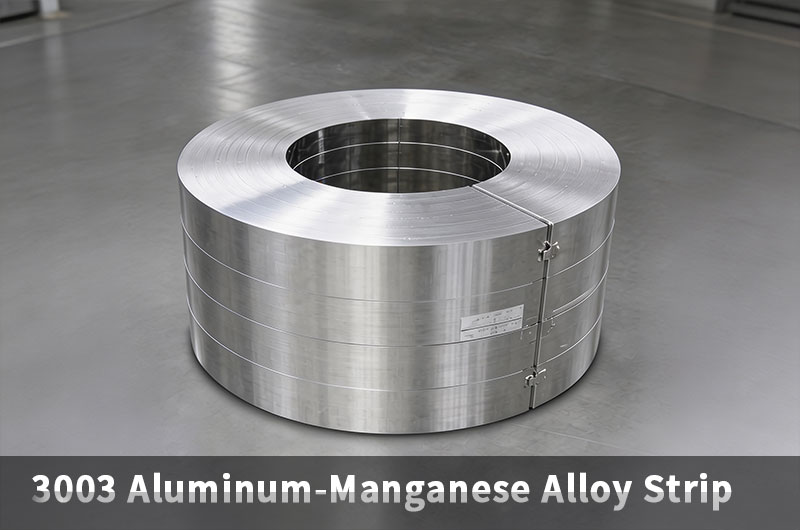
3003 Aluminum-Manganese Alloy Strip
Contains 1.0%–1.5% manganese. Its strength is 20%–30% higher than pure aluminum, with stronger corrosion resistance. Suitable for acidic soils or humid coastal areas.
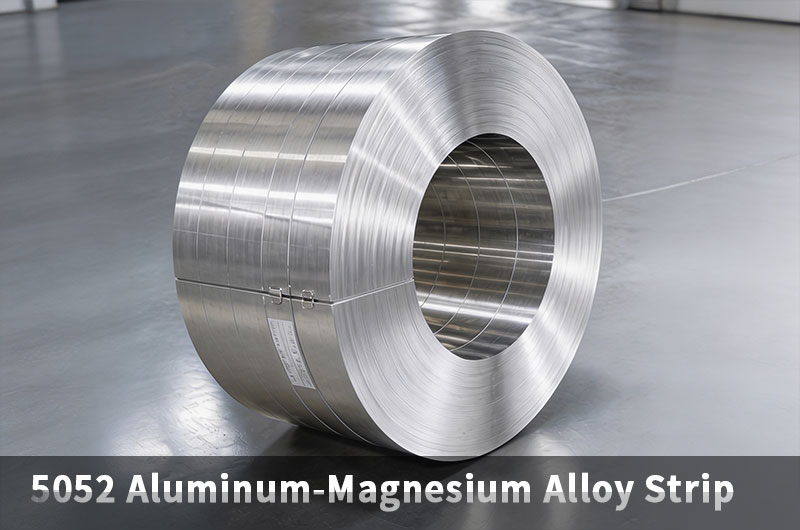
5052 Aluminum-Magnesium Alloy Strip
Tensile strength up to 230 MPa. Its resistance to seawater corrosion is particularly outstanding, mainly used for submarine cable armouring.
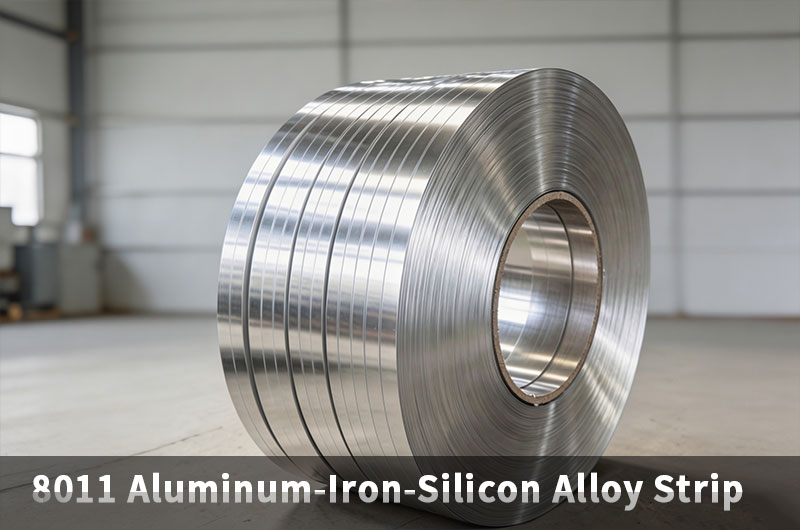
8011 Aluminum-Iron-Silicon Alloy Strip
Well-balanced performance, particularly suitable as the base strip for processing into aluminum-plastic composite tapes.
Common Forms of Armoring Aluminum Tape
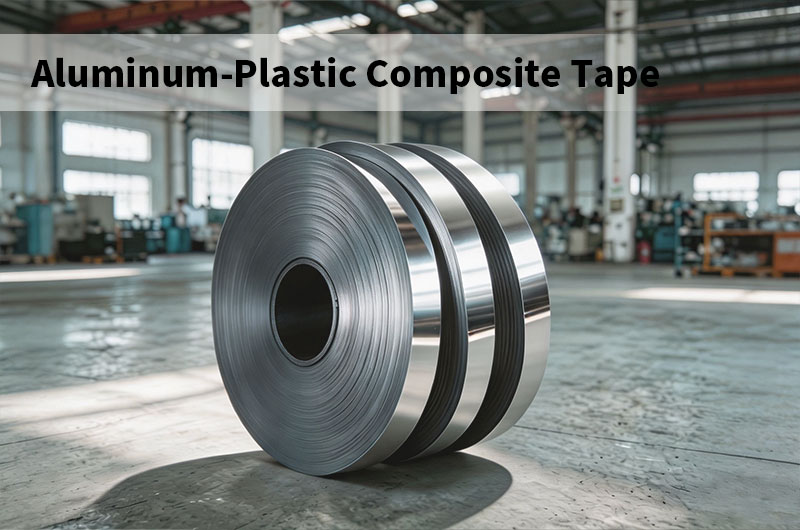
Aluminum-Plastic Composite Tape
This is a composite material created by combining aluminum foil/strip with PE plastic film through thermal pressing. It is heavily used in communication and power cables.
| Parameter | Specification Range |
|---|---|
| Aluminum Foil/Strip Thickness | 0.008 mm – 0.05 mm |
| Total Composite Thickness | 0.05 mm – 0.20 mm |
| Aluminum Material | Commonly 8011, 1235 alloys |
| Peel Strength | ≥ 6 N/cm |
Main Advantages: Excellent radial waterproofing, extremely lightweight, and provides electromagnetic shielding.
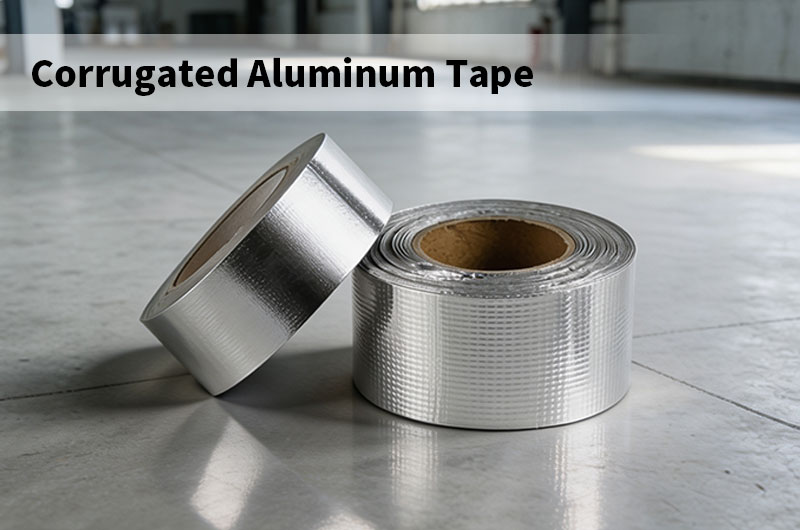
Corrugated Aluminum Tape
This product is made by pressing regular patterns onto a standard aluminum strip using corrugating rollers.
| Parameter | Specification Range |
|---|---|
| Strip Thickness | 0.3 mm – 1.5 mm |
| Pitch (Corrugation Spacing) | 3 mm – 10 mm |
| Depth of Corrugation | 0.2 mm – 1.0 mm |
Main Advantages: The corrugated structure gives the aluminum tape an "expansion margin," preventing cracking upon bending. Hoop stiffness is increased by about 15%–25% compared to a flat strip of the same thickness. Suitable for high-voltage power cables (110 kV and above).
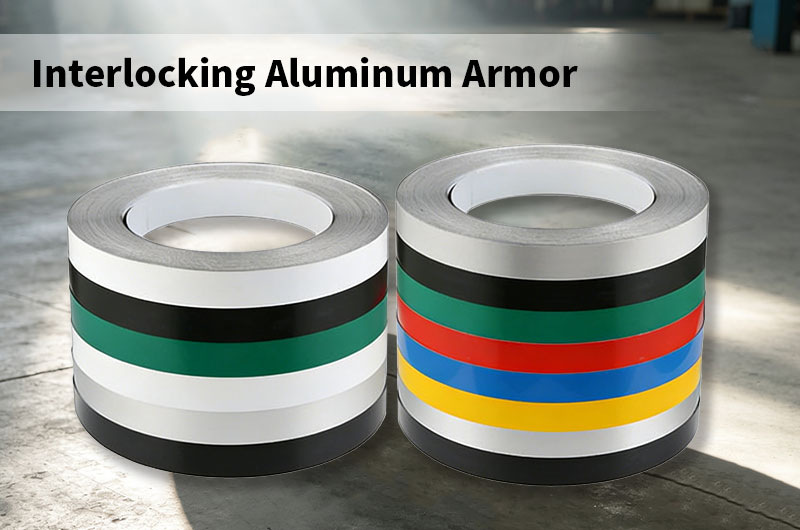
Interlocking Aluminum Armor
Interlocking armoring involves stamping the aluminum strip into an "S" or "Z" cross-section and wrapping it tightly around the cable in an interlocking manner.
| Parameter | Specification Range |
|---|---|
| Strip Width | 12 mm – 25 mm |
| Strip Thickness | 0.5 mm – 1.2 mm |
| Interlocking Method | Mechanical interlocking of ridges and grooves |
Main Advantages: Purely mechanical interlocking. It offers the best flexibility, allowing the cable to bend freely with a much smaller bending radius. Ideal for indoor building wiring and data centers.
Comprehensive Comparison of the Three Forms
| Form | Waterproofing | Mechanical Strength | Flexibility | Weight | Cost | Best Scenario |
|---|---|---|---|---|---|---|
| Aluminum-Plastic Composite | Excellent | Fair | Good | Lightest | Low | Telecom / Low-Med Voltage |
| Corrugated Aluminum Tape | Moderate | Strong | Moderate | Medium | Medium | High-Voltage Power Cables |
| Interlocking Aluminum Armor | Fair | Strongest | Best | Heavier | Higher | Building / Industrial Wiring |
Application Scenarios
The outstanding properties of aluminum tape armoring make it an indispensable material in various modern infrastructure fields.

Urban Power Grids & Transmission
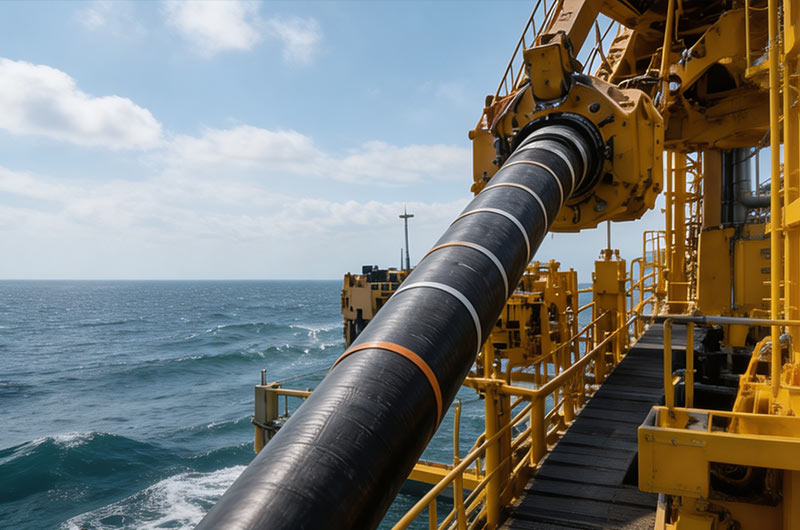
Submarine Cables
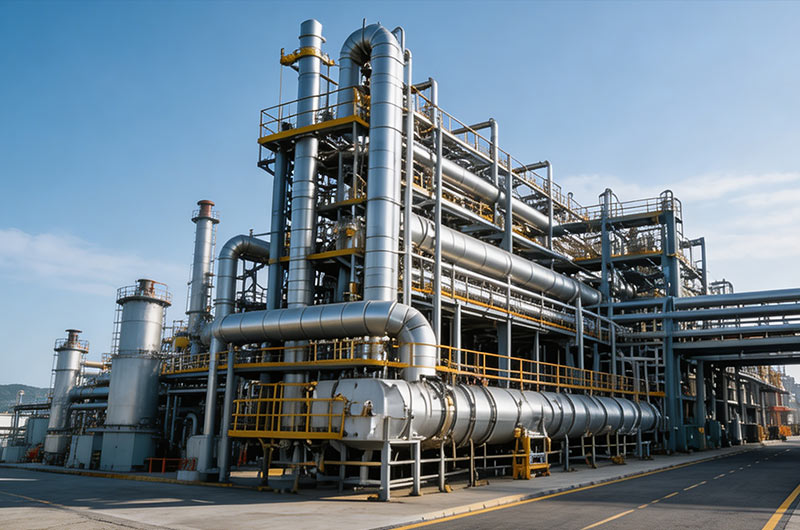
Industrial & Chemical Sectors

Buildings & Data Centers
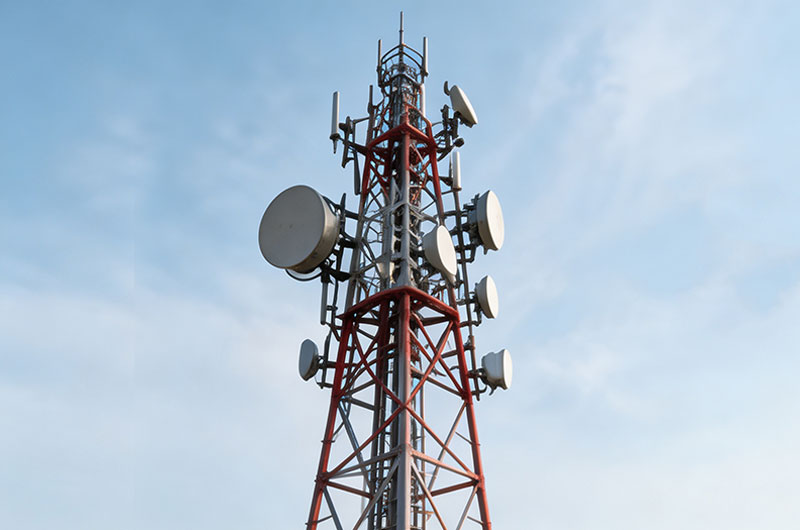
Telecom & Optical Cables
Selection Guide
| Application Scenario | Recommended Form | Recommended Strip Material |
|---|---|---|
| Single-core High-voltage Cables | Corrugated Aluminum Tape | 1060 / 1050 |
| High Corrosion Environments | Corrugated Aluminum Tape | 3003 / 5052 |
| High Waterproofing Requirements | Aluminum-Plastic Composite | 8011 / 1235 |
| Indoor Building Wiring | Interlocking Aluminum Armor | 1060 / 3003 |
| Submarine Cables | Corrugated Aluminum Tape | 5052 |
Purchasing Advice: When sourcing aluminum strip for cable armouring, it is recommended to ask suppliers for Mill Certificates and third-party testing reports. Focus on verifying three key indicators: tensile strength, elongation, and electrical conductivity.
Conclusion
Though seemingly inconspicuous, the cable armoring aluminum strip (tape) carries multiple critical missions, including mechanical protection, electrical safety, waterproofing, and anti-corrosion. From raw material alloy selection to the final product form, every solution is backed by clear engineering logic.
With the massive expansion of urban grids, offshore wind power, and data centers, the market demand for cable armouring materials will continue to grow. Properly understanding and selecting the right aluminum strip or tape not only determines the service life of the cable but also directly impacts the safe and stable operation of the entire power system.