


Introduction: The Engineering Problem Behind a Part Number
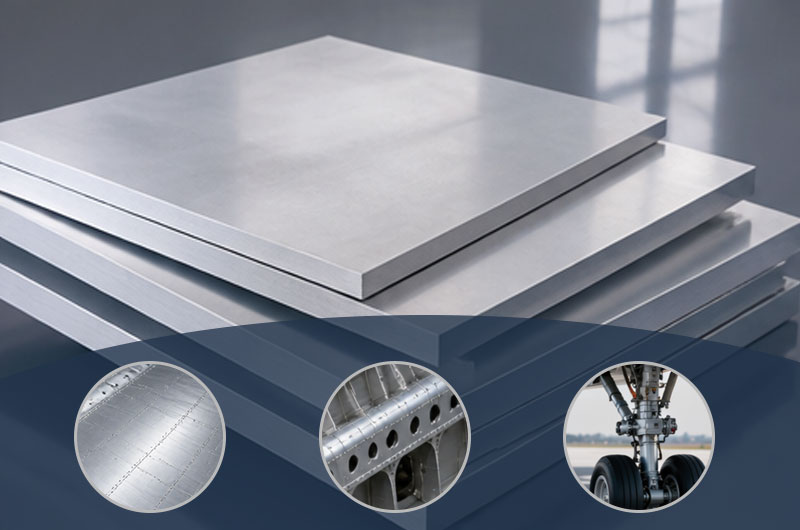
Procurement departments often receive a single line of description: 7075-T651, 7050-T7451, or 2024-T351. It seems clear enough, but during the actual verification process, it becomes apparent that the alloy grade is merely the starting point. The temper, thickness, grain direction for testing, inspection requirements, and certificate contents equally determine whether the material can smoothly enter the production line.
The selection of aerospace aluminum alloys always revolves around four engineering core issues: weight reduction, fatigue life, corrosion control, and manufacturability. Public data from NASA shows that launch vehicle pressurized tanks commonly use 2000 series aluminum alloys like 2219 and 2195, while non-pressurized structures utilize both 2000 and 7000 series. [13] This explains why the aerospace sector rarely uses "highest strength" as the sole criterion for selecting materials.
What truly needs to be confirmed is whether the alloy, temper, thickness, environment, manufacturing process, and quality documents match the specific structural location.
Mainstream Grades Analysis: The Engineering Positioning of 2024, 7075, 7050, and 7005
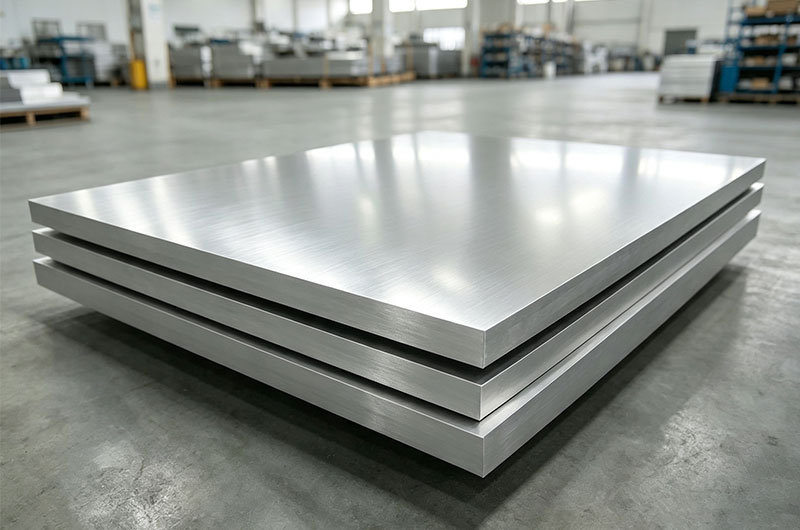
2024: The Common Choice for Fatigue-Bearing
2024 aluminum belongs to the Al-Cu-Mg system. Common tempers are T3, T351, and T4. It is primarily used for fuselage/wing skins, spars, ribs, bulkheads, and fittings. Its advantages lie in its fatigue performance, machinability, and maturity in aviation applications. [1][3]
Typical 2024-T3 yield strength is approx. 42 ksi and tensile strength is approx. 64 ksi. [7][8] In hot, humid, or salt-spray environments, it requires Alclad or specialized coatings due to weaker corrosion resistance.
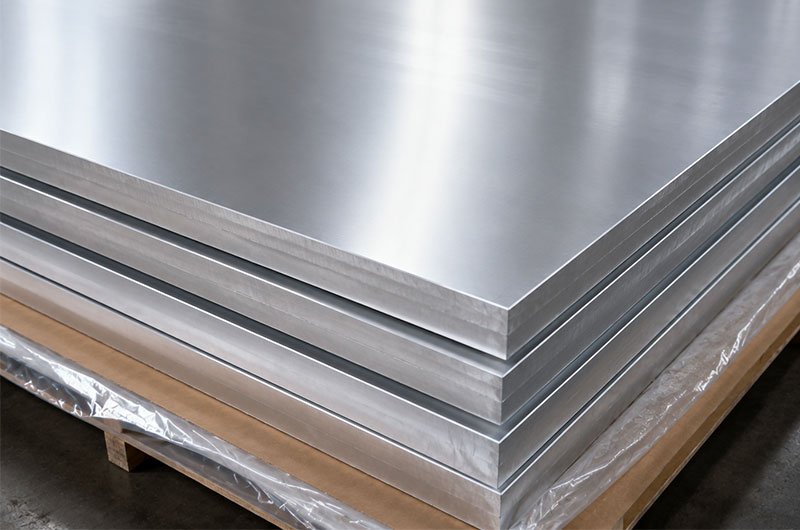
7075: The "Mainstay" for High-Strength
7075 aluminum (Al-Zn-Mg-Cu). Typical 7075-T6 yield strength is approx. 70–73 ksi, tensile strength 78–83 ksi, making it one of the highest-strength alloys. [7][8] It is suitable for highly stressed frames, fittings, and wing spars. [11]
Critical note: 7075-T6 has high sensitivity to Stress Corrosion Cracking (SCC) and is not weldable. In corrosive environments, designers shift to T73/T7351 to gain better SCC resistance at the cost of some strength.
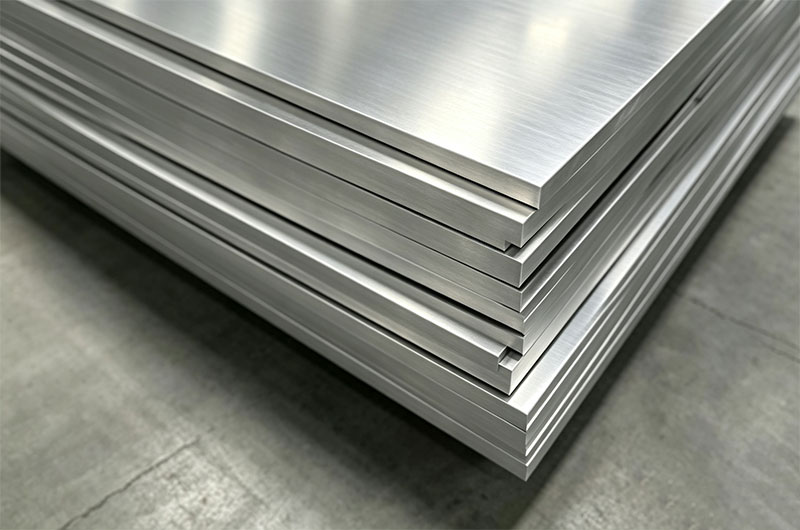
7050: Balancing Thick Plates and Toughness
7050 aluminum adjusts the ratio of Zn, Mg, Cu, and Zr based on 7075 to improve the hardenability and SCC resistance of thick sections. [2][6]
Typical 7050-T7451 yield strength is approx. 68 ksi (tensile ~76 ksi). [8] While slightly lower than 7075-T6, it holds a distinct advantage in fracture toughness and SCC resistance, ideal for thick fuselage frames, bulkheads, and large machined components.
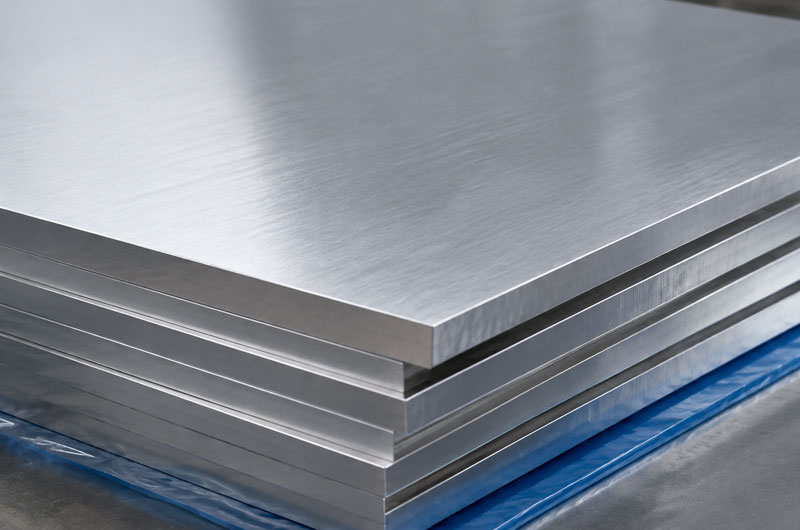
7005: For Extrusions & Weldability
7005 aluminum is more commonly found in extruded profiles and long structural components. ASM literature positions it as an extrusion structural alloy that balances moderately high strength with fracture toughness. [14]
Typical T53 temper yield strength is approx. 42 ksi. [8] While the strength is lower than 7075, its weldability and extrusion manufacturing processes are much more favorable for frame beams and stiffeners.
Extended Grades: 2219 and 2195 — When Entering Space Tanks
When aluminum alloys enter scenarios requiring cryogenic pressurized structures and high welding/sealing requirements, 2219 and 2195 become preferred.
- 2219 (Al-Cu): Possesses excellent weldability, cryogenic toughness, and resistance to stress corrosion. Long used in rocket tanks.
- 2195 (Al-Li): Offers lower density and a higher elastic modulus. NASA’s Space Shuttle project recorded a lightweighting route replacing 2219 with 2195 to reduce weight by approx. 7, 500 lbs. [12]
These alloys remind us: once applied to space structures, "cryogenic performance", "weldability", and "sealing" redefine priorities. [13]
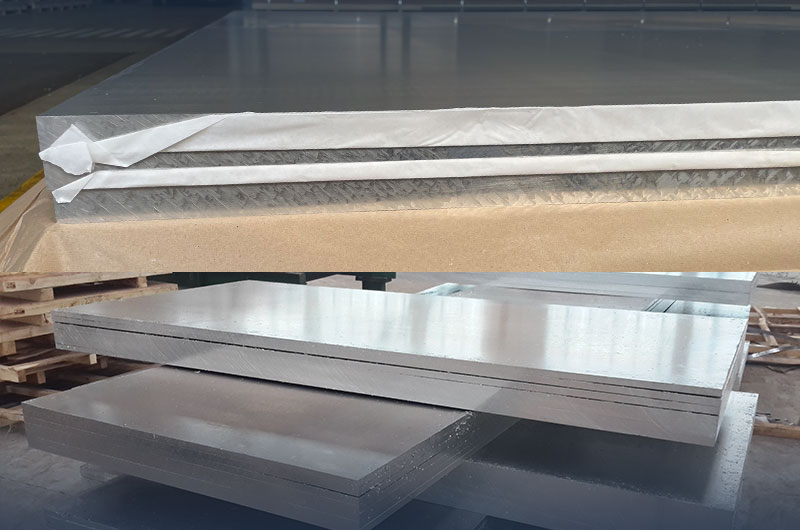
Quick Guide Table: Trade-offs of Common Aerospace Aluminum Alloys
Note: The parameters below are for preliminary selection and RFQ communication. They do not replace design allowable values or material test certificates.
| Alloy / Temper | Main Product Forms | Typical Reference Properties (Yield/Tensile) | Suitable Applications |
|---|---|---|---|
| 2024-T3/T351 | Sheet, Plate, Alclad Sheet | Yield ~42 ksi / Tensile ~64 ksi [7][8] | Fuselage/wing skins, spars, ribs, bulkheads |
| 7075-T6/T651 | Sheet, Plate, Thick Plate, Bar | Yield ~70–73 ksi / Tensile ~78–83 ksi [7][8] | High-stress frames, fittings, spars/ribs, machined parts |
| 7050-T7451/T7651 | Thick Plate, Plate, Round Bar | Yield ~68 ksi / Tensile ~76 ksi [8] | Thick fuselage frames, bulkheads, wing panels, large machined parts |
| 7005-T53, etc. | Primarily Extrusions, limited plate | Yield ~42 ksi / Tensile ~51 ksi [8] | Frame beams, stiffeners, guide rails, weldable extruded structures |
| 2219-T87 | Plate, Welding Wire, Forging | Yield ~51 ksi / Tensile ~66 ksi | Rocket tanks, cryogenic propellant containers |
| 6061-T6/T651 | Sheet, Plate, Extrusion, Tube | Yield ~35 ksi / Tensile ~42 ksi [7][8] | Secondary structures, brackets, fixtures, welded assemblies |
Aerospace Aluminum Product Types: Not Just "Aluminum Plates"
The product forms of aerospace aluminum go far beyond just plates. When procuring, it is necessary to match the product type against component function and manufacturing processes.
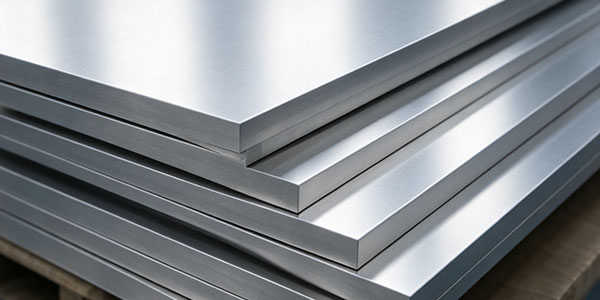
Sheet & Plate
The most common form, suitable for skins, bulkheads, and wing surfaces. Sheet (under 6.35 mm) and Plate (over 6.35 mm) have distinct specifications governed by ASTM B209/B209M. [10]
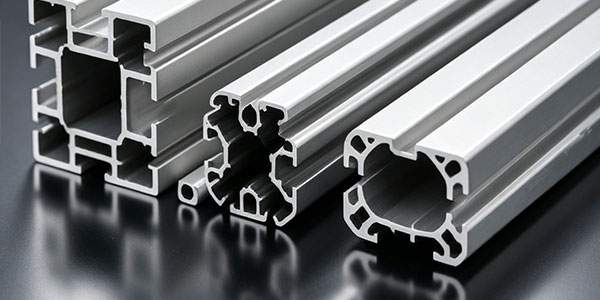
Extrusion
Used for long structural parts like stringers, ribs, and frame beams. Extrusion direction properties differ from plates. Common spec is ASTM B221.
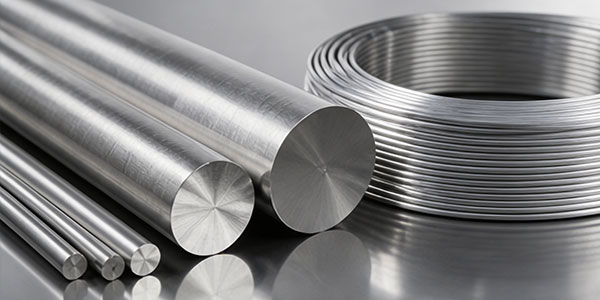
Bar, Rod & Wire
Used for fasteners, pins, and small machined parts. Governed by ASTM B211. Heat treatment temper must be confirmed independently.
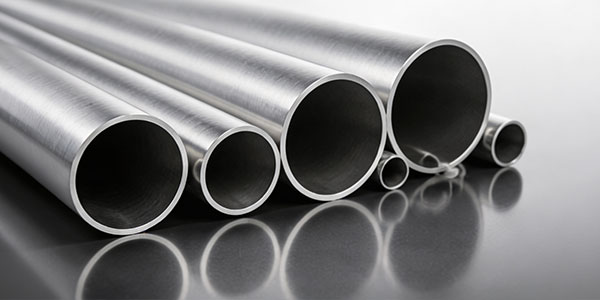
Tube & Pipe
Used for hydraulic lines, airframe skeleton tubes, and space trusses. Requires strict wall thickness tolerance and roundness (ASTM B210 / B241).
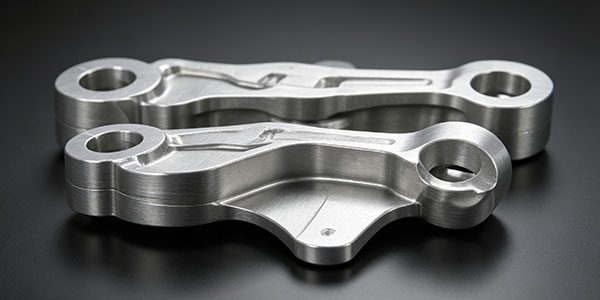
Forging
Used for high-load components like landing gears. Grain flow dictates strength. Requires forging drawings and NDT confirmation (AMS 2770).
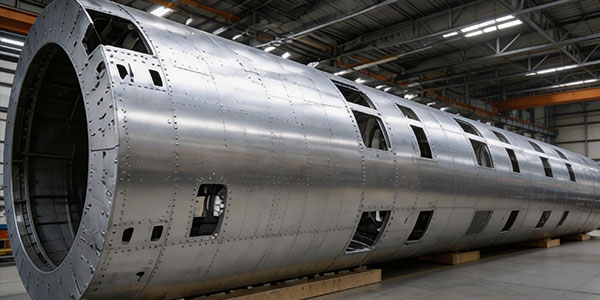
Al-Li Alloy Products
Al-Li alloys (2195, 2098) offer lower density and higher elastic modulus for space tanks. Requires strict forming and welding control. [12]
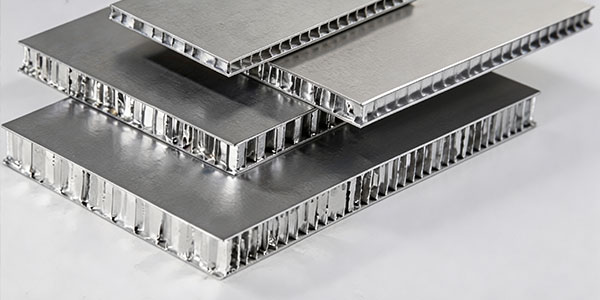
Honeycomb Panel
Used in radomes, floors, and interiors for extreme specific stiffness. Requires confirming face sheet alloy, core density, and adhesive standards.
Aluminum Plate Specifications Detailed Guide
In aerospace aluminum plate procurement, "specification" is not just a simple dimension range, but a set of parameter combinations that must be confirmed item by item.
Common Dimension Ranges & Thickness Tolerances
| Product Form | Thickness Range (mm) | Width Range (mm) | Length Range (mm) |
|---|---|---|---|
| Sheet | 0.20 – 6.30 | Up to approx. 2000 | Up to approx. 7000 |
| Plate | 6.35 – approx. 150 | Up to approx. 3000 | Up to approx. 10000 |
| Extra-Thick Plate | 150 and above | Negotiable | Negotiable |
Aluminum plate thickness tolerances are usually defined by ASTM B209 or AMS specs. Aerospace structural components often require Precision Tolerance. This must be explicitly stated in the RFQ.
Grain Direction and Anisotropy
Aluminum plates exhibit significant anisotropy after rolling. Mechanical properties are divided into:
- L Direction (Longitudinal): Strength and elongation are usually the highest.
- LT Direction (Long Transverse): Strength is slightly lower than L; most commonly referenced in engineering design.
- ST Direction (Short Transverse): Strength and toughness are the lowest. The SCC resistance in the ST direction of 7050 and 7075 thick plates requires special attention.
If the drawing specifies a sampling direction, the purchase order must state it synchronously. Otherwise, suppliers will default to providing reports based on the easiest testing direction.
Surface Conditions
| Surface Type | Description |
|---|---|
| Bare | No cladding; direct alloy body |
| Alclad | Coated with pure Al or Al-alloy layer for sacrificial anode protection |
| Anodized | Electrochemical oxidation to improve corrosion resistance and surface hardness |
| Phosphoric Acid Anodizing (PAA) | Pre-treatment for aerospace structural bonding, used with primer |
Non-Destructive Testing (NDT) Requirements
| Testing Type | Purpose | Common Standards |
|---|---|---|
| Ultrasonic Testing (UT) | Detect internal defects, delaminations, inclusions | AMS 2630, ASTM E2375 |
| Fluorescent Penetrant (FPI) | Detect surface and near-surface cracks | AMS 2647 |
| Eddy Current Testing (ECT) | Detect surface cracks and measure thickness | AMS 2644 |
| Hardness Testing | Verify heat treatment temper | ASTM E18, ASTM E10 |
| Electrical Conductivity | Indirect verification of temper, crucial for 7000 series | AMS 2658 |
In aerospace aluminum plate procurement, the UT class (Class A, B, or AA) must be specified during the RFQ stage.
Material Test Certificate (MTC) and Traceability
An aerospace MTC must include: alloy grade, temper, Heat/Lot Number, chemical composition, mechanical properties (including direction), NDT reports, specification compliance, origin, and manufacturer.
Procurement Advice: Explicitly writing "Provide Prime Mill MTC" in the PO technical requirements provides much better security than verifying certificates after the fact.
Common Misconceptions in Material Selection
- Highest strength ≠ Most suitable.
- 7075-T6 has higher strength than 2024-T3, but in fatigue-sensitive structures or corrosive environments, 2024 or 7050 might be more rational.
- Different tempers = Significant property differences.
- The yield strength between 7075-T6 and 7075-T73 differs by more than 10 ksi, and their SCC resistance fundamentally differs. They cannot replace each other.
- "Conforms to 7075" ≠ Conforms to specifications.
- The specification number, revision version, and product form must match perfectly. "Conforms to 7075" does not mean "Conforms to AMS 4045M T651 plate."
- Thick plates and sheets have different properties.
- 7050-T7451 was developed specifically to improve the ST-direction performance of thick plates. You cannot use 7075-T651 sheet data to evaluate thick plate components.
- Having a certificate ≠ Having the RIGHT certificate.
- Alloy, temper, specification, test direction, and values must be traceable to the original mill; certificates generated by intermediaries are rejected by many QA systems.
Procurement Checklist: Information to Provide Upfront
The more complete the specification information, the less back-and-forth communication required. We recommend organizing RFQs based on these four categories:
- Basic Material Info: Alloy grade and temper (e.g., 2024-T351), product form, Dimensions (Thickness × Width × Length), and tolerance grade.
- Testing Requirements: Grain direction for testing (L/LT/ST), tensile properties, hardness, electrical conductivity, UT classification.
- Surface & Process: Bare/Alclad/Anodizing type, whether cutting or face milling is required.
- Standards & Delivery: Applicable specifications and revision versions (ASTM B209, AMS 4045M, EN 485, etc.), requirement for Prime Mill MTC, origin, lead time, and packaging.
Writing the actual standard number into the RFQ has far more operational value than simply writing "Aerospace Grade." [10]
How Can Worthwill Intervene and Assist?
For procurement managers, the most common risk isn't failing to find the numbers "7075", but buying material with mismatched tempers, incomplete certificates, or lack of traceability. For MROs, the cost of line stoppage is often higher than the material price.
Worthwill's core logic for serving aerospace aluminum clients is "Confirm the engineering context first, then match the specifications":
- Assisting in confirming the alloy, temper, specifications, and testing requirements during the RFQ stage to avoid batch rework;
- Assisting in verifying that MTC content aligns with procurement requirements;
- Pre-coordinating supply chain availability for special thicknesses, special testing directions, or low-volume varieties;
- Supporting AOG (Aircraft on Ground) urgent procurement flows for maintenance facilities to shorten lead times.
Conclusion
2024 resolves the balance between fatigue and machining in mature structures; 7075 tackles high-stress demands; 7050 is suited for thick sections and SCC resistance; 7005 provides options for extruded and welded structures; 2219 and 2195 show us that space tanks and cryogenics redefine material choices. [1][2][10][12][13][14]
The key to aerospace aluminum procurement is not putting the strongest material into every drawing, but ensuring that specific strengths appear exactly where they are truly needed—and then locking that engineering judgment into the supply chain process using compliant specifications, traceable batches, and complete documentation.
References
- Aircraft Aluminium, Aerospace Grade Aluminum 2024 and 7075: https://www.aircraftaluminium.com/a/aerospace-grade-aluminum-2024-and-7075.html
- Metal Supermarkets, What is the Difference Between 7050 vs 7075 Aluminum?: https://www.metalsupermarkets.com/difference-between-7050-vs-7075-aluminum
- Howard Precision Metals, 2024 Aluminum vs. 7075 Aluminum: https://www.howardprecision.com/2024-aluminum-vs-7075-aluminum/
- Worthwill Aluminium, Aluminum Industry Insights and Technical Blog: https://www.worthwillaluminium.com/blog
- Xometry, 7075 Aluminum Alloy: https://www.xometry.com/resources/materials/7075-aluminum-alloy
- Chalco Aluminum, 7 Major Differences Between 7050 and 7075: https://www.chalcoaluminum.com/blog/differences-7075-7050-aluminum
- Engineering ToolBox, Aluminum Alloys - Mechanical Properties: https://www.engineeringtoolbox.com/properties-aluminum-pipe-d_1340.html
- MechCodex, Aluminum Alloy Grades & Tempers: https://mechcodex.com/reference/aluminum-alloy-grades
- ASTM, B209/B209M-21a Standard Specification for Aluminum and Aluminum-Alloy Sheet and Plate: https://store.astm.org/b0209_b0209m-21a.html
- ANSI Webstore, SAE AMS 4045M-2022: https://webstore.ansi.org/standards/sae/saeams4045m2022
- NASA NTRS, Super LightWeight Tank: https://ntrs.nasa.gov/api/citations/20010000456/downloads/20010000456.pdf
- NASA NTRS, Launch Vehicle Structures: https://ntrs.nasa.gov/api/citations/20190020090/downloads/20190020090.pdf
- ASM Digital Library, 7005: Extrusion Alloy: https://dl.asminternational.org/handbooks/edited-volume/91/chapter/2088171/7005ExtrusionAlloy