


6061 vs. 6082 Aluminum
Introduction
Among the 6000 series aluminum alloys, 6061 and 6082 are the two most frequently compared grades. Belonging to the Al-Mg-Si family, they share highly similar chemical compositions, well-balanced overall properties, and fall into the same price range. Because of this, many engineers and purchasing agents often feel confused when selecting materials: What is the fundamental difference between these two alloys? Which one should I use for my project?
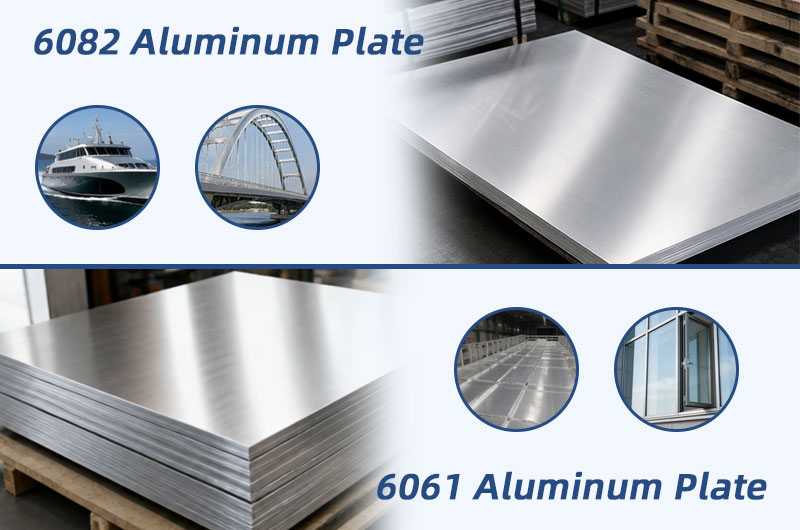
This article will systematically compare 6061 and 6082 aluminum alloys across six dimensions: chemical composition, mechanical properties, weldability, machinability, corrosion resistance, and market positioning.
Quick Comparison Table: 6061 vs. 6082 Core Differences at a Glance
| Comparison Item | 6061 Aluminum | 6082 Aluminum | Advantage |
|---|---|---|---|
| Tensile Strength (T6) | 310 MPa | 310–340 MPa | 6082 |
| Yield Strength (T6) | 270 MPa | 260–280 MPa | Similar |
| Elongation (T651) | 11% | 6.3% | 6061 |
| Thermal Conductivity | 167–170 W/m·K | 160 W/m·K | 6061 |
| Weldability | Excellent | Excellent (Welding Coefficient 0.92) | 6082 |
| Seawater Corrosion Resistance | Good | Superior | 6082 |
| Formability | Better | Slightly inferior | 6061 |
| Machinability | Excellent | Excellent | Similar |
| Max Strength Temper | T89/T94 (410 MPa) | T6511 (340 MPa) | 6061 |
| Price | Relatively lower | Slightly higher | 6061 |
6061 vs. 6082 Aluminum: Chemical Composition Comparison
Chemical composition is the fundamental factor determining aluminum alloy properties. Although both 6061 and 6082 belong to the Al-Mg-Si series, the differences in key element content create their distinct performance characteristics.
Chemical Composition Comparison Table (Weight %):
| Element | 6061 | 6082 | Difference Note |
|---|---|---|---|
| Al (Aluminum) | 95.9–98.6 | 95.2–98.3 | Base element, 6061 has slightly higher purity |
| Mg (Magnesium) | 0.8–1.2 | 0.6–1.2 | Main strengthening element, similar range |
| Si (Silicon) | 0.4–0.8 | 0.7–1.3 | 6082 has higher content, more strengthening phases |
| Cu (Copper) | 0.15–0.4 | ≤0.1 | 6061 has significantly higher content |
| Mn (Manganese) | ≤0.15 | 0.4–1.0 | Key difference: 6082 is over 6 times higher |
| Cr (Chromium) | 0.04–0.35 | ≤0.25 | 6061 has a wider range |
| Fe (Iron) | ≤0.7 | ≤0.5 | 6082 is strictly controlled |
| Zn (Zinc) | ≤0.25 | ≤0.2 | Impurity element |
| Ti (Titanium) | ≤0.15 | ≤0.1 | Grain refiner |
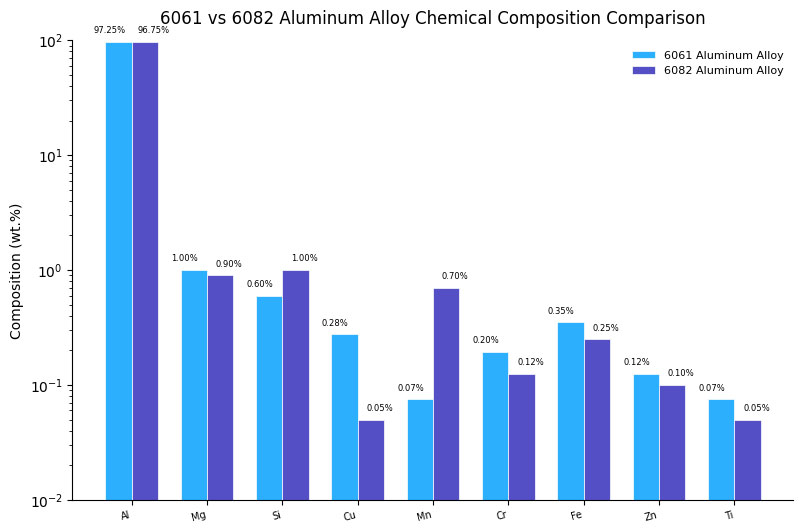
Simply put, 6082 excels in welding and marine corrosion resistance due to its "High Mn + High Si" formula, making it the top choice for heavy structural components. Meanwhile, 6061 offers better ductility and thermal conductivity by adding Copper (Cu), making it more suitable for complex forming and heat dissipation applications.
6061 vs. 6082 Aluminum: Mechanical Properties Comparison
Performance Comparison in Different Tempers
Mechanical properties are the core basis for material selection. 6061 and 6082 exhibit distinct characteristics under different heat treatment states.
Main Temper Mechanical Properties Comparison:
| Temper | Alloy | Tensile Strength (MPa) | Yield Strength (MPa) | Elongation (%) | Brinell Hardness (HB) |
|---|---|---|---|---|---|
| O (Annealed) | 6061 | 130 | 76 | 20 | 33 |
| 6082 | 140 | 85 | 18 | 40 | |
| T4 | 6061 | 230 | 130 | 18 | 63 |
| 6082 | 230 | 120 | 16 | 58 | |
| T6 | 6061 | 310 | 270 | 10 | 93 |
| 6082 | 330 | 270 | 9.8 | 93 | |
| T651 | 6061 | 320 | 270 | 11 | 93 |
| 6082 | 320 | 270 | 6.3 | 91 | |
| T6511 | 6061 | 290 | 270 | 9 | — |
| 6082 | 340 | 320 | 13 | 95 |
This represents a classic trade-off in mechanical properties: 6082 is the "strength champion" (up to 17% higher strength in specific tempers), while 6061 is the "ductility expert" (elongation can reach up to 20% in the O temper).
Fatigue Strength & Fracture Toughness
Fatigue Strength Comparison (500, 000, 000 cycles):
- 6061 (T6): 96 MPa
- 6082 (T6): 95–130 MPa
Shear Strength Comparison:
- 6061 (T6): 210 MPa
- 6082 (T6): 220 MPa
6082 performs better in shear applications (such as shaft parts and connectors).
Temperature Effects on Performance
6061 Temperature-Strength Relationship:
- 20°C: 275 MPa (100% Strength Retention)
- 100°C: 145 MPa (53% Strength Retention)
- 150°C: <120 MPa (<44% Strength Retention)
Both alloys have a maximum heat resistance limit of around 170°C (they will soften significantly if exceeded). However, in extremely cold environments below -40°C, 6061, with its inherently better ductility, is more freeze-resistant and less prone to brittle fracture than 6082.
6061 vs. 6082 Aluminum: Physical & Thermal Properties
Basic Physical Properties Comparison
| Parameter | 6061 | 6082 | Advantage |
|---|---|---|---|
| Density (g/cm³) | 2.70 | 2.70 | Same |
| Melting Point Range (°C) | 582–650 | 582–652 | Basically same |
| Elastic Modulus (GPa) | 69 | 69 | Same |
| Poisson's Ratio | 0.33 | 0.33 | Same |
| Shear Modulus (GPa) | 26 | 26 | Same |
Thermal Properties Comparison
| Thermal Parameter | 6061 | 6082 | Advantage |
|---|---|---|---|
| Thermal Conductivity (W/m·K) | 167–170 | 160 | 6061 |
| Thermal Expansion Coeff. (μm/m·K) | 23.6 | 23.1–23.4 | Similar |
| Specific Heat Capacity (J/kg·K) | 900 | 900 | Same |
| Electrical Conductivity (% IACS) | 43 | 42 | 6061 |
| Electrical Resistivity (Ω·mm²/m) | 0.040 | 0.038 | 6082 |
Thermal Diffusivity & Thermal Shock Resistance
- Thermal Diffusivity (mm²/s): 6061 (68) | 6082 (67)
- Thermal Shock Resistance (points): 6061 (5.7–18) | 6082 (6.0–15)
Both alloys exhibit similar stability under thermal cycling environments.
6061 vs. 6082 Aluminum: Heat Treatment Processes
In terms of heat treatment, there are significant differences between the two alloys, which directly affect the technical threshold for manufacturers:
- 6082 has extremely high quench sensitivity: Due to its higher manganese content, 6082 must undergo strict and rapid water quenching during heat treatment (cooling rate ≥15°C/s), otherwise its properties will drop significantly. This means producing 6082 requires suppliers to have highly professional and precise heat treatment equipment. However, its advantage lies in a shorter artificial aging time (T6), which only takes 5–8 hours to reach standard levels.
- 6061 has better process tolerance: 6061 has relatively relaxed quenching requirements and excellent process stability, which most small and medium-sized aluminum plants can easily handle. This is one of the reasons for its high global penetration rate. However, its T6 artificial aging time is longer, typically requiring about 18 hours.
Note: For a comprehensive understanding of aluminum alloy temper designations like O, T4, and T6, please click to read our Aluminum Alloy Temper Guide.
6061 vs. 6082 Aluminum: Machinability & Formability Comparison
Machinability Assessment
| Process Type | 6061 | 6082 | Description |
|---|---|---|---|
| Machinability | Excellent (50% rating) | Excellent | Best in T6 temper |
| Cold Forming | Excellent | Good | 6061 ductility advantage |
| Hot Working | 260–372°C | 260–372°C | Same temp range |
| Extrusion | Excellent (2nd most used) | Good | 6061 easier for complex profiles |
| Forging | Good | Good | Both suitable for hot forging |
| Deep Drawing | Excellent (O temper) | Good (O temper) | 6061 is more suitable |
Machining Characteristics
- 6061-T6 Machining Advantages: Moderate cutting forces, long tool life. Forms tight chip curls (with chip breakers). Excellent surface finish. Stable dimensional accuracy.
- 6082-T6 Machining Features: Slightly higher hardness (95 vs 93 HB) may accelerate tool wear. Machinability still falls into the excellent category. Suitable for CNC milling, turning, and drilling.
Formability Comparison
Bend Radius:
- O Temper: 6061 (Excellent, 1–2t) | 6082 (Good, 1–2t)
- T4 Temper: 6061 (Good, 2–3t) | 6082 (Moderate, 2–3t)
- T6 Temper: Both are limited, require hot forming.
Deep Drawing Performance:
- 6061-O: 20% elongation, suitable for complex deep drawing.
- 6082-O: 18% elongation, suitable for moderate deep drawing.
Practical Application Advice: For complex bending/stamping, choose 6061-O or T4, and perform T6 heat treatment after forming to restore strength. 6082 is better suited for simple forming or direct use as extruded/forged shapes.
Post-Weld Machinability
- 6061 (Pre-weld T6): HAZ properties drop to near T4 (approx. 40% loss). Can be restored via re-T6 treatment.
- 6082 (Pre-weld T6): HAZ properties drop to near T4 (approx. 40–50% loss). Can be restored via re-T6 treatment.
6061 vs. 6082 Aluminum: Corrosion Resistance Comparison
Corrosion Resistance Mechanism
Both alloys rely on a naturally formed aluminum oxide (Al₂O₃) protective layer:
- Layer thickness: 2–10 nm (natural oxidation), up to 10–25 μm after anodizing.
- Dense, highly adhesive, and self-healing.
Corrosion Resistance in Different Environments
| Environment | 6061 | 6082 | Recommended Alloy |
|---|---|---|---|
| Atmospheric | Excellent | Excellent | Both |
| Freshwater | Excellent | Excellent | Both |
| Seawater Immersion | Good | Superior | 6082 |
| Seawater Splash Zone | Good | Excellent | 6082 |
| Industrial Atmos. | Good | Good | Both |
| Alkaline Soil | Moderate (may pit) | Good | 6082 |
| Concentrated Nitric Acid | Excellent | Excellent | Both |
| Ammonia | Excellent | Excellent | Both |
Seawater Corrosion Rate: 6061 (0.03 mm/year) vs. 6082 (0.02 mm/year, +30% longer lifespan).
Stress Corrosion Cracking (SCC) Resistance
- 6082's advantage is obvious: High Mn content provides better intergranular stability. Insensitive in 50°C, 3.5% NaCl solution. The distribution of Mg₂Si phases benefits SCC resistance.
- 6061's performance: Performs well in standard tests. Low Cu content reduces galvanic corrosion risks. Suitable for most non-extreme corrosive environments.
Corrosion Protection Recommendations
- Anodizing: Excellent protection. (Architecture, decorative) — Medium cost.
- Powder Coating: Excellent protection. (Outdoor equipment) — Medium cost.
- Painting: Good protection. (General use) — Low cost.
- Chemical Conversion: Good protection. (Pre-treatment for bonding) — Low cost.
6061 vs. 6082 Aluminum: Welding Performance Comparison
Weldability Rating
| Welding Method | 6061 | 6082 | Recommended Filler Wire |
|---|---|---|---|
| TIG (GTAW) | Excellent | Excellent | 4043 (Primary), 5356 (Alt.) |
| MIG (GMAW) | Excellent | Excellent | 4043, 5356 |
| Resistance Welding | Good | Good | — |
| Brazing | Good | Good | Al-Si filler |
| Friction Stir (FSW) | Excellent | Excellent | No wire needed |
Welding Performance Data
- 6061-T6: Base strength 310 MPa, Welding Coefficient 0.85, Weld strength ~260 MPa.
- 6082-T6: Base strength 330 MPa, Welding Coefficient 0.92, Weld strength ~305 MPa.
Welding Process Parameter Suggestions
- TIG (3 mm plate): 80–120A, 12–15V, Speed 200–300 mm/min, Pure Argon. Filler: 4043 or 5356.
- MIG (5 mm plate): 150–200A, 20–25V, Wire feed 5–8 m/min, Pure Argon or Ar+He mix.
Post-Weld Treatment Advice
- Natural Aging: Naturally restores some strength (50–60% within 7 days, 60–70% after several weeks).
- Artificial Aging: Re-T6 treatment (530°C solution + 175°C × 8h aging) can restore close to original strength for critical structures.
6061 vs. 6082: Typical Applications Comparison
Although both are 6-series aluminum alloys, due to subtle differences in strength and corrosion resistance, their "roles" across major industries are distinctly different:
Marine & Offshore Engineering
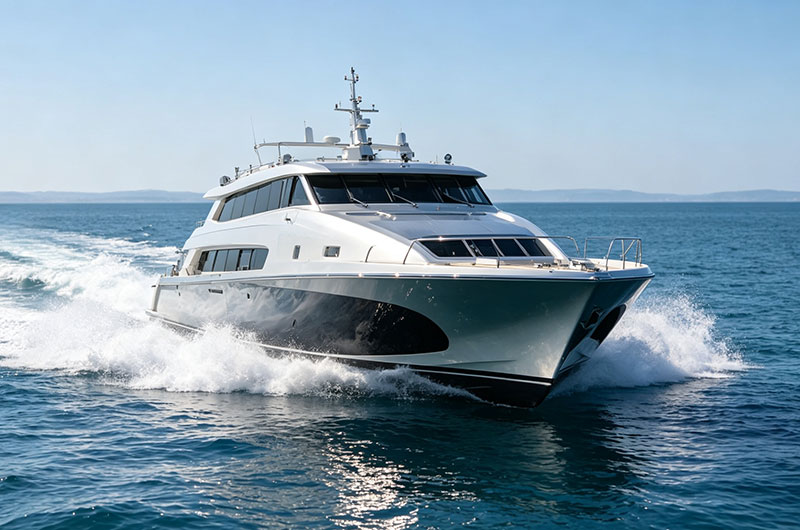
- 6082: A true "marine-grade" aluminum alloy. Thanks to its excellent seawater corrosion resistance and high strength, it is heavily used in shipbuilding (hull frames, anti-slip decks) and offshore wind platforms in harsh environments.
- 6061: Slightly inferior in seawater resistance, usually only used for yacht interiors, non-critical cabins, or vessels in freshwater environments.

Architecture & Structural Engineering
- 6061 (Focus on Aesthetics): Mostly used for architectural window/door frames, curtain wall supports, and indoor partition systems. Its surface anodizing effect is excellent, perfect for lightweight decorative structures.
- 6082 (Focus on Load-bearing): Known as "structural aluminum." With a higher load-bearing capacity for the same cross-section, it is dedicated to heavy engineering, such as aluminum bridges, large stadium roof trusses, and crane booms.
Transportation
- 6061: The darling of passenger vehicles, often used for sedan chassis, wheel hubs, EV battery trays, and high-end bicycle frames.
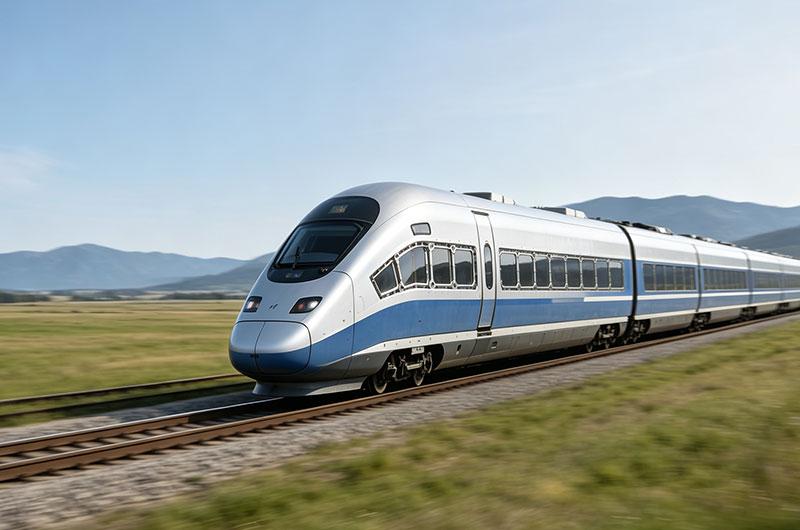
- 6082: Favored by commercial vehicles and heavy transit. Common applications include truck cargo bed frames, and structural body parts for European high-speed trains (like ICE, TGV) and subway cars.
Electronics & Precision Manufacturing
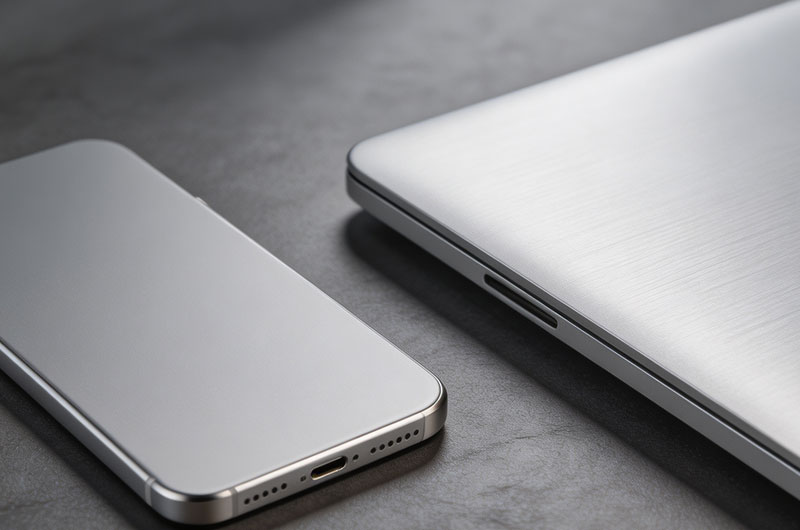
- 6061: The first choice for 3C consumer electronics. Due to its good thermal conductivity and excellent machinability, it is widely used for CPU heatsinks, mobile/laptop metal casings, and camera lens mounts.
- 6082: Primarily used for industrial-grade equipment requiring extremely high rigidity, such as semiconductor manufacturing equipment frames and SMT soldering pallets.

Aerospace
Neither is used for the main load-bearing structures of aircraft (usually handled by 2024 or 7075), but both shine in sub-structures. 6061 leans towards interior brackets and seat frames in commercial airliners, while 6082 is often used for floor beams and structural connectors that meet European aviation standards.
6061 vs. 6082 Aluminum: International Standards & Designations
International Designations Cross-Reference
| Country/Region | Standard | 6061 Designation | 6082 Designation |
|---|---|---|---|
| China | GB/T 3190 | 6061 (LD30) | 6082 (6A82) |
| USA | AA/ASTM | 6061 / A96061 | A96082 |
| Europe | EN 573-3 | EN AW-6061 / AlMg1SiCu | EN AW-6082 / AlSi1MgMn |
| Germany | DIN | AlMgSi1Cu / 3.3211 | AlMgSi1 / 3.2315 |
| Japan | JIS | A6061 | A6082 |
| UK | BS | N20 / H20 | H30 / HE30 |
| France | NF/AFNOR | A-GSUC | A-SGM0.7 |
| ISO | ISO 209.1 | AlMg1SiCu | AlSi1MgMn |
Applicable Standards List
| Product Form | 6061 Standards (ASTM Dominant) | 6082 Standards (EN Dominant) |
|---|---|---|
| Basic Specs (Composition) | Included in specific product standards | EN 573-3 |
| Plates & Coils/Strips | ASTM B209, ISO 6361 | EN 485-2, GB/T 3880-2006 (China) |
| Extrusions (Profiles/Bars/Tubes) | ASTM B221, ASTM B308 (Structural) | EN 755-2 |
| Cold Drawn (Seamless Tubes/Wire) | ASTM B210 (Tubes), ASTM B211 (Bars) | EN 754-2 |
Cost & Supply Chain Considerations
- Price & Cost
- Overall, the initial procurement cost of 6082 is 5% to 15% higher than that of 6061. Relying on massive global production volumes, 6061 offers extreme cost-effectiveness, making it the first choice for conventional projects and budget-sensitive applications. However, in highly corrosive environments (like marine applications), 6082's longer lifespan actually results in a lower total lifecycle cost.
- Supply Chain & Region
- The procurement of these two materials is highly regional. 6061 is the absolute mainstream in North America and Asia, with extremely abundant spot inventory and short lead times. Meanwhile, 6082 is the standard configuration in the European and Middle Eastern markets. If your drawings target the European market, you usually must choose 6082; however, when purchasing in other regions, be sure to plan ahead for a longer lead time.
How to Choose: Application Recommendations
Scenarios Prioritizing 6061
- Precision Machining & Aesthetic Parts: Excellent CNC cutting performance and more uniform, beautiful anodizing effects (e.g., consumer electronics casings, precision instrument bases).
- Complex Formed Parts: Features superior bending and deep drawing capabilities.
- North American Projects & General Scenarios: Complies with US ASTM standards, highly versatile, and cost-effective. It is the premier "universal aluminum" for regular, budget-sensitive projects.
Scenarios Prioritizing 6082
- High-Stress & Heavy Welding Structures: Higher strength and more reliable welding nodes (e.g., bridges, cranes, high-speed train bodies).
- Marine & Highly Corrosive Environments: Copper-free composition offers seawater corrosion resistance far superior to 6061 (e.g., ship hulls, offshore platforms).
- European Projects & High-Strength Extrusions: Perfectly complies with European EN standard specifications, making it standard for high-performance structural components.
Interchangeable Scenarios
In general architectural profiles, industrial equipment frames, or medium-load transportation components, the practical performance difference between the two is not significant. In such cases, there is no need to overthink performance; it is recommended to make the final decision based directly on local spot availability and the standard system specified by the project (ASTM for 6061, EN for 6082).
Why Choose Worthwill Aluminum?
Henan Worthwill Industry Co., Ltd. is a professional aluminum alloy material manufacturer providing high-quality 6061 and 6082 aluminum materials that meet global authoritative standards (ASTM, EN, GB, ISO).
We specialize in a full thickness range of 6061 and 6082 aluminum plates (T6/T651 tempers) with abundant inventory. We uniquely supply 6082 ultra-wide heavy plates up to 3800 mm in width and anti-slip tread plates, perfectly meeting the needs of large vessels, bridges, and heavy structures.
- Precision Cutting: We offer cut-to-length shearing, laser/waterjet cutting with exact dimensions, ready for immediate use.
- Surface & Heat Treatment: Customizable anodizing, brushing, powder coating, and other surface treatments.
- Quality Assurance: All deliveries come with complete Material Test Certificates (MTC) and mechanical testing reports.
Conclusion
6061 and 6082: one is the world's most versatile industrial aluminum alloy, and the other is Europe's most recognized structural aluminum alloy. They are not competitors, but rather complementary choices with different focuses. Simply put: for machinability, versatility, and decorative finishes, choose 6061; for structural strength, welding performance, and marine corrosion resistance, choose 6082.
Worthwill offers complete product lines for both alloys. From standard stock sizes to custom dimensions, from raw materials to deep processing, we can provide you with a one-stop solution.
Appendix: Comprehensive Performance Data Comparison of 6061 and 6082
A1. Chemical Composition Comparison
| Element | 6061 (wt%) | 6082 (wt%) |
|---|---|---|
| Al | 95.85–98.56 | 95.2–98.3 |
| Si | 0.40–0.80 | 0.70–1.30 |
| Mg | 0.80–1.20 | 0.60–1.20 |
| Cu | 0.15–0.40 | ≤0.10 |
| Mn | ≤0.15 | 0.40–1.00 |
| Cr | 0.04–0.35 | 0.05–0.25 |
| Fe | ≤0.70 | ≤0.50 |
| Zn | ≤0.25 | ≤0.20 |
| Ti | ≤0.15 | ≤0.10 |
A2. Physical Properties Comparison
| Physical Property | 6061 | 6082 |
|---|---|---|
| Density | 2.70 g/cm³ | 2.70–2.71 g/cm³ |
| Melting Point Range | 582–652°C | 555–655°C |
| Solidus | 582°C | 580°C |
| Liquidus | 652°C | 650°C |
| Elastic Modulus | 68.9 GPa | 69 GPa |
| Poisson's Ratio | 0.33 | 0.33 |
| Shear Modulus | 26 GPa | 26 GPa |
| Thermal Conductivity | 167 W/m·K | 160 W/m·K |
| Coefficient of Thermal Expansion | 23.6 μm/m·K | 23–24 μm/m·K |
| Specific Heat Capacity | 900 J/kg·K | 900 J/kg·K |
| Electrical Conductivity | 43% IACS | 42% IACS |
| Thermal Diffusivity | 68 mm²/s | 67 mm²/s |
| Max Operating Temp | 170°C | 170°C |
| Carbon Footprint | 8.3 kg CO₂/kg | 8.3 kg CO₂/kg |
A3. Mechanical Properties Comparison by Temper (T6 is most common)
| Performance Indicator | 6061-T6 | 6082-T6 |
|---|---|---|
| Tensile Strength (UTS) | 310 MPa | 330 MPa |
| Yield Strength | 276 MPa | 270 MPa |
| Elongation | 10% | 9.8% |
| Hardness (HB) | 93 | 93 |
| Fatigue Strength | 96.5 MPa | 95 MPa |
| Shear Strength | 207 MPa | 220 MPa |
| Fracture Toughness (KIC) | 29 MPa·m½ | — |
| Specific Strength (Axial) | 31 points | 33 points |
| Specific Strength (Bending) | 37 points | 39 points |
A4. 6061 Mechanical Properties by Temper
| Temper | Tensile Strength | Yield Strength | Elongation | Hardness (HB) | Fatigue Strength | Shear Strength |
|---|---|---|---|---|---|---|
| O | 130 MPa | 76 MPa | 20% | 33 | 61 MPa | 84 MPa |
| T1 | 210 MPa | 110 MPa | 16% | — | 86 MPa | 130 MPa |
| T4 | 230 MPa | 130 MPa | 18% | 63 | 96 MPa | 170 MPa |
| T42 | 230 MPa | 110 MPa | 18% | 57 | 58 MPa | 140 MPa |
| T451 | 240 MPa | 130 MPa | 20% | 63 | 95 MPa | 170 MPa |
| T51 | 270 MPa | 230 MPa | 7.8% | — | 110 MPa | 160 MPa |
| T6 | 310 MPa | 270 MPa | 10% | 93 | 96 MPa | 210 MPa |
| T62 | 320 MPa | 270 MPa | 8.7% | 88 | 100 MPa | 190 MPa |
| T651 | 320 MPa | 270 MPa | 11% | 93 | 95 MPa | 210 MPa |
| T6511 | 290 MPa | 270 MPa | 9% | — | 100 MPa | 170 MPa |
| T652 | 280 MPa | 250 MPa | 3.4% | — | 81 MPa | 160 MPa |
| T89/T94 | 410 MPa | 370 MPa | — | — | — | — |
A5. 6082 Mechanical Properties by Temper
| Temper | Tensile Strength | Yield Strength | Elongation | Hardness (HB) | Fatigue Strength | Shear Strength |
|---|---|---|---|---|---|---|
| O | 140 MPa | 85 MPa | 18% | 40 | 91 MPa | 84 MPa |
| H111 | 140 MPa | 95 MPa | 16% | — | 81 MPa | 86 MPa |
| T4 | 230 MPa | 120 MPa | 16% | 58 | 66 MPa | 140 MPa |
| T42 | 230 MPa | 110 MPa | 15% | 57 | 55 MPa | 140 MPa |
| T451 | 230 MPa | 120 MPa | 15% | 58 | 64 MPa | 140 MPa |
| T5 | 300 MPa | 260 MPa | 9% | — | 130 MPa | 180 MPa |
| T6 | 330 MPa | 270 MPa | 9.8% | 93 | 95 MPa | 220 MPa |
| T61 | 310 MPa | 220 MPa | 9.1% | 82 | 88 MPa | 190 MPa |
| T62 | 310 MPa | 270 MPa | 7.9% | 91 | 100 MPa | 180 MPa |
| T651 | 320 MPa | 270 MPa | 6.3% | 91 | 94 MPa | 190 MPa |
| T6511 | 340 MPa | 320 MPa | 13% | 95 | 95 MPa | 220 MPa |
A6. 6061 vs. 6082 Strength Comparison by Temper
| Temper | 6061 Tensile Strength | 6082 Tensile Strength | Strength Advantage |
|---|---|---|---|
| O | 130 MPa | 140 MPa | 6082 slightly higher |
| T4 | 230 MPa | 230 MPa | Same |
| T42 | 230 MPa | 230 MPa | Same |
| T451 | 240 MPa | 230 MPa | 6061 slightly higher |
| T6 | 310 MPa | 330 MPa | 6082 higher by 6% |
| T62 | 320 MPa | 310 MPa | 6061 slightly higher |
| T651 | 320 MPa | 320 MPa | Same |
| T6511 | 290 MPa | 340 MPa | 6082 higher by 17% |
A7. Heat Treatment Process Parameters Comparison
| Process Parameter | 6061 | 6082 |
|---|---|---|
| Solution Treatment Temp | 529°C | 500–530°C |
| Artificial Aging Temp (Rolled) | 160°C / 18h | 170–180°C / 5–8h |
| Artificial Aging Temp (Extruded) | 177°C / 8h | 170–180°C / 5–8h |
| Annealing Temp | 415°C / 2–3h | — |
| Homogenization Temp | 550°C / 9h | 555–565°C / 3h |
| Billet Heating Temp (Extrusion) | — | 490–520°C |
| Die Temp (Extrusion) | — | 430–450°C |
| Quenching Requirement | Water Quench (Medium sensitivity) | Water Quench (Mandatory, High sensitivity) |
| Post-Quench Temp Requirement | — | ≤50°C |
A8. Welding Performance Comparison
| Welding Parameter | 6061 | 6082 |
|---|---|---|
| Gas Welding | Good | Good |
| Arc Welding (MIG/TIG) | Good | Excellent |
| Resistance Welding | Good | Good |
| Brazing | Good | Good |
| Soldering | Good | Good |
| Welding Coefficient | 0.85 | 0.92 |
| Post-Weld Strength Retention | Approx. 60% | Approx. 92% |
| Recommended Filler Wire | 4043 / 5356 | 4043 / 5356 |
A9. Comprehensive Performance Rating Comparison
| Comprehensive Indicator | 6061 | 6082 | Advantage |
|---|---|---|---|
| Tensile Strength (T6) | 310 MPa | 330 MPa | 6082 |
| Ductility (T6) | 10% | 9.8% | 6061 slightly better |
| Weldability | Good | Excellent | 6082 |
| Machinability | Excellent | Good | 6061 |
| Anodizing | Excellent | Good | 6061 |
| Seawater Corrosion Res. | Good | Excellent | 6082 |
| Extrudability | Excellent | Good | 6061 |
| Thermal Conductivity | 167 W/m·K | 160 W/m·K | 6061 |
| Electrical Conductivity | 43% IACS | 42% IACS | 6061 slightly better |
| Quench Sensitivity | Medium | Higher | 6061 (Easier to process) |
| Price | Comparable | Comparable | Tie |
| Versatility | Extremely High | High | 6061 |
| Structural Load-bearing | Good | Excellent | 6082 |